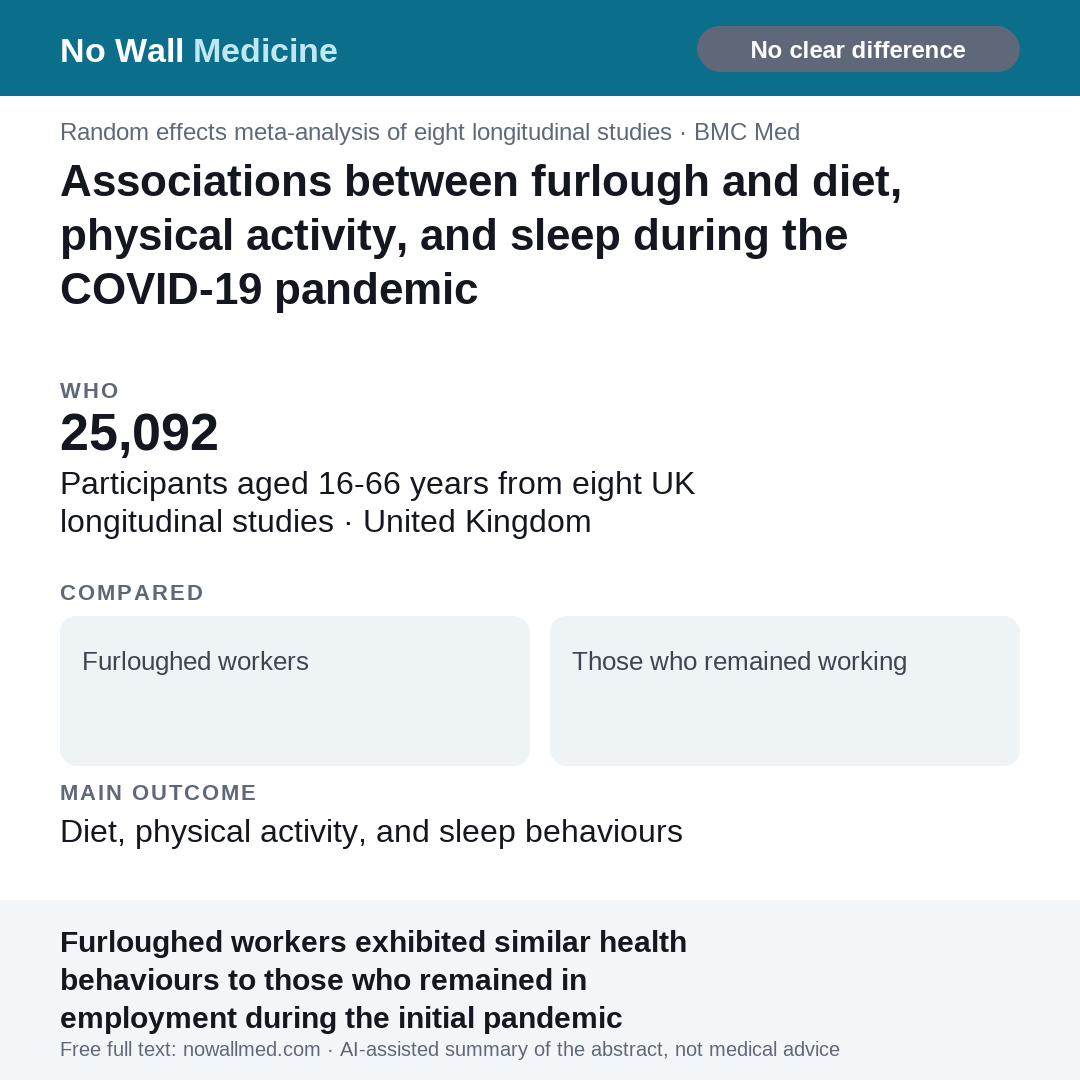
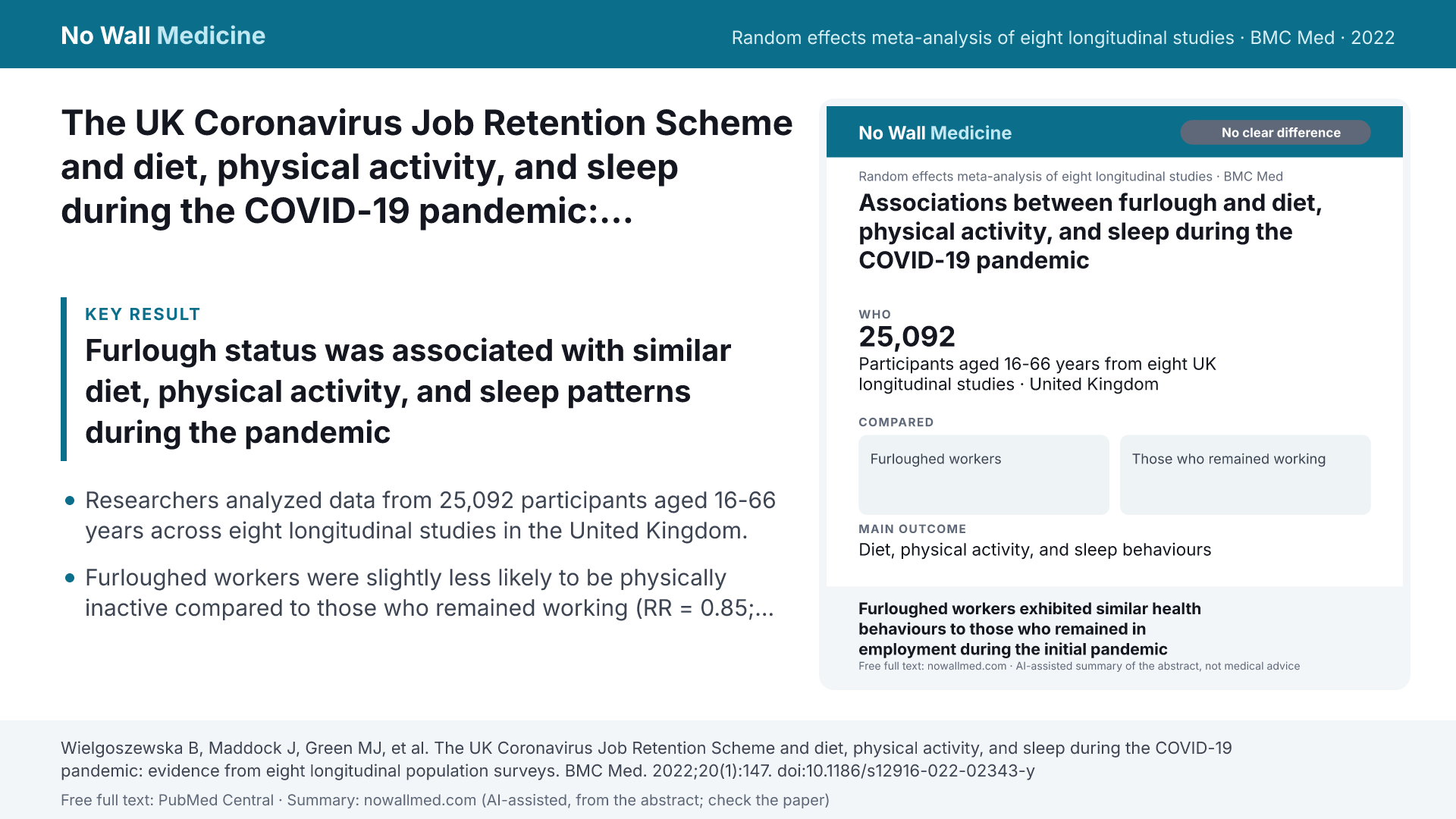
Furlough status was associated with similar diet, physical activity, and sleep patterns during the pandemic
The UK Coronavirus Job Retention Scheme and diet, physical activity, and sleep during the COVID-19 pandemic: evidence from eight longitudinal population surveys
Random effects meta-analysis of eight longitudinal studiesNo clear difference
Associations between furlough and diet, physical activity, and sleep during the COVID-19 pandemic
Who
25,092
Participants aged 16-66 years from eight UK longitudinal studies · United Kingdom
Compared
Furloughed workers
Those who remained working
Main outcome
Diet, physical activity, and sleep behaviours
Result: relative risk 0.85 (95% CI 0.75-0.97) for physical inactivity
Bottom line: Furloughed workers exhibited similar health behaviours to those who remained in employment during the initial pandemic stages.
BMC Med · 2022-04-06Download image
Key points
- Researchers analyzed data from 25,092 participants aged 16-66 years across eight longitudinal studies in the United Kingdom.
- Furloughed workers were slightly less likely to be physically inactive compared to those who remained working (RR = 0.85; 95% CI 0.75-0.97).
- Furlough was associated with lower fruit and vegetable consumption among males (RR = 1.11; 95% CI 1.01-1.22) but not females (RR = 0.84; 95% CI 0.68-1.04).
Headline and key points written with AI from the paper’s abstract, with every number checked against it. Read the paper before relying on them.
Was this summary helpful?
Subject terms
Headline, design, result, key points, caveat and citation as plain text.
Cite this article
Wielgoszewska B, Maddock J, Green MJ, et al. The UK Coronavirus Job Retention Scheme and diet, physical activity, and sleep during the COVID-19 pandemic: evidence from eight longitudinal population surveys. BMC Med. 2022. doi:10.1186/s12916-022-02343-y
Spotted a mistake? Suggest a correction