Weight gain algorithms show high sensitivity for predicting severe retinopathy of prematurity in infants
The Use of Postnatal Weight Gain Algorithms to Predict Severe or Type 1 Retinopathy of Prematurity: A Systematic Review and Meta-analysis
Systematic review and meta-analysisBenefit found
Can postnatal weight gain-based algorithms predict type 1 or severe retinopathy of prematurity?
Who
37000
More than 37,000 infants
Compared
WINROP algorithm: sensitivity 0.89 (95% CI, 0.85-0.92)
G-ROP algorithm: sensitivity 1.00 (95% CI, 0.88-1.00)
CHOP ROP algorithm: sensitivity 0.95 (95% CI, 0.71-0.99)
ROPScore algorithm: sensitivity 0.99 (95% CI, 0.73-1.00)
Main outcome
Prediction of type 1 or severe retinopathy of prematurity
Bottom line: Weight gain-based algorithms show adequate sensitivity to help rule out severe retinopathy of prematurity in infants.
JAMA Netw Open · 2021-11-01Download image
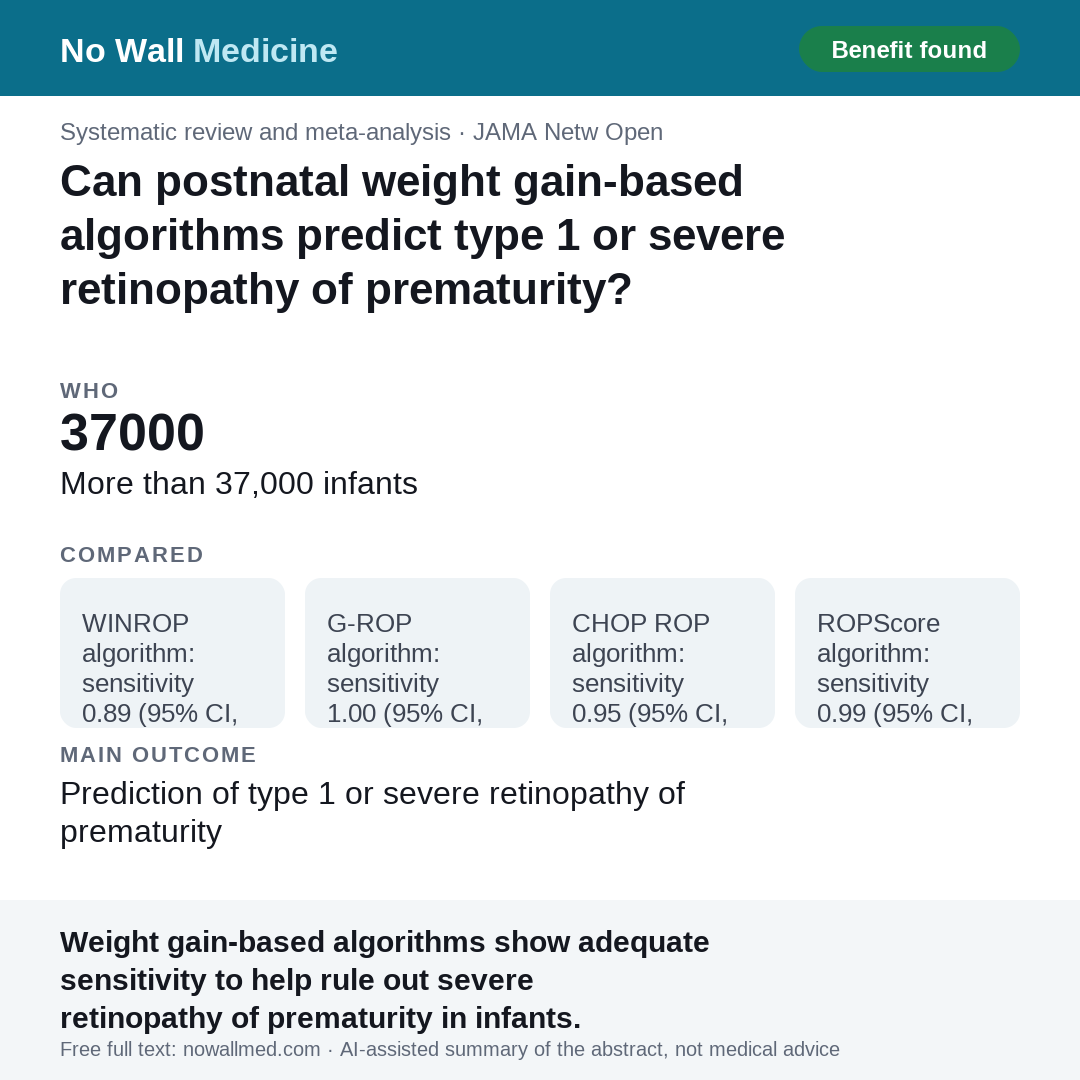
Clinical question: Can postnatal weight gain-based algorithms predict type 1 or severe retinopathy of prematurity?
Why it matters: The current method for screening retinopathy of prematurity requires frequent eye examinations that create a heavy clinical workload, and it is unknown if weight gain algorithms can reliably predict severe cases.
Key points
- Researchers analyzed 61 studies involving more than 37,000 infants to evaluate weight gain-based algorithms for predicting severe or type 1 retinopathy of prematurity.
- The algorithms showed high sensitivity, such as 1.00 for G-ROP and 0.99 for ROPScore, but low specificity, ranging from 0.35 for CO-ROP to 0.60 for G-ROP.
- Pooled negative likelihood ratios were low across all models, including 0.19 for WINROP and 0.0 for G-ROP, suggesting they may help rule out the condition.
Headline and key points written with AI from the paper’s abstract, with every number checked against it. Read the paper before relying on them.
Was this summary helpful?
Subject terms
Cite this article
Athikarisamy S, Desai S, Patole S, Rao S, Simmer K, Lam GC. The Use of Postnatal Weight Gain Algorithms to Predict Severe or Type 1 Retinopathy of Prematurity: A Systematic Review and Meta-analysis. JAMA Netw Open. 2021. doi:10.1001/jamanetworkopen.2021.35879
Spotted a mistake? Suggest a correction
Top studies every Monday
The week’s key trials and guidelines in your specialties, plus any topics you follow. By email, free.
Get the weekly digest