Systematic review identifies key ethical principles discussed in telehealth research
The Value of Applying Ethical Principles in Telehealth Practices: Systematic Review
Systematic literature reviewUnclear result
How do ethical considerations differ in telehealth versus face-to-face health care delivery?
Who
49
Existing research on telehealth and telemedicine ethical principles
Compared
69%Autonomy (34/49)
53%Professional-patient relationship (26/49)
41%Nonmaleficence (20/49)
39%Beneficence and justice (19/49)
Main outcome
Identification of ethical principles in telehealth practice
Bottom line: There is limited research on how ethical principles are incorporated into clinical telehealth practice.
Limitation: There was little discussion or evidence of how recommendations are being used to improve practice.
J Med Internet Res · 2021-03-30Download image
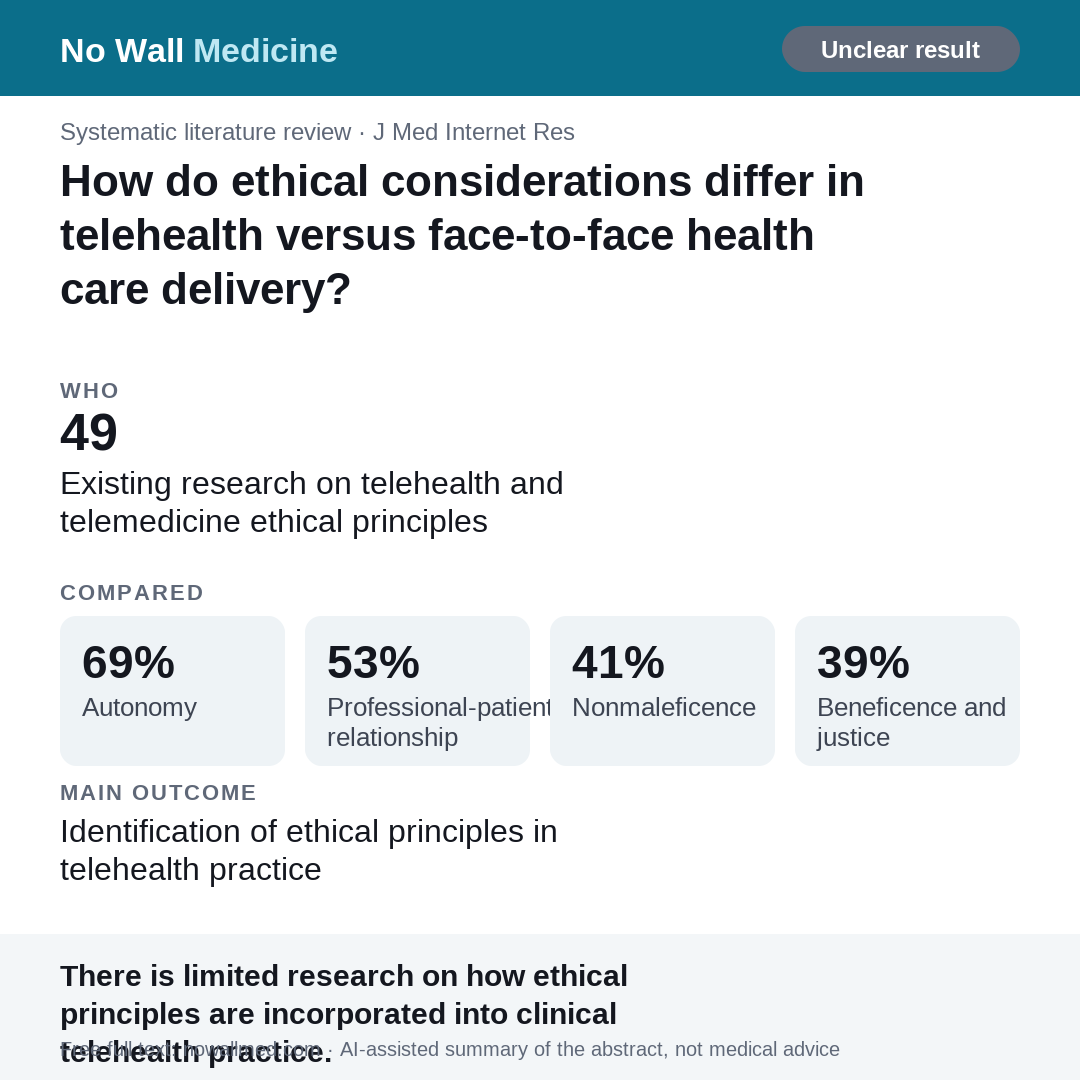
Clinical question: How do ethical considerations differ in telehealth versus face-to-face health care delivery?
Why it matters: It is unknown how ethical considerations in telehealth differ from face-to-face care or how ethical principles are applied in clinical practice.
Key points
- Researchers conducted a systematic review of 49 papers to identify how ethical principles are discussed in telehealth, which is health service delivery using information and communication technology.
- Autonomy was the most discussed principle at 69% (34/49), followed by the professional-patient relationship at 53% (26/49), nonmaleficence at 41% (20/49), beneficence at 39% (19/49), and justice at 39% (19/49).
- The review found limited research on how these ethical principles are actually incorporated into clinical practice.
Headline and key points written with AI from the paper’s abstract, with every number checked against it. Read the paper before relying on them.
Was this summary helpful?
Subject terms
Cite this article
Keenan AJ, Tsourtos G, Tieman J. The Value of Applying Ethical Principles in Telehealth Practices: Systematic Review. J Med Internet Res. 2021. doi:10.2196/25698
Spotted a mistake? Suggest a correction
Top studies every Monday
The week’s key trials and guidelines in your specialties, plus any topics you follow. By email, free.
Get the weekly digest