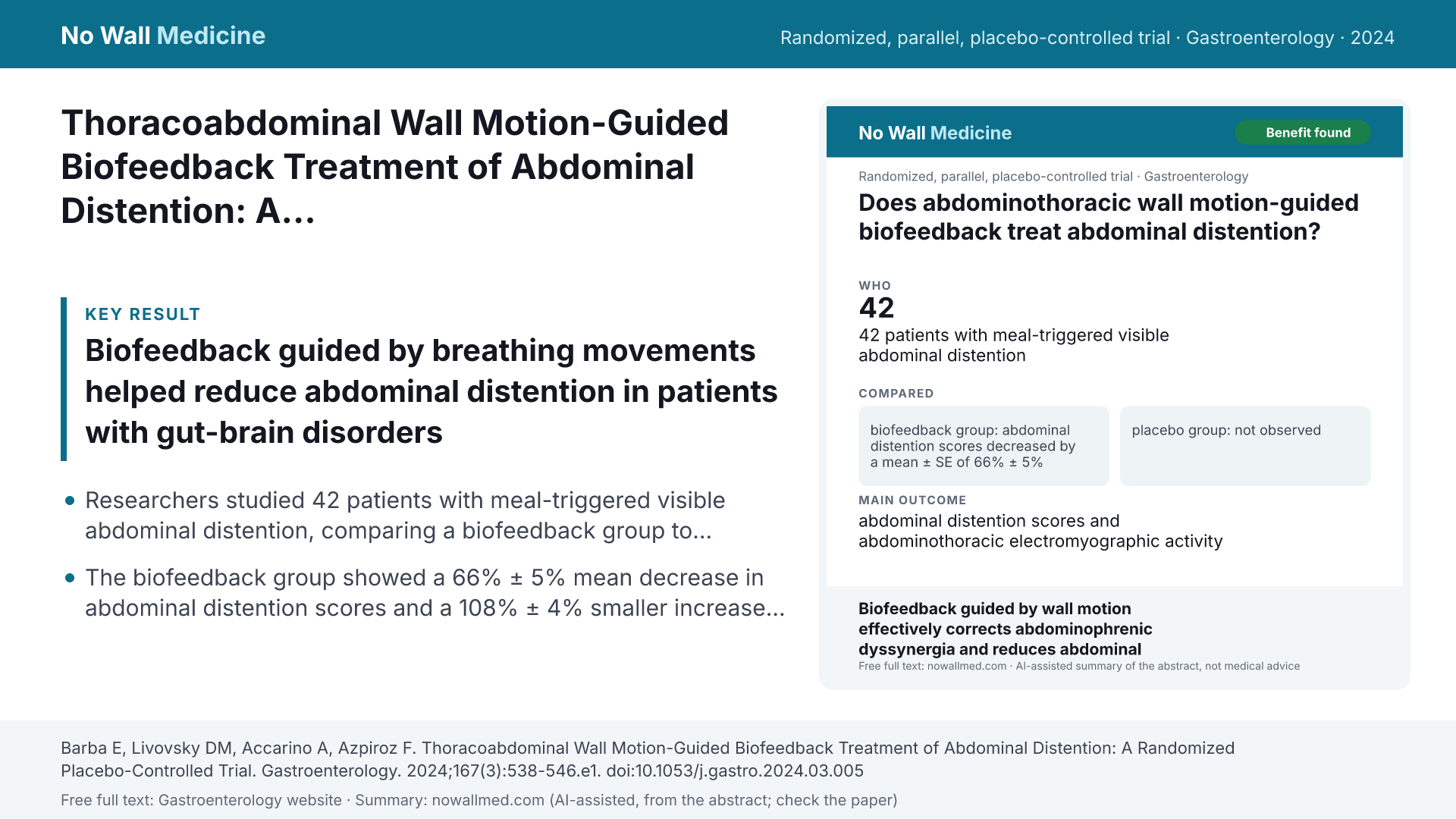
Thoracoabdominal Wall Motion-Guided Biofeedback Treatment of Abdominal Distention: A Randomized Placebo-Controlled Trial
Key result: Biofeedback guided by breathing movements helped reduce abdominal distention in patients with gut-brain disorders
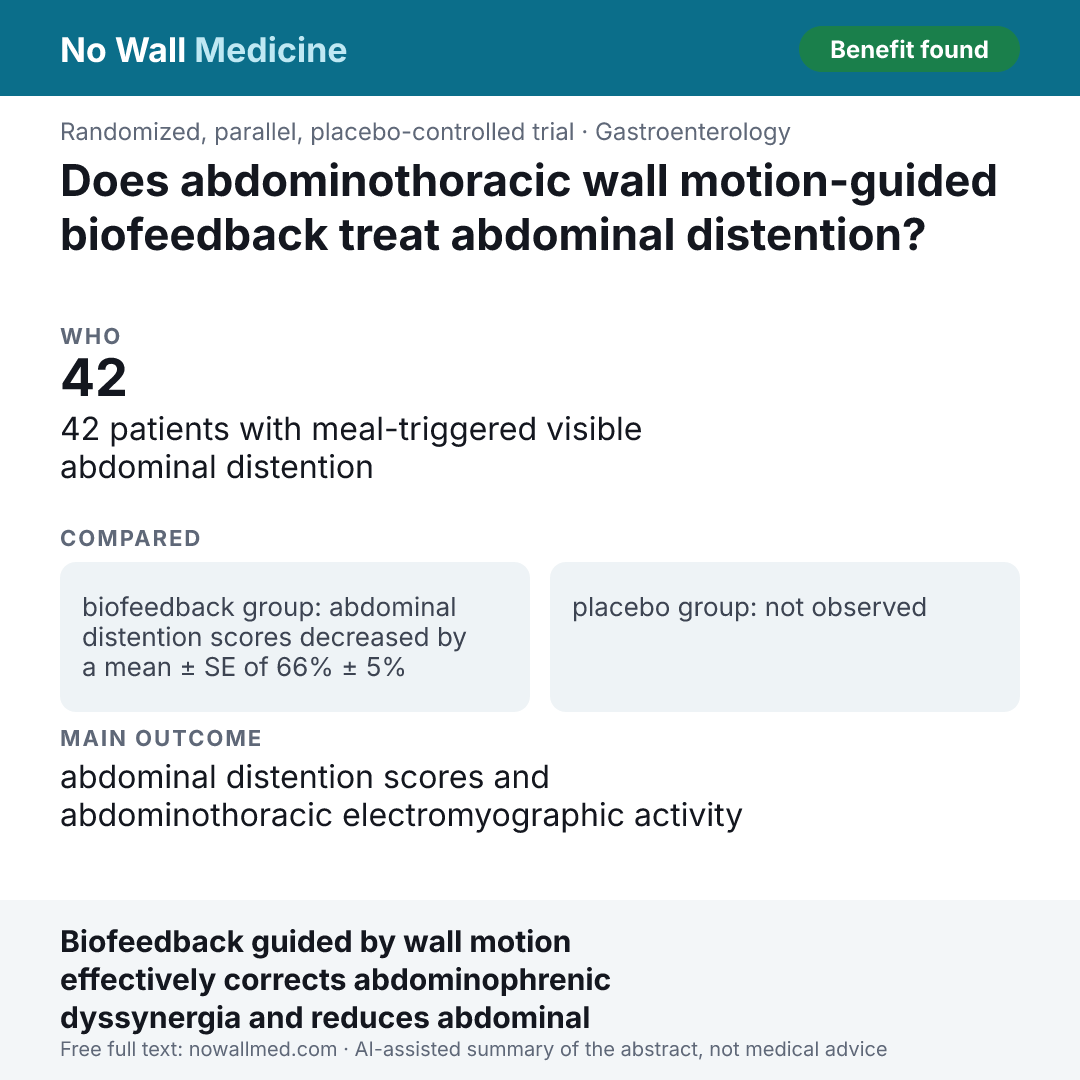
Randomized, parallel, placebo-controlled trialBenefit found
Does abdominothoracic wall motion-guided biofeedback treat abdominal distention?
Who
42
42 patients with meal-triggered visible abdominal distention
Compared
biofeedback group: abdominal distention scores decreased by a mean ± SE of 66% ± 5%
placebo group: not observed
Main outcome
abdominal distention scores and abdominothoracic electromyographic activity
Bottom line: Biofeedback guided by wall motion effectively corrects abdominophrenic dyssynergia and reduces abdominal distention.
Gastroenterology · 2024-03-11 · Save PNG
Key points
- Researchers studied 42 patients with meal-triggered visible abdominal distention, comparing a biofeedback group to a placebo group.
- The biofeedback group showed a 66% ± 5% mean decrease in abdominal distention scores and a 108% ± 4% smaller increase in girth.
- In the biofeedback group, intercostal muscle activity decreased by 82% ± 10% and anterior wall activity increased by 97% ± 6%.
Discussion prompts
- Would these patients look like yours? Who was left out?
- Is the main outcome one that matters to patients?
- Is the difference large enough to change what you do?
Cite: Barba E, Livovsky DM, Accarino A, Azpiroz F. Thoracoabdominal Wall Motion-Guided Biofeedback Treatment of Abdominal Distention: A Randomized Placebo-Controlled Trial. Gastroenterology. 2024;167(3):538-546.e1. doi:10.1053/j.gastro.2024.03.005
Free full text: Gastroenterology website · Summary and visual abstract: nowallmed.com/a/thoracoabdominal-wall-motion-guided-biofeedback-treatment-of-jnns64/ (AI-assisted from the abstract; check the paper before relying on it).