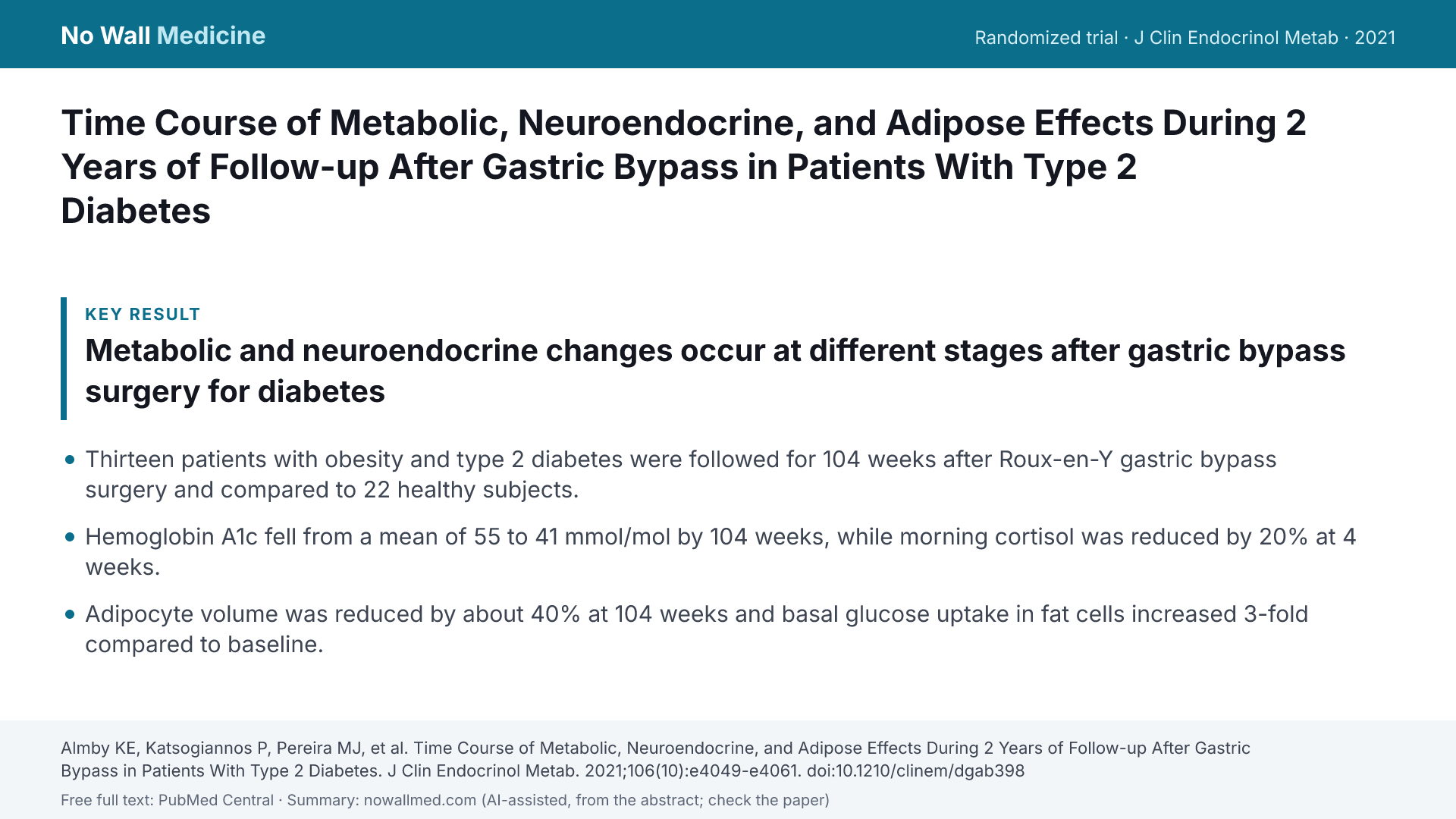
Metabolic and neuroendocrine changes occur at different stages after gastric bypass surgery for diabetes
Time Course of Metabolic, Neuroendocrine, and Adipose Effects During 2 Years of Follow-up After Gastric Bypass in Patients With Type 2 Diabetes
Why it matters: The underlying mechanisms and the specific timing of neuroendocrine and metabolic changes after gastric bypass surgery for type 2 diabetes are incompletely understood.
Key points
- Thirteen patients with obesity and type 2 diabetes were followed for 104 weeks after Roux-en-Y gastric bypass surgery and compared to 22 healthy subjects.
- Hemoglobin A1c fell from a mean of 55 to 41 mmol/mol by 104 weeks, while morning cortisol was reduced by 20% at 4 weeks.
- Adipocyte volume was reduced by about 40% at 104 weeks and basal glucose uptake in fat cells increased 3-fold compared to baseline.
Limitation the authors note: The study was a single-center follow-up of a small group of thirteen patients.
Headline and key points written with AI from the paper’s abstract, with every number checked against it. Read the paper before relying on them.
Was this summary helpful?
Subject terms
Headline, design, result, key points, caveat and citation as plain text.
Cite this article
Almby KE, Katsogiannos P, Pereira MJ, et al. Time Course of Metabolic, Neuroendocrine, and Adipose Effects During 2 Years of Follow-up After Gastric Bypass in Patients With Type 2 Diabetes. J Clin Endocrinol Metab. 2021;106(10):e4049-e4061. doi:10.1210/clinem/dgab398
Spotted a mistake? Suggest a correction