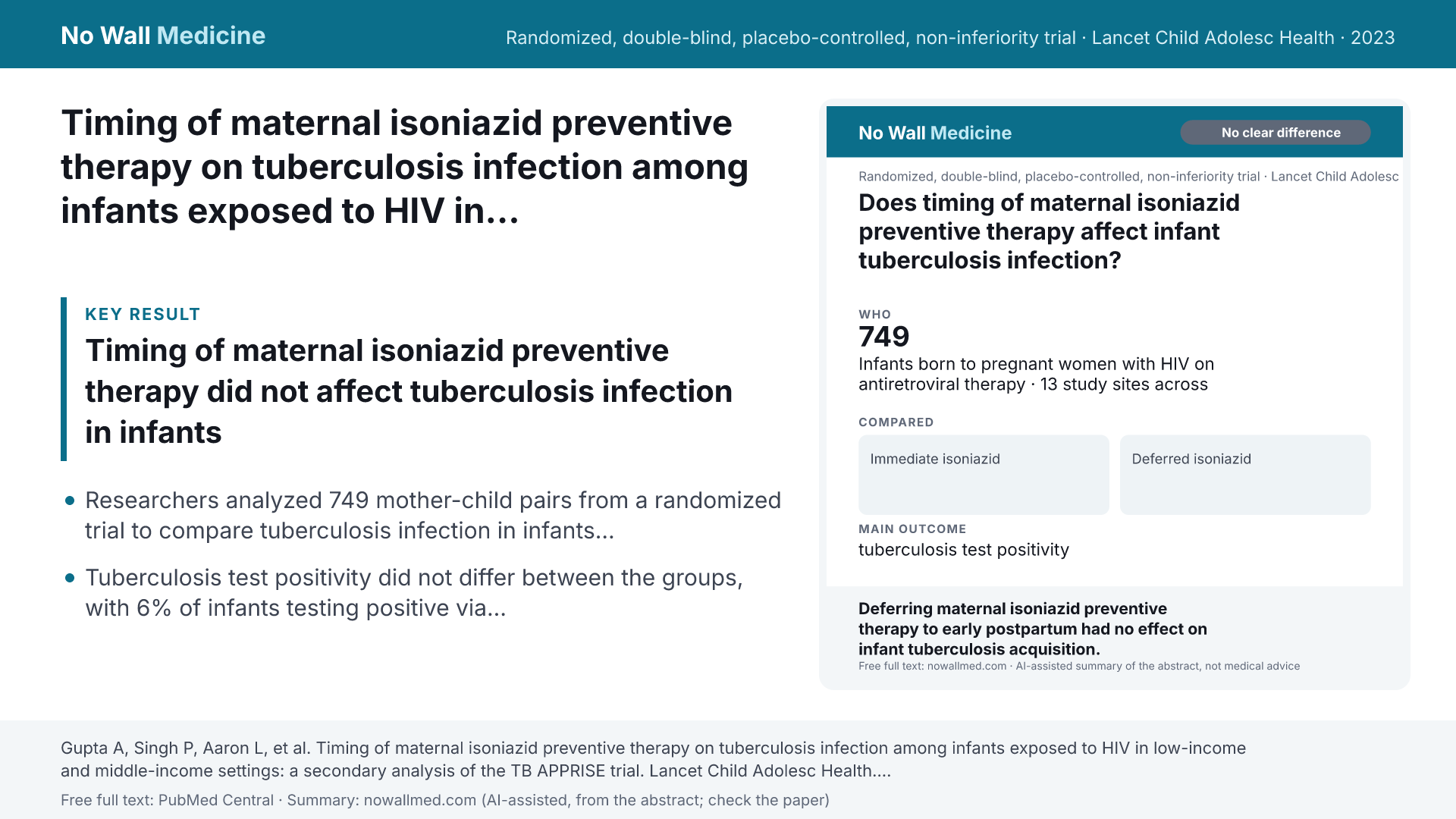
Timing of maternal isoniazid preventive therapy on tuberculosis infection among infants exposed to HIV in low-income and middle-income settings: a secondary analysis of the TB APPRISE trial
Key result: Timing of maternal isoniazid preventive therapy did not affect tuberculosis infection in infants
Key points
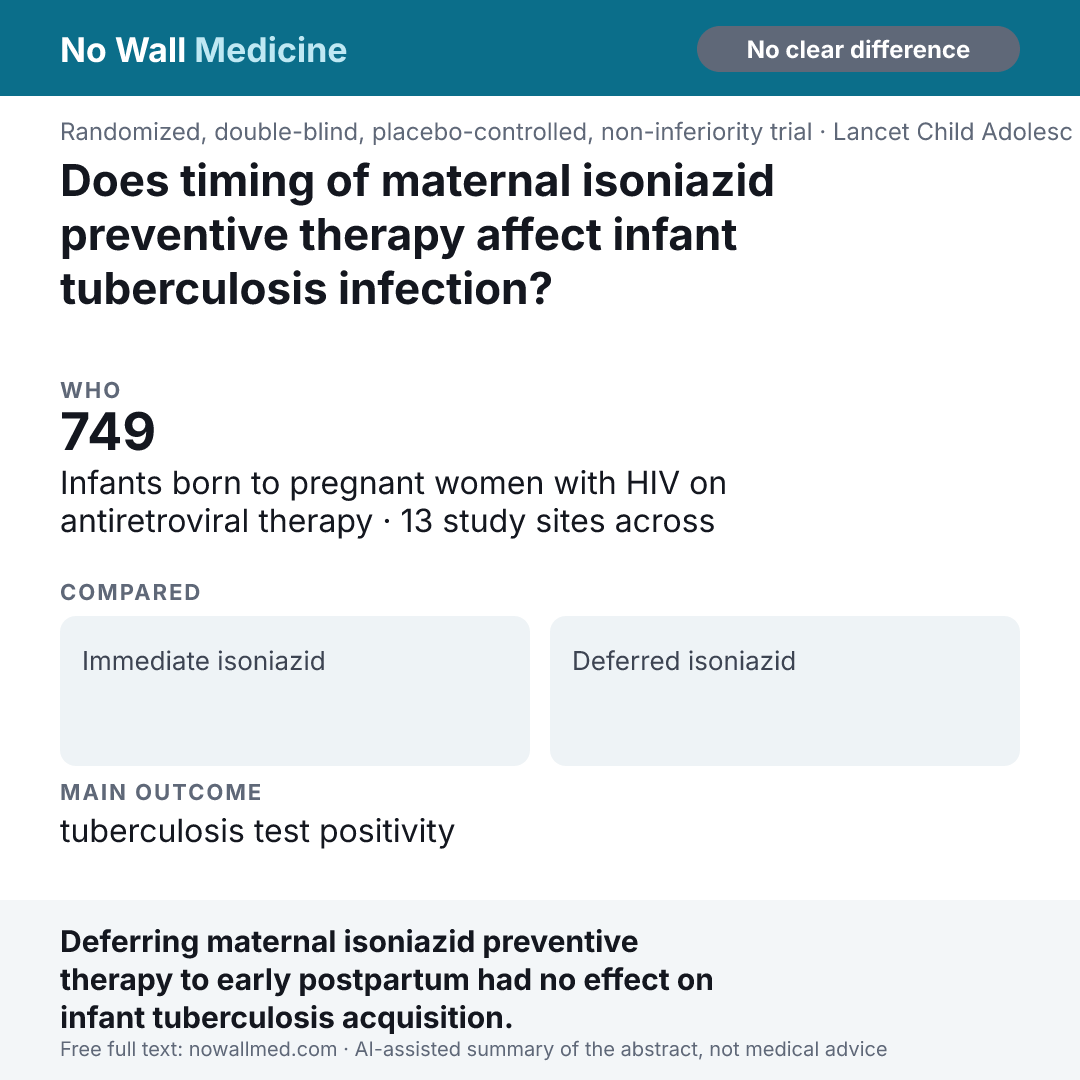
- Researchers analyzed 749 mother-child pairs from a randomized trial to compare tuberculosis infection in infants whose mothers started isoniazid during pregnancy versus after delivery.
- Tuberculosis test positivity did not differ between the groups, with 6% of infants testing positive via interferon-gamma release assay and 8% via tuberculin skin test.
- The agreement between the two different tuberculosis diagnostic tests was poor, with a kappa value of 0.107.
Why it matters: The optimal timing for starting isoniazid preventive therapy in pregnant women living with HIV remains unclear to prevent tuberculosis infection in their infants.
Discussion prompts
- Would these patients look like yours? Who was left out?
- Is the main outcome one that matters to patients?
- Is the difference large enough to change what you do?
Cite: Gupta A, Singh P, Aaron L, et al. Timing of maternal isoniazid preventive therapy on tuberculosis infection among infants exposed to HIV in low-income and middle-income settings: a secondary analysis of the TB APPRISE trial. Lancet Child Adolesc Health. 2023;7(10):708-717. doi:10.1016/S2352-4642(23)00174-8
Free full text: PubMed Central · Summary and visual abstract: nowallmed.com/a/timing-of-maternal-isoniazid-preventive-therapy-on-tuberculosis-jed5h0/ (AI-assisted from the abstract; check the paper before relying on it).