Brain stimulation may improve pain and quality of life in patients with end-stage renal disease
Transcranial Direct Current Stimulation (tDCS): Pain Management in End-Stage Renal Disease - Report of an Early Randomized Controlled Trial
Double-blind, randomized, sham-controlled trialBenefit found
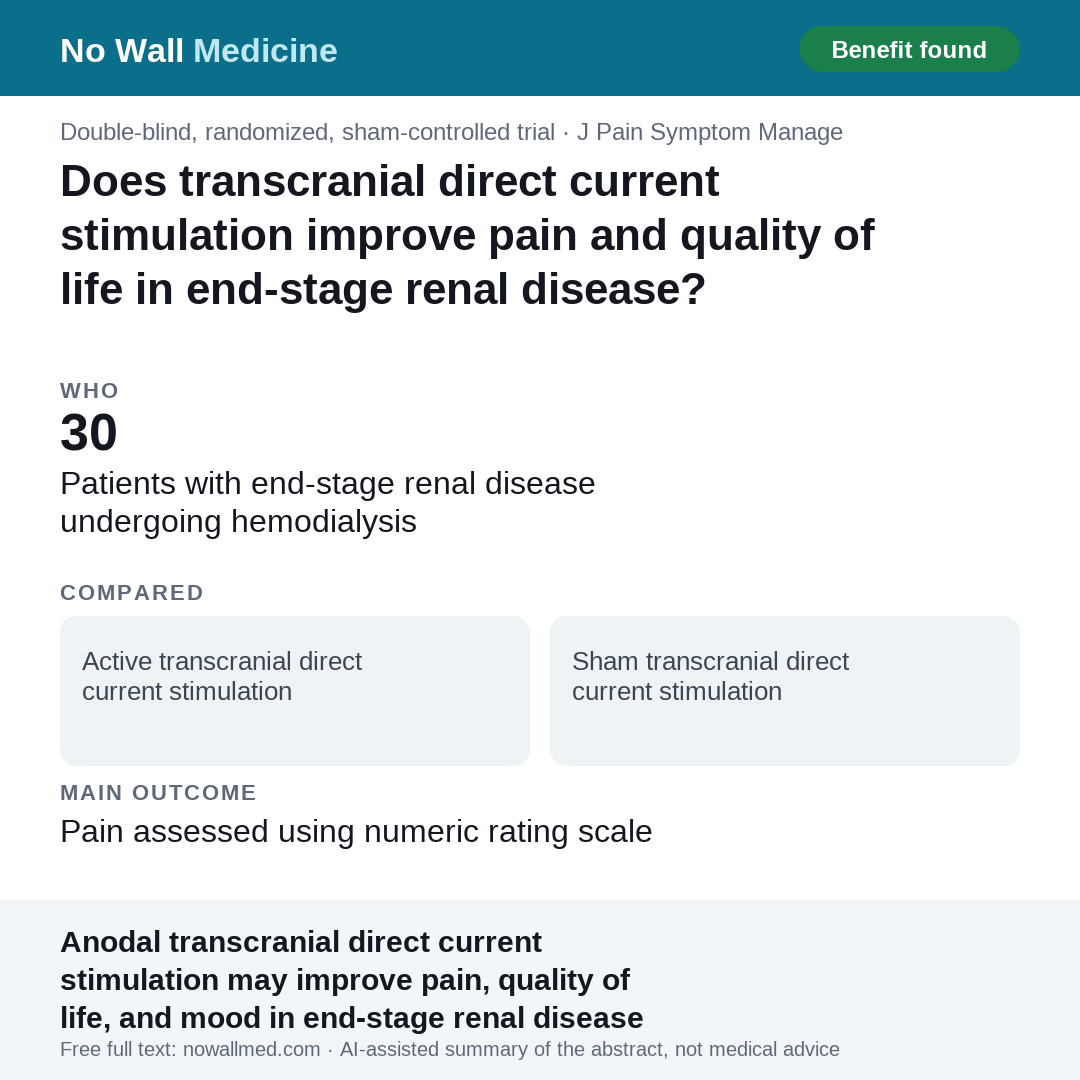
Does transcranial direct current stimulation improve pain and quality of life in end-stage renal disease?
Who
30
Patients with end-stage renal disease undergoing hemodialysis
Compared
Active transcranial direct current stimulation
Sham transcranial direct current stimulation
Main outcome
Pain assessed using numeric rating scale
Bottom line: Anodal transcranial direct current stimulation may improve pain, quality of life, and mood in end-stage renal disease patients.
J Pain Symptom Manage · 2022-05-28Download image
Clinical question: Does transcranial direct current stimulation improve pain and quality of life in end-stage renal disease?
Why it matters: Chronic pain affects more than 60% of patients with end-stage renal disease and may be linked to brain imbalances and poor quality of life.
Key points
- Researchers conducted a double-blind, randomized, sham-controlled trial with 30 patients with chronic pain undergoing hemodialysis.
- Active transcranial direct current stimulation, a method using low electrical currents to stimulate the brain, showed significant changes in pain, quality of life, general health, fatigue, symptoms, depression, and anxiety.
- No difference was found for affectivity, which refers to the experience of feeling or emotion.
Headline and key points written with AI from the paper’s abstract, with every number checked against it. Read the paper before relying on them.
Was this summary helpful?
Subject terms
Cite this article
Quintiliano A, Bikson M, Oehmen T, Pegado R, Kirsztajn GM. Transcranial Direct Current Stimulation (tDCS): Pain Management in End-Stage Renal Disease - Report of an Early Randomized Controlled Trial. J Pain Symptom Manage. 2022. doi:10.1016/j.jpainsymman.2022.05.018
Spotted a mistake? Suggest a correction
Top studies every Monday
The week’s key trials and guidelines in your specialties, plus any topics you follow. By email, free.
Get the weekly digest