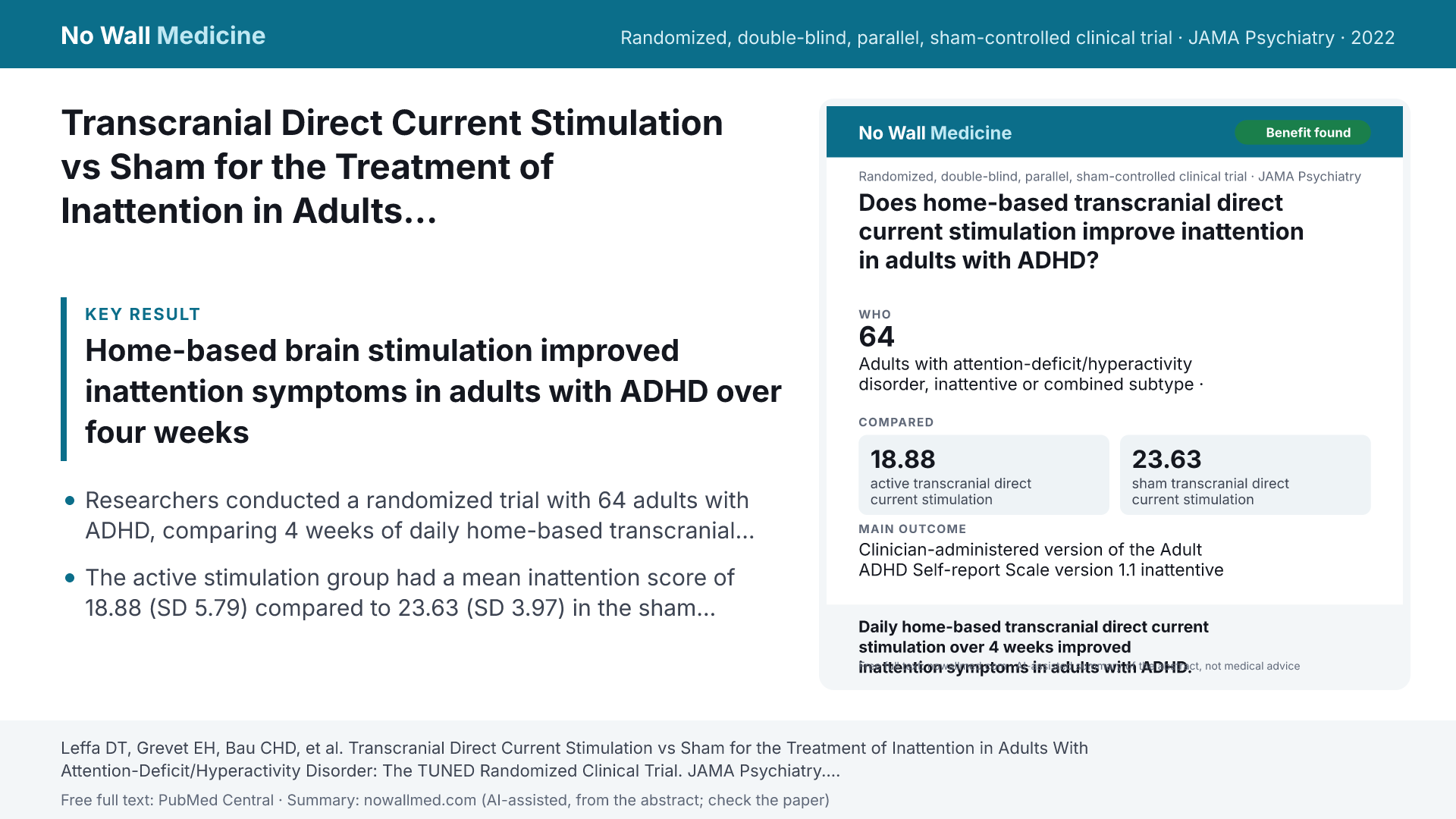
Transcranial Direct Current Stimulation vs Sham for the Treatment of Inattention in Adults With Attention-Deficit/Hyperactivity Disorder: The TUNED Randomized Clinical Trial
Key result: Home-based brain stimulation improved inattention symptoms in adults with ADHD over four weeks
Key points
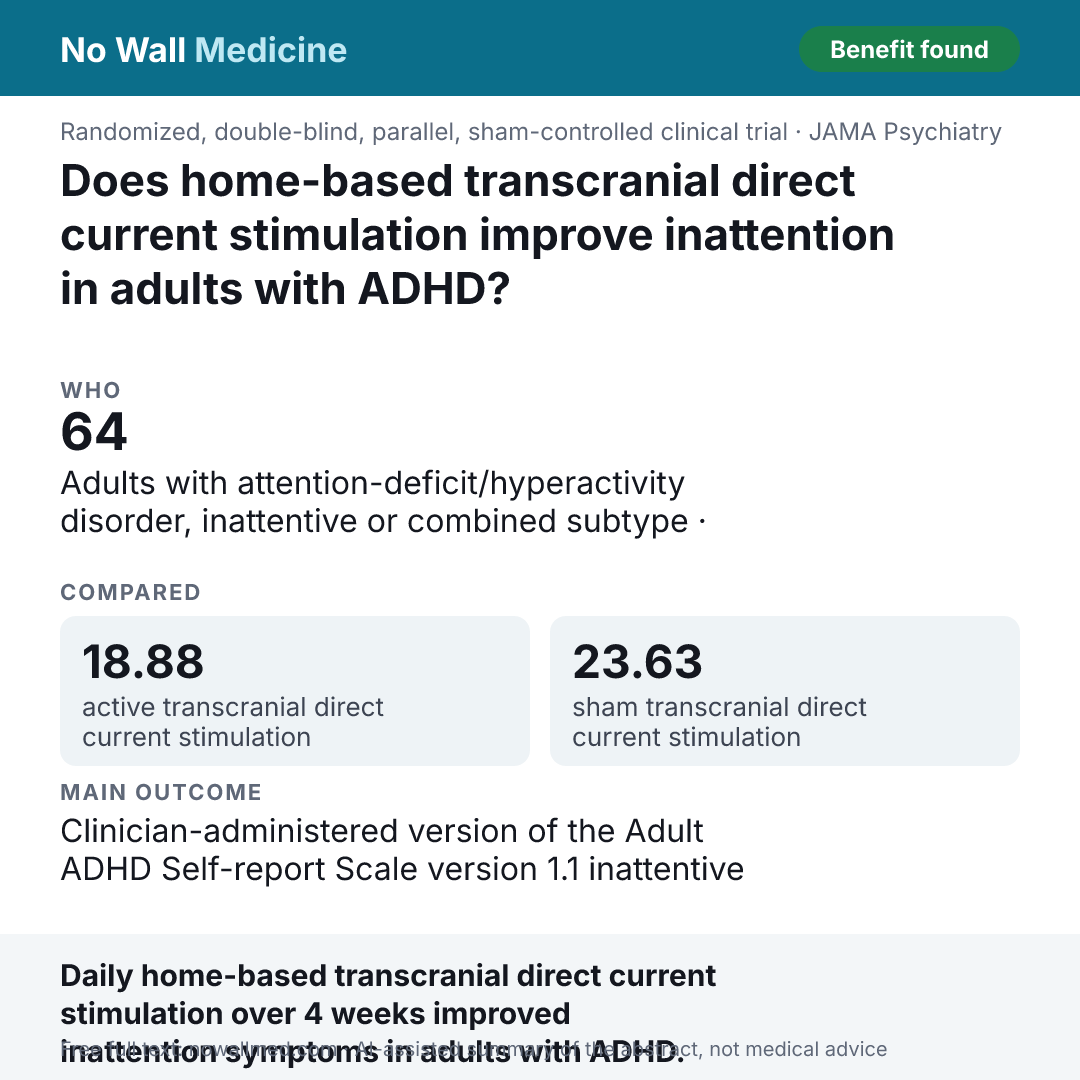
- Researchers conducted a randomized trial with 64 adults with ADHD, comparing 4 weeks of daily home-based transcranial direct current stimulation to a sham treatment.
- The active stimulation group had a mean inattention score of 18.88 (SD 5.79) compared to 23.63 (SD 3.97) in the sham group at week 4.
- Mild adverse events like skin redness, headache, and scalp burn were more frequent in the group receiving active stimulation.
Limitation the authors note: The study was conducted in a single-center outpatient academic setting and only 55 of the 64 participants completed the follow-up.
Discussion prompts
- Would these patients look like yours? Who was left out?
- Is the main outcome one that matters to patients?
- Is the difference large enough to change what you do?
Cite: Leffa DT, Grevet EH, Bau CHD, et al. Transcranial Direct Current Stimulation vs Sham for the Treatment of Inattention in Adults With Attention-Deficit/Hyperactivity Disorder: The TUNED Randomized Clinical Trial. JAMA Psychiatry. 2022;79(9):847-856. doi:10.1001/jamapsychiatry.2022.2055
Free full text: PubMed Central · Summary and visual abstract: nowallmed.com/a/transcranial-direct-current-stimulation-vs-sham-for-the-treatment-of-6psx4e/ (AI-assisted from the abstract; check the paper before relying on it).