Electrical brain stimulation did not reduce delirium incidence in patients after elective surgery
Transcranial Electrical Stimulation and Delirium Among Postoperative Patients: A Randomized Clinical Trial
Double-blind, sham-controlled randomized clinical trialNo clear difference
Does transcranial electrical stimulation modulate the incidence of postoperative delirium?
Who
225
Patients aged 65 years or older scheduled for elective surgery · University Medicine Greifswald, Germany
Compared
transcranial alternating current stimulation: 11.5% [6 of 52]
transcranial direct current stimulation: 14.3% [9 of 63]
sham stimulation: 9.2% [6 of 65]
Main outcome
postoperative delirium incidence in the ward
Result: odds ratio 1.60 (95% CI 0.47-5.46)
Bottom line: Transcranial electrical stimulation did not show a uniform effect on postoperative delirium incidence among patients.
JAMA Netw Open · 2026-08-03Download image
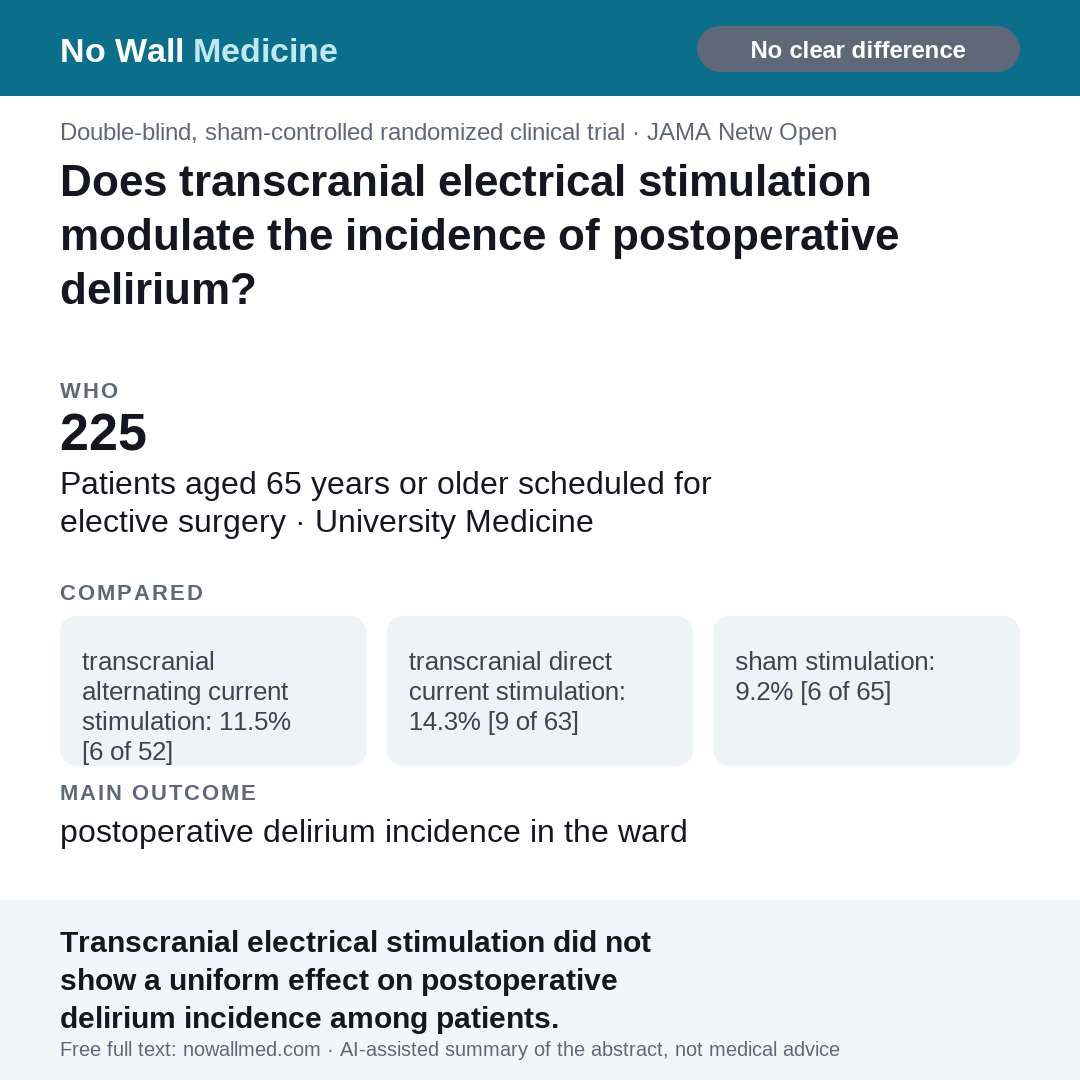
Clinical question: Does transcranial electrical stimulation modulate the incidence of postoperative delirium?
Why it matters: Postoperative delirium is a significant complication after elective surgery, and researchers wanted to investigate if electrical brain stimulation could modulate its incidence.
Key points
- Researchers studied 225 patients aged 65 years or older to compare transcranial alternating current stimulation, transcranial direct current stimulation, or a sham treatment.
- No substantial differences were found for delirium incidence in the ward between the stimulation groups and the sham group (tACS 11.5% vs sham 9.2%; tDCS 14.3% vs sham 9.2%).
- Subgroup analysis suggested that transcranial alternating current stimulation might reduce delirium incidence in the postanesthesia care unit for patients undergoing longer surgeries.
Headline and key points written with AI from the paper’s abstract, with every number checked against it. Read the paper before relying on them.
Topics
Spotted a mistake? Suggest a correction