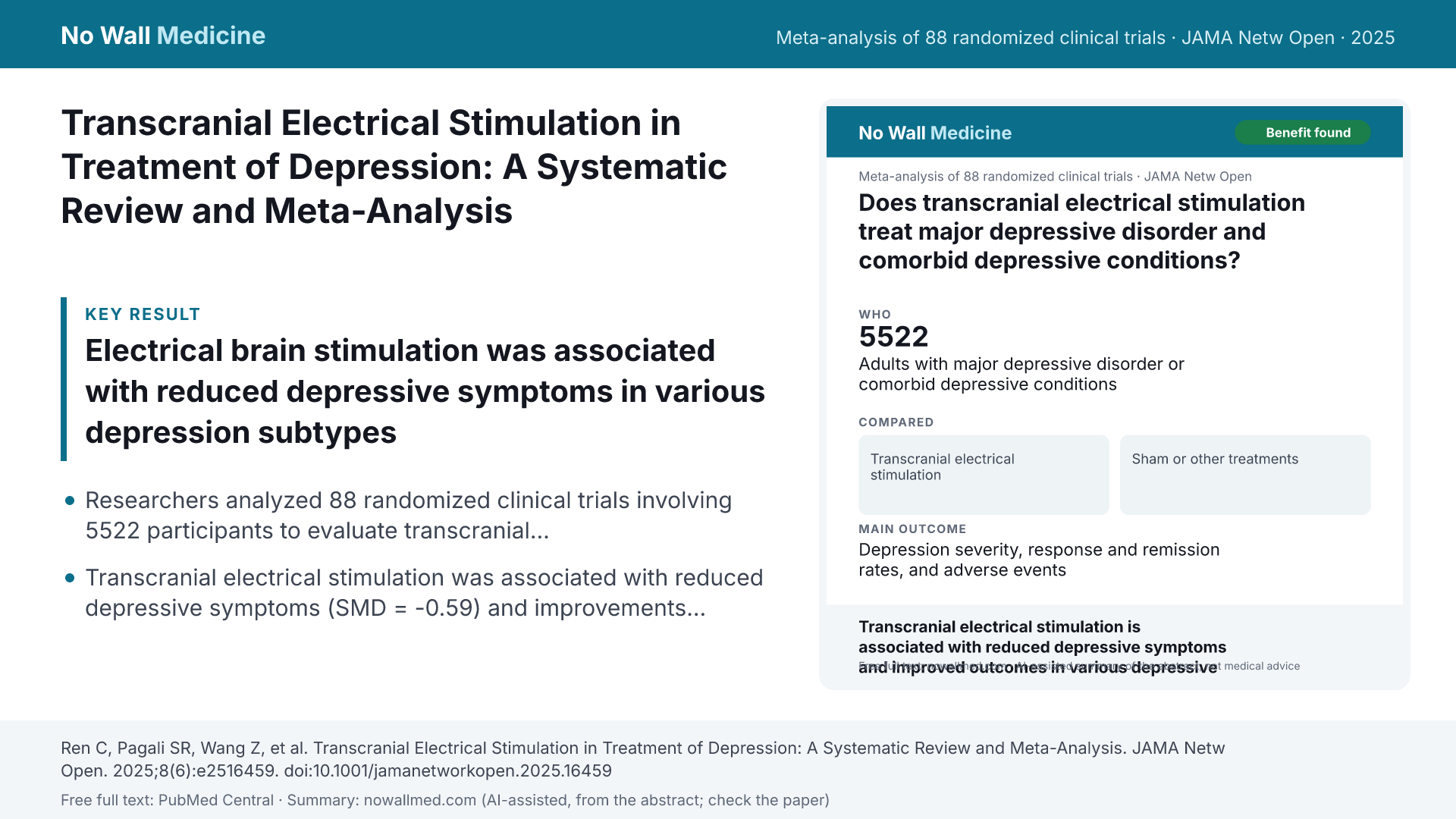
Electrical brain stimulation was associated with reduced depressive symptoms in various depression subtypes
Transcranial Electrical Stimulation in Treatment of Depression: A Systematic Review and Meta-Analysis
Meta-analysis of 88 randomized clinical trialsBenefit found
Does transcranial electrical stimulation treat major depressive disorder and comorbid depressive conditions?
Who
5522
Adults with major depressive disorder or comorbid depressive conditions
Compared
Transcranial electrical stimulation
Sham or other treatments
Main outcome
Depression severity, response and remission rates, and adverse events
Result: SMD -0.59 (95% CI -0.83 to -0.35)
Bottom line: Transcranial electrical stimulation is associated with reduced depressive symptoms and improved outcomes in various depressive conditions.
JAMA Netw Open · 2025-06-02 · Save PNG
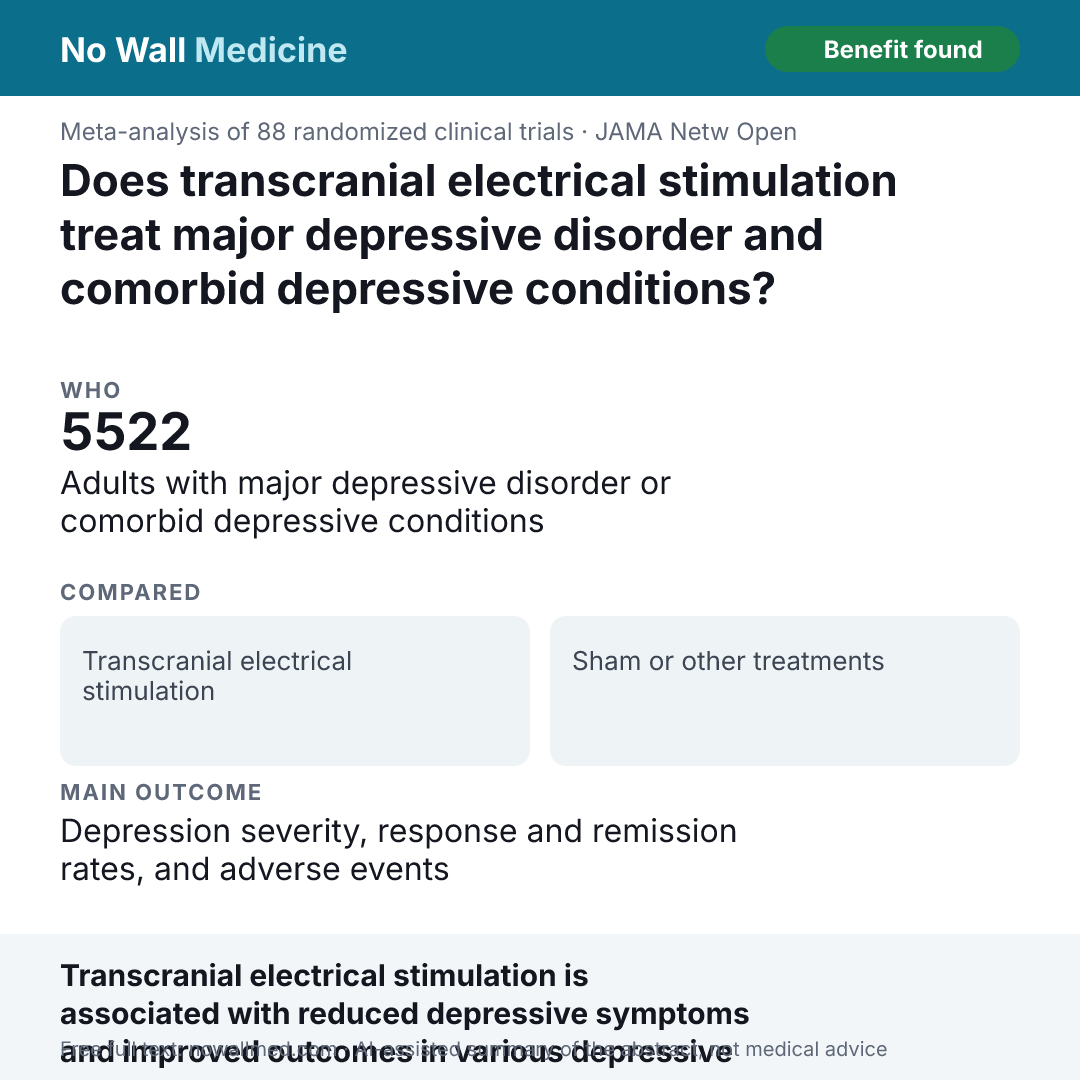
Clinical question: Does transcranial electrical stimulation treat major depressive disorder and comorbid depressive conditions?
Why it matters: The role and safety of transcranial electrical stimulation for treating various depressive disorders remain under evaluation.
Key points
- Researchers analyzed 88 randomized clinical trials involving 5522 participants to evaluate transcranial electrical stimulation for depression.
- Transcranial electrical stimulation was associated with reduced depressive symptoms (SMD = -0.59) and improvements in depression with medical or psychiatric comorbidities.
- Transcranial alternating current stimulation was associated with improved major depressive disorder symptoms (SMD = -0.58) and response rates (OR, 2.07).
Headline and key points written with AI from the paper’s abstract, with every number checked against it. Read the paper before relying on them.
Was this summary helpful?
Subject terms
Headline, design, result, key points, caveat and citation as plain text.
Cite this article
Ren C, Pagali SR, Wang Z, et al. Transcranial Electrical Stimulation in Treatment of Depression: A Systematic Review and Meta-Analysis. JAMA Netw Open. 2025;8(6):e2516459. doi:10.1001/jamanetworkopen.2025.16459
Spotted a mistake? Suggest a correction