Animal model results for alcohol use disorder medications were linked to specific clinical trial outcomes
Translating medication effects for alcohol use disorder across preclinical, human laboratory, and clinical trial outcomes using meta-analysis
Meta-analysisMixed results
Do preclinical medication effects predict efficacy in human laboratory and clinical trials?
Who
Medications tested for alcohol use disorder
Compared
Preclinical models
Clinical trials
Main outcome
Medication effects across different experimental models
Bottom line: Preclinical effects on alcohol preference and reinstatement associate with return to any drinking in clinical trials.
Transl Psychiatry · 2025-07-21Download image
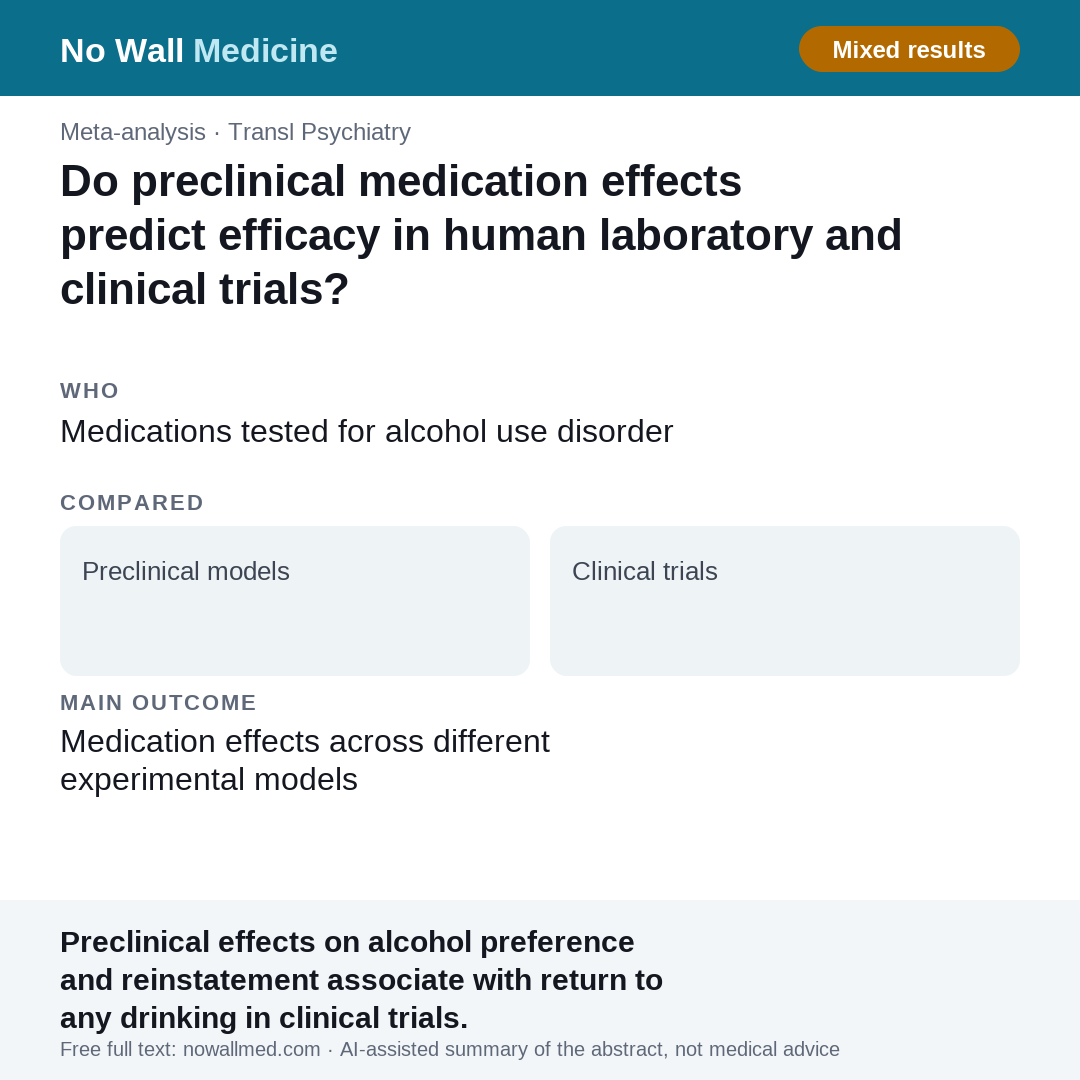
Clinical question: Do preclinical medication effects predict efficacy in human laboratory and clinical trials?
Why it matters: It is unclear whether early efficacy in animal models reliably predicts how medications will perform in human laboratory and clinical trials.
Key points
- Researchers analyzed 77 preclinical studies on alcohol preference, 18 on reinstatement, 36 human laboratory studies on craving, and 139 randomized clinical trials for alcohol use disorder.
- Medication effects on alcohol preference (β = 0.04, p = 0.004) and reinstatement (β = 0.20, p = 0.05) were positively associated with return to any drinking in clinical trials.
- Preclinical medication findings were not associated with medication effects on alcohol cue-induced craving in human laboratory settings.
Headline and key points written with AI from the paper’s abstract, with every number checked against it. Read the paper before relying on them.
Topics
Cite this article
Nieto SJ, Donato S, Du H, Meredith LR, Baskerville WA, McManus KR. Translating medication effects for alcohol use disorder across preclinical, human laboratory, and clinical trial outcomes using meta-analysis. Transl Psychiatry. 2025. doi:10.1038/s41398-025-03473-6
Spotted a mistake? Suggest a correction
Top studies every Monday
The week’s key trials and guidelines in your specialties, plus any topics you follow. By email, free.
Get the weekly digest