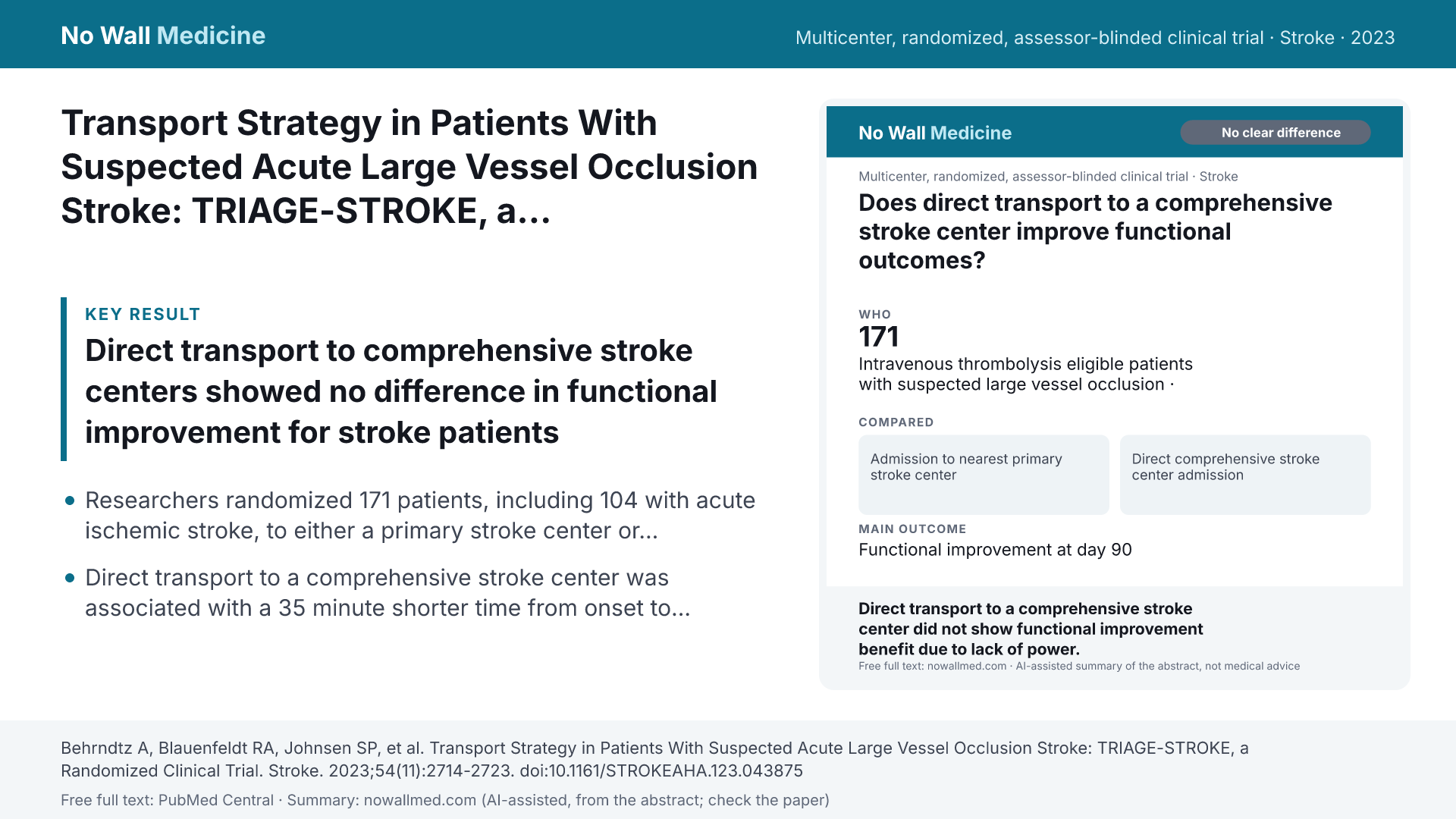
Direct transport to comprehensive stroke centers showed no difference in functional improvement for stroke patients
Transport Strategy in Patients With Suspected Acute Large Vessel Occlusion Stroke: TRIAGE-STROKE, a Randomized Clinical Trial
Multicenter, randomized, assessor-blinded clinical trialNo clear difference
Does direct transport to a comprehensive stroke center improve functional outcomes?
Who
171
Intravenous thrombolysis eligible patients with suspected large vessel occlusion · National, multicenter
Compared
Admission to nearest primary stroke center
Direct comprehensive stroke center admission
Main outcome
Functional improvement at day 90
Result: odds ratio 1.42 (95% CI, 0.72-2.82)
Bottom line: Direct transport to a comprehensive stroke center did not show functional improvement benefit due to lack of power.
Stroke · 2023-10-06 · Save PNG
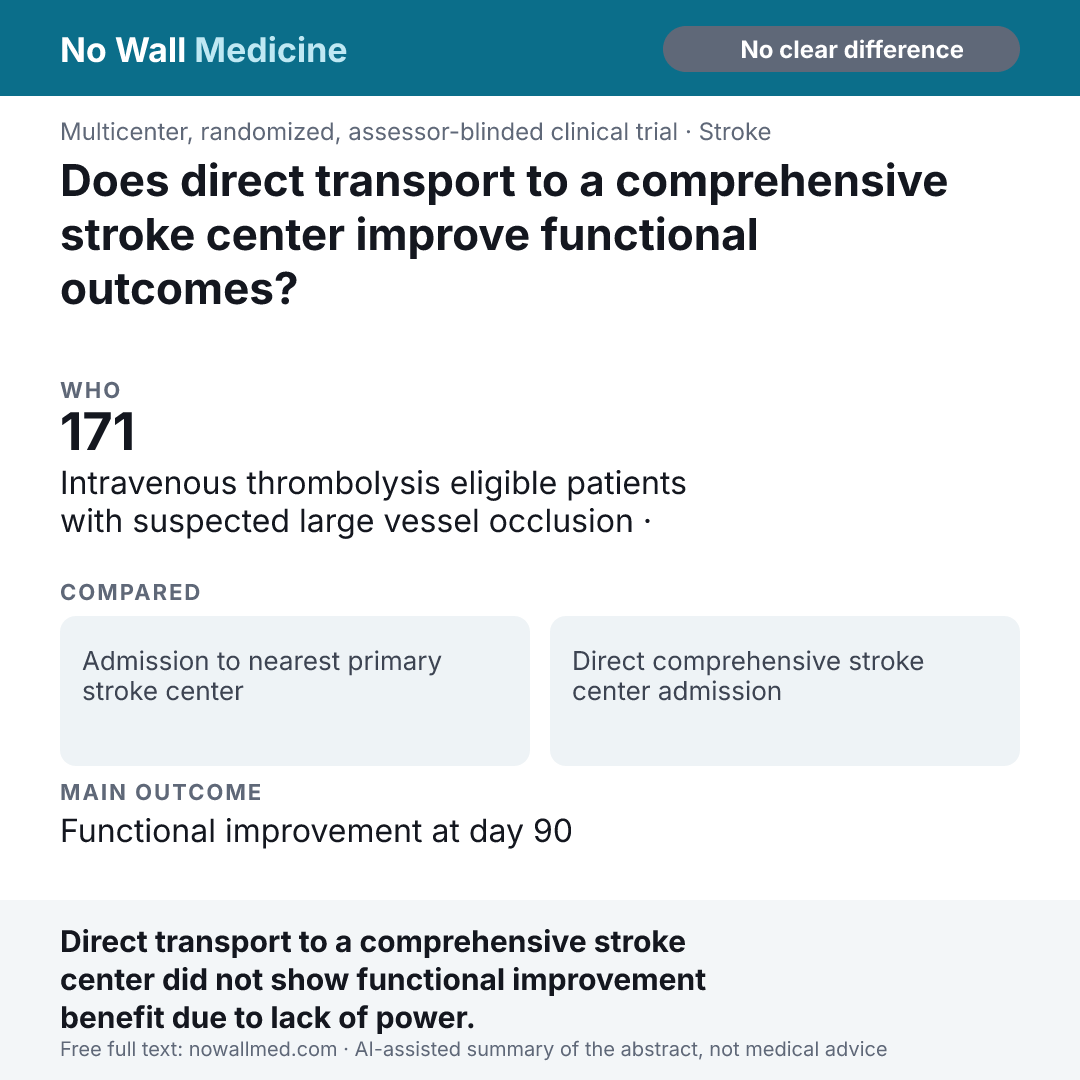
Clinical question: Does direct transport to a comprehensive stroke center improve functional outcomes?
Key points
- Researchers randomized 171 patients, including 104 with acute ischemic stroke, to either a primary stroke center or a comprehensive stroke center.
- Direct transport to a comprehensive stroke center was associated with a 35 minute shorter time from onset to groin access compared to primary stroke center transport.
- There was no statistically significant difference in functional improvement at day 90 between the two transport strategies, with an odds ratio of 1.42 (95% CI, 0.72-2.82, P=0.31).
Headline and key points written with AI from the paper’s abstract, with every number checked against it. Read the paper before relying on them.
Was this summary helpful?
Subject terms
Headline, design, result, key points, caveat and citation as plain text.
Cite this article
Behrndtz A, Blauenfeldt RA, Johnsen SP, et al. Transport Strategy in Patients With Suspected Acute Large Vessel Occlusion Stroke: TRIAGE-STROKE, a Randomized Clinical Trial. Stroke. 2023;54(11):2714-2723. doi:10.1161/STROKEAHA.123.043875
Spotted a mistake? Suggest a correction