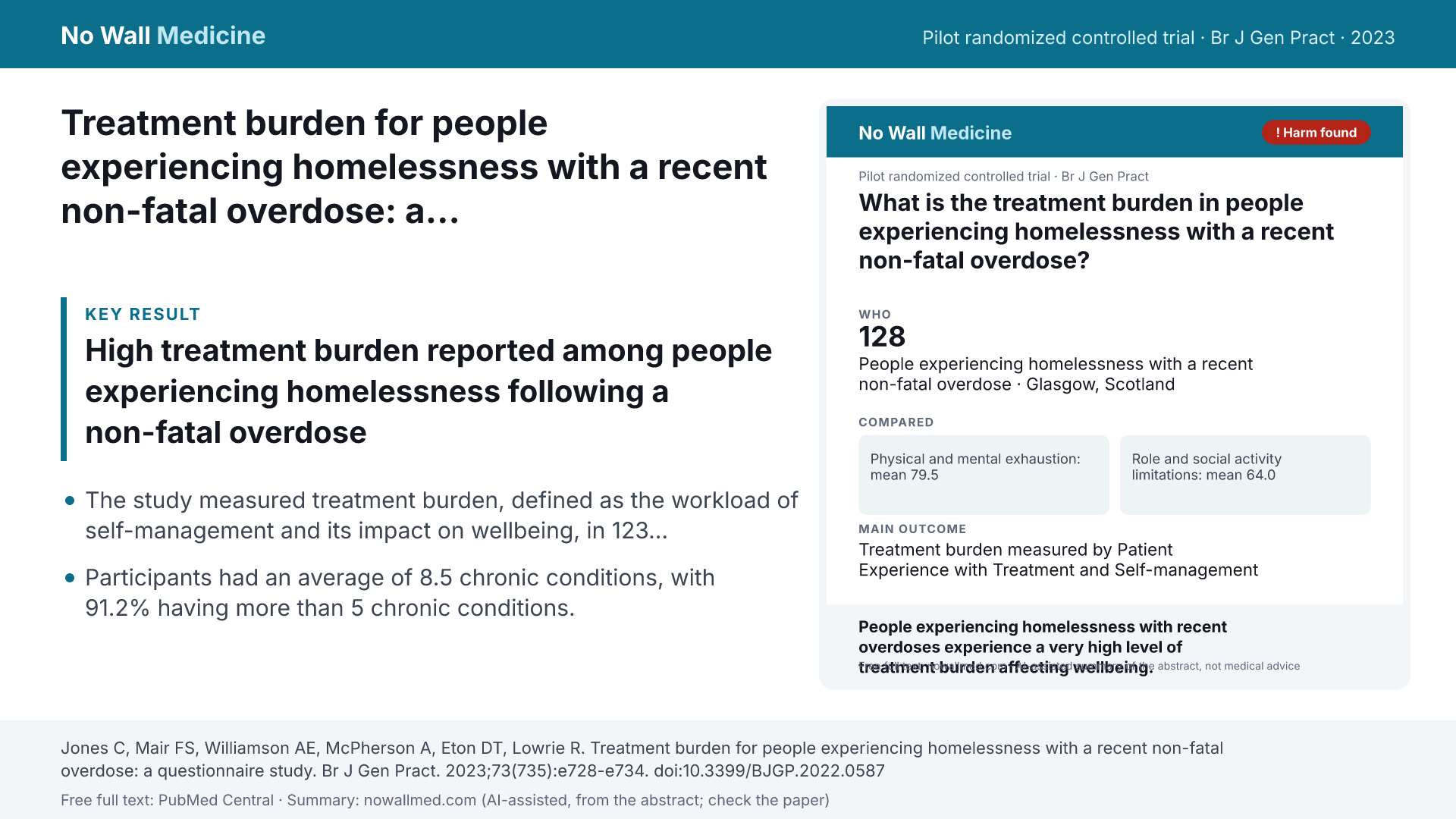
High treatment burden reported among people experiencing homelessness following a non-fatal overdose
Treatment burden for people experiencing homelessness with a recent non-fatal overdose: a questionnaire study
Pilot randomized controlled trialHarm found
What is the treatment burden in people experiencing homelessness with a recent non-fatal overdose?
Who
128
People experiencing homelessness with a recent non-fatal overdose · Glasgow, Scotland
Compared
Physical and mental exhaustion: mean 79.5
Role and social activity limitations: mean 64.0
Main outcome
Treatment burden measured by Patient Experience with Treatment and Self-management questionnaire
Bottom line: People experiencing homelessness with recent overdoses experience a very high level of treatment burden affecting wellbeing.
Br J Gen Pract · 2023-09-28Download image
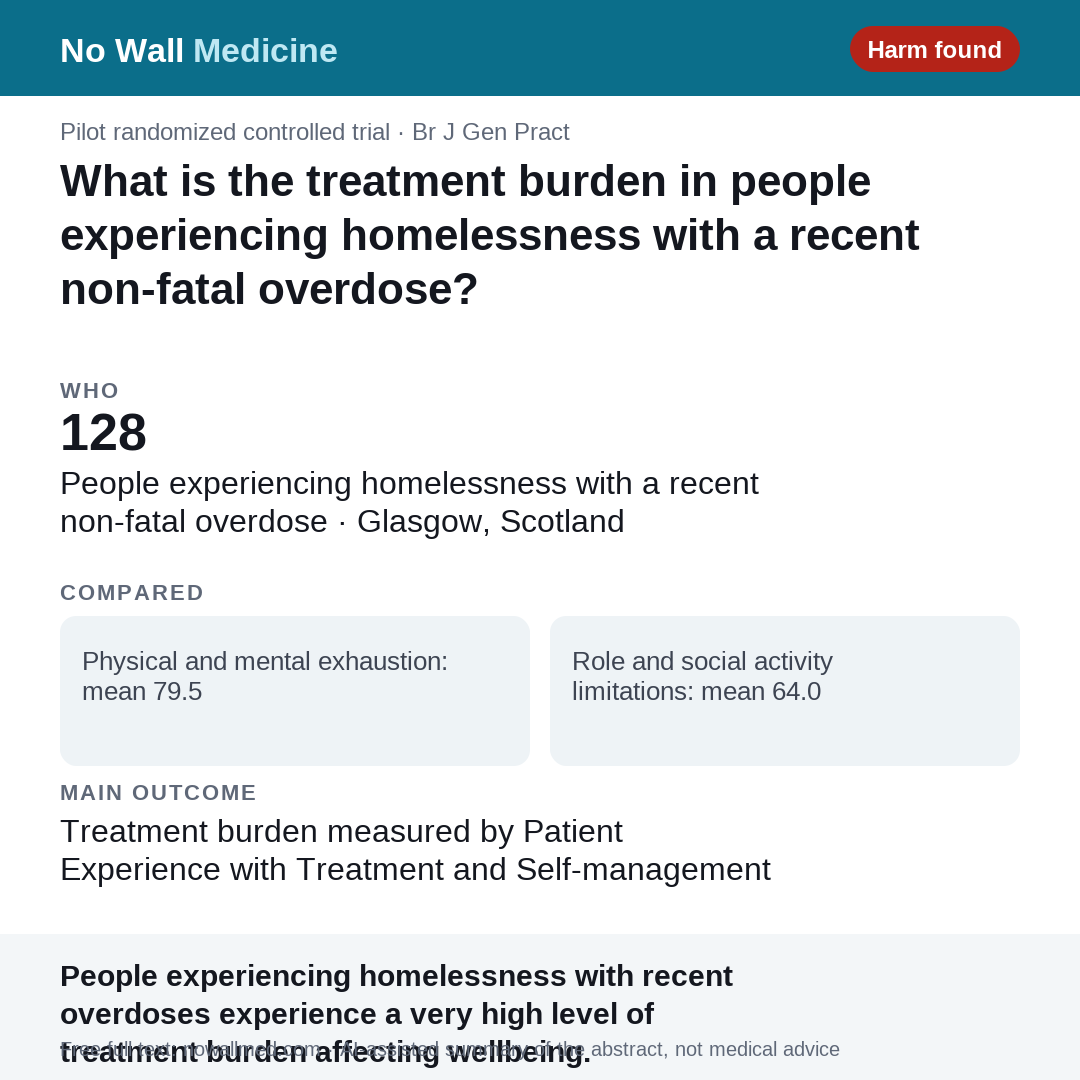
Clinical question: What is the treatment burden in people experiencing homelessness with a recent non-fatal overdose?
Why it matters: The workload of self-management and its impact on wellbeing remains unexplored for people experiencing homelessness with problem drug use and complex medical needs.
Key points
- The study measured treatment burden, defined as the workload of self-management and its impact on wellbeing, in 123 people experiencing homelessness who had a recent non-fatal overdose.
- Participants had an average of 8.5 chronic conditions, with 91.2% having more than 5 chronic conditions.
- Highest treatment burden scores were found in physical and mental exhaustion at a mean of 79.5 and role and social activity limitations at a mean of 64.0.
Headline and key points written with AI from the paper’s abstract, with every number checked against it. Read the paper before relying on them.
Was this summary helpful?
Subject terms
Cite this article
Jones C, Mair FS, Williamson AE, McPherson A, Eton DT, Lowrie R. Treatment burden for people experiencing homelessness with a recent non-fatal overdose: a questionnaire study. Br J Gen Pract. 2023. doi:10.3399/BJGP.2022.0587
Spotted a mistake? Suggest a correction
Top studies every Monday
The week’s key trials and guidelines in your specialties, plus any topics you follow. By email, free.
Get the weekly digest