Adding medications or doubling doses shows different results for treating allergic rhinitis symptoms
Treatment Dose Increase Versus Co-Medication in Allergic Rhinitis: Systematic Review With Dose-Response Network Meta-Analysis
Systematic review and network meta-analysisMixed results
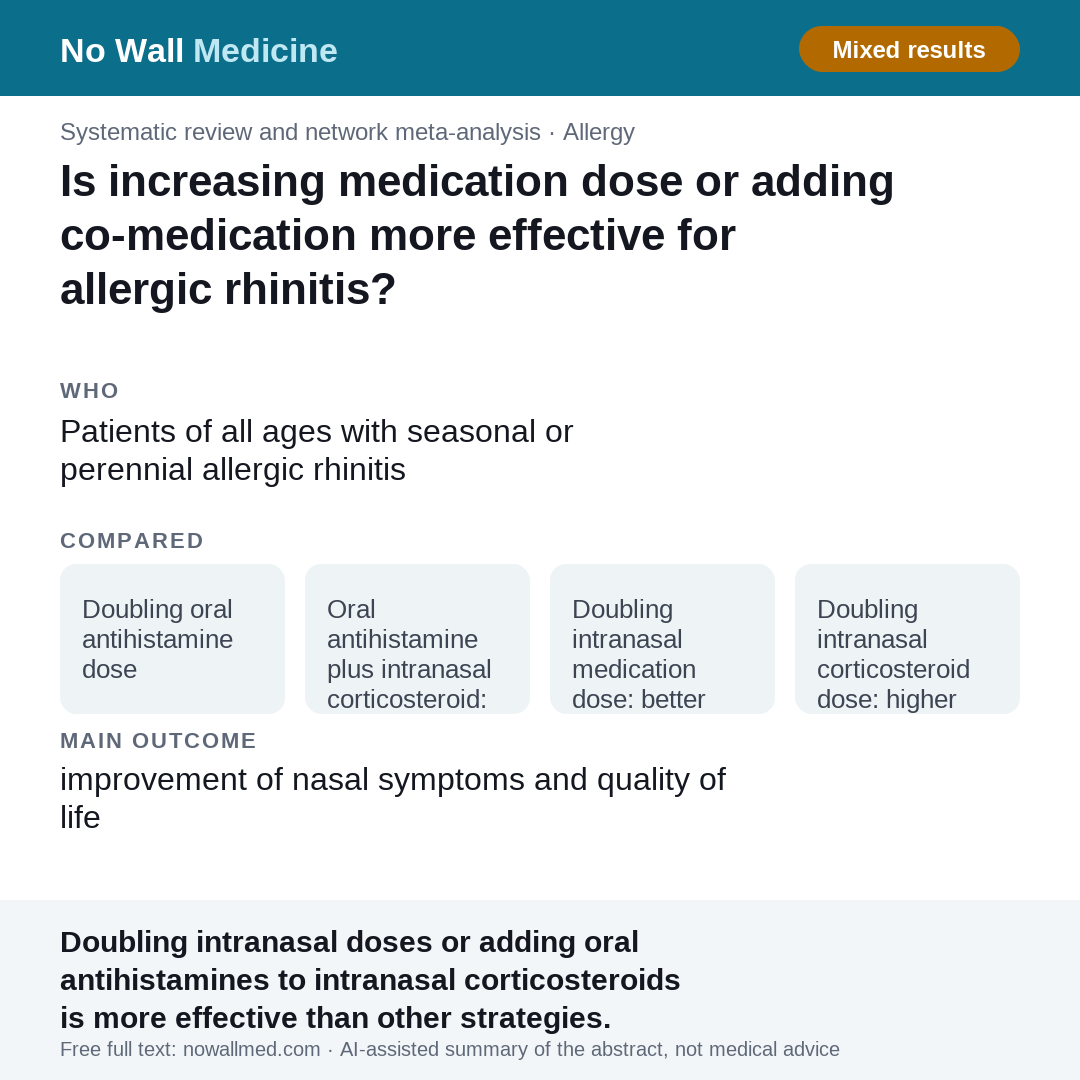
Is increasing medication dose or adding co-medication more effective for allergic rhinitis?
Who
Patients of all ages with seasonal or perennial allergic rhinitis
Compared
Doubling oral antihistamine dose
Oral antihistamine plus intranasal corticosteroid: higher improvements of nasal symptoms and quality of life
Doubling intranasal medication dose: better results than having intranasal medications plus oral antihistamines
Doubling intranasal corticosteroid dose: higher efficacy than adding intranasal antihistamines
Main outcome
improvement of nasal symptoms and quality of life
Bottom line: Doubling intranasal doses or adding oral antihistamines to intranasal corticosteroids is more effective than other strategies.
Allergy · 2026-05-01Download image
Clinical question: Is increasing medication dose or adding co-medication more effective for allergic rhinitis?
Why it matters: Patients with allergic rhinitis often need to increase their medication dose or add other treatments to achieve adequate symptom control.
Key points
- Researchers analyzed 262 studies to compare increasing medication doses versus adding a second medication for allergic rhinitis.
- Combining oral antihistamines with intranasal corticosteroids improved nasal symptoms more than doubling the dose of oral antihistamines.
- Doubling the dose of intranasal medications worked better than adding an oral antihistamine, and doubling intranasal corticosteroids was more effective than adding intranasal antihistamines.
Headline and key points written with AI from the paper’s abstract, with every number checked against it. Read the paper before relying on them.
Topics
Spotted a mistake? Suggest a correction