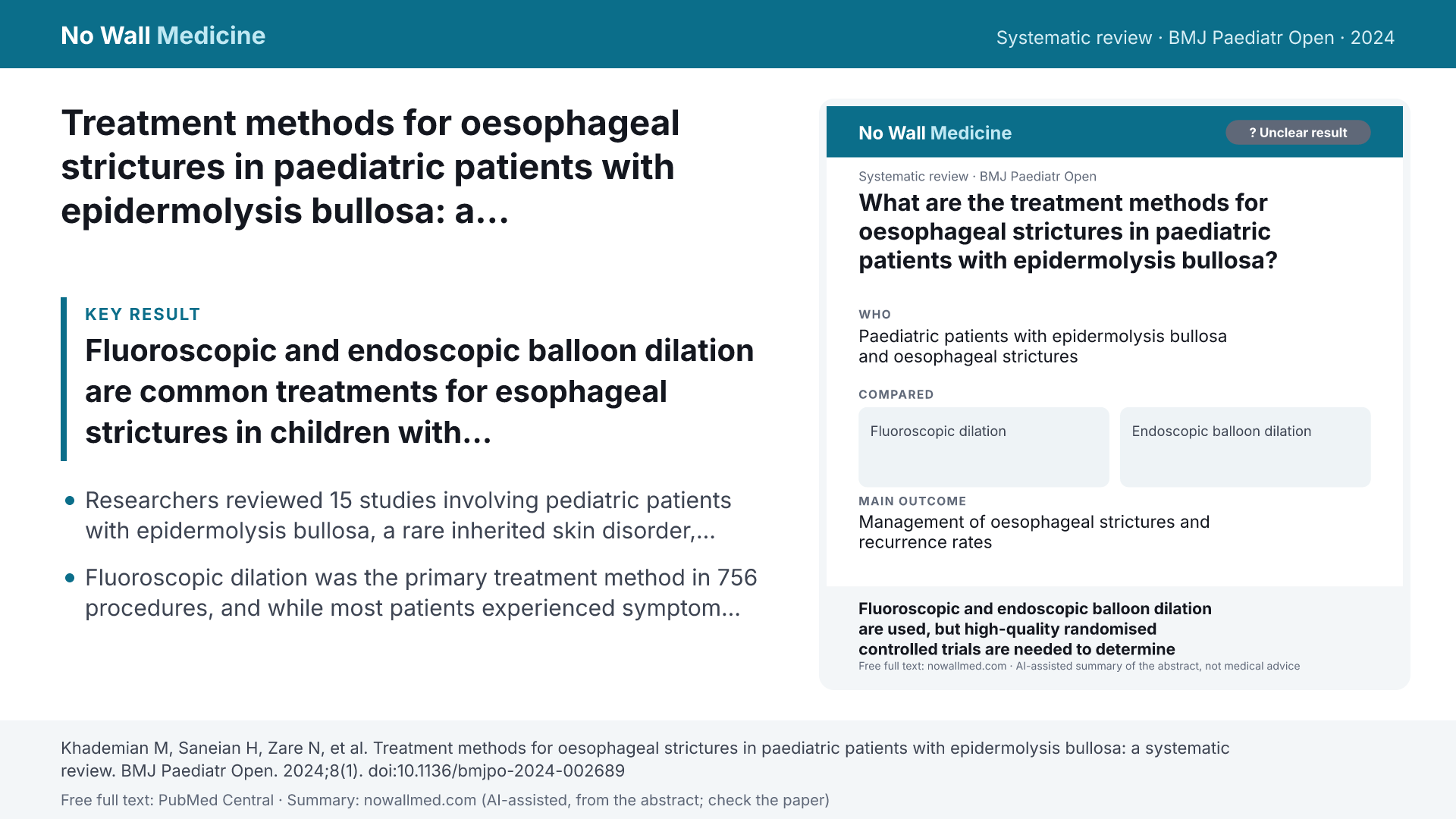
Fluoroscopic and endoscopic balloon dilation are common treatments for esophageal strictures in children with epidermolysis bullosa
Treatment methods for oesophageal strictures in paediatric patients with epidermolysis bullosa: a systematic review
Systematic reviewUnclear result
What are the treatment methods for oesophageal strictures in paediatric patients with epidermolysis bullosa?
Who
Paediatric patients with epidermolysis bullosa and oesophageal strictures
Compared
Fluoroscopic dilation
Endoscopic balloon dilation
Main outcome
Management of oesophageal strictures and recurrence rates
Bottom line: Fluoroscopic and endoscopic balloon dilation are used, but high-quality randomised controlled trials are needed to determine superiority.
Limitation: The current evidence is notably limited.
BMJ Paediatr Open · 2024-10-01 · Save PNG
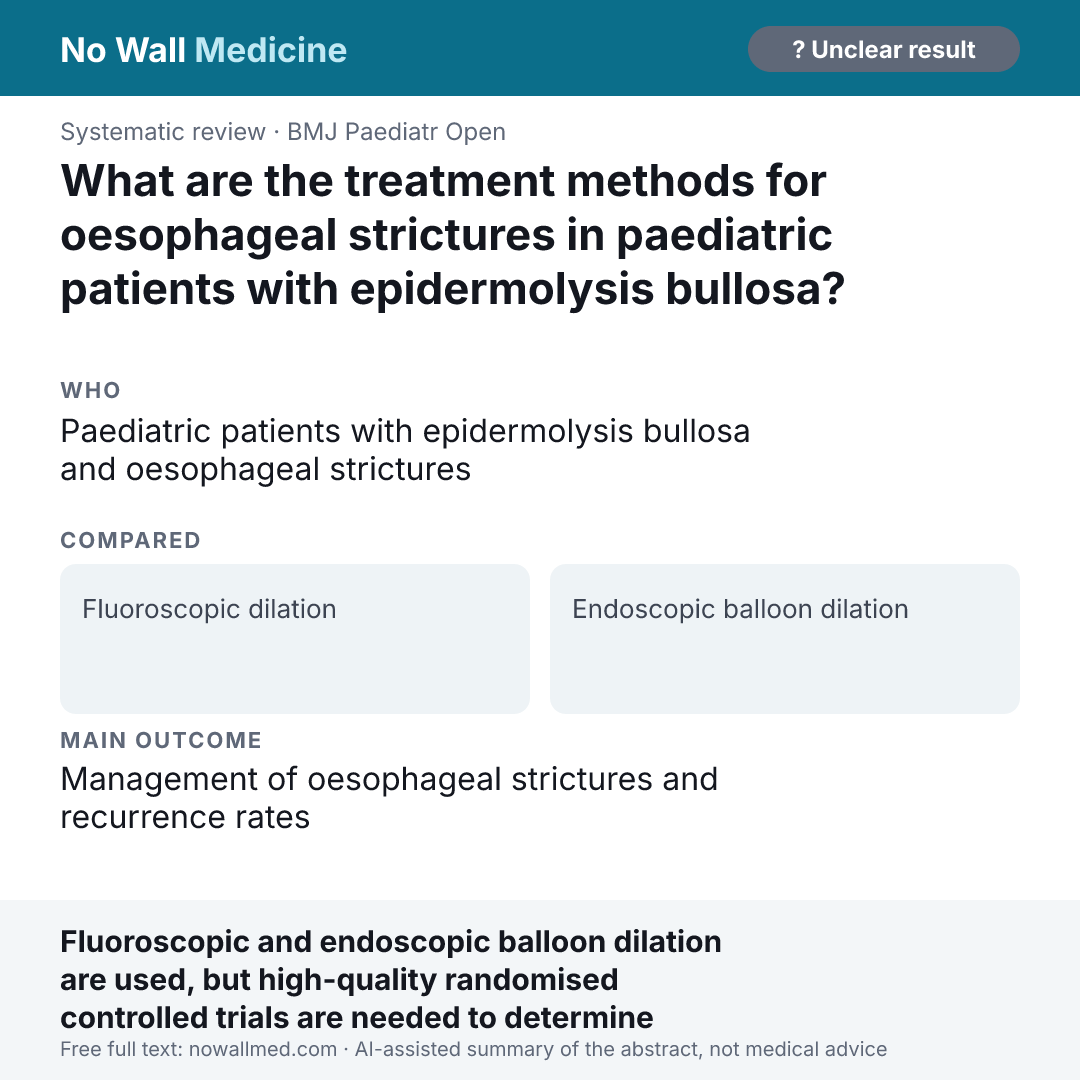
Clinical question: What are the treatment methods for oesophageal strictures in paediatric patients with epidermolysis bullosa?
Key points
- Researchers reviewed 15 studies involving pediatric patients with epidermolysis bullosa, a rare inherited skin disorder, to examine treatments for esophageal strictures.
- Fluoroscopic dilation was the primary treatment method in 756 procedures, and while most patients experienced symptom relief, recurrence rates varied from 12% to 83%.
- Complications like perforation, fever, and painful swallowing were relatively uncommon and were managed with conservative treatment.
Limitation the authors note: The current evidence is notably limited and high-quality randomized controlled trials are needed to determine if one technique is superior.
Headline and key points written with AI from the paper’s abstract, with every number checked against it. Read the paper before relying on them.
Was this summary helpful?
Abstract
Background
Epidermolysis bullosa (EB) is a collection of rare, inherited disorders that require treatment in specialised centres by multidisciplinary teams knowledgeable about the unique features and challenges of EB manifestations and complications.A major gastrointestinal complication in patients with EB is oesophageal strictures. Effective management of oesophageal strictures can significantly improve patients' quality of life. This study systematically reviews the current literature on treatment options for oesophageal strictures in paediatric patients with EB. Methods
In September 2023, we conducted a systematic search for articles on the treatment of oesophageal stricture in patients with EB. We searched PubMed, Scopus, Embase and Ovid database without language or publication date restrictions. We screened 1042 articles, 15 of them were included in the current review. We extracted the following data from these studies: patient demographics, stricture characteristics, procedural details, clinical outcomes, complications and recurrences. Results
Overall, in the reviewed papers, strictures were located mostly in cervical oesophagus followed by thoracic lesions. Moreover, in most of the cases only a single stricture was reported, but multiple strictures were not uncommon. Stricture treatment approaches included medical management, bougienage, as well as fluoroscopic and endoscopic balloon dilation or a combination of these methods. In most studies, fluoroscopic dilation was used as the primary treatment method in 756 procedures. They commonly used general anaesthesia for the procedure, only one study used sedation. Hospital stays were usually brief, with an average duration of 1 day, and in one study patients were discharged after just 4 hours. Most patients experienced symptom relief, could resume oral intake and gained weight soon after the procedure. However, recurrence rates had large variations from 12% to 83%. Studies reported median recurrence intervals ranging from 7 to 18 months. This review showed that complications such as perforation, fever and odynophagia were relatively uncommon, and were controlled by conservative treatment. Conclusions
Both fluoroscopic and endoscopic balloon dilation are widely used methods for the management of oesophageal strictures in patients with EB. Each technique presents its own set of advantages and potential complications. Although the current evidence is notably limited, practical clinical decision-making may favour the fluoroscopic technique over endoscopic balloon dilation due to a comparatively reduced risk of procedural trauma. To ascertain the most effective approach, high-quality randomised controlled trials are imperative to delineate the superiority of one technique over the other.
Abstract reproduced under the article’s CC BY NC licence.
Subject terms
Headline, design, result, key points, caveat and citation as plain text.
Cite this article
Khademian M, Saneian H, Zare N, et al. Treatment methods for oesophageal strictures in paediatric patients with epidermolysis bullosa: a systematic review. BMJ Paediatr Open. 2024;8(1). doi:10.1136/bmjpo-2024-002689
Spotted a mistake? Suggest a correction