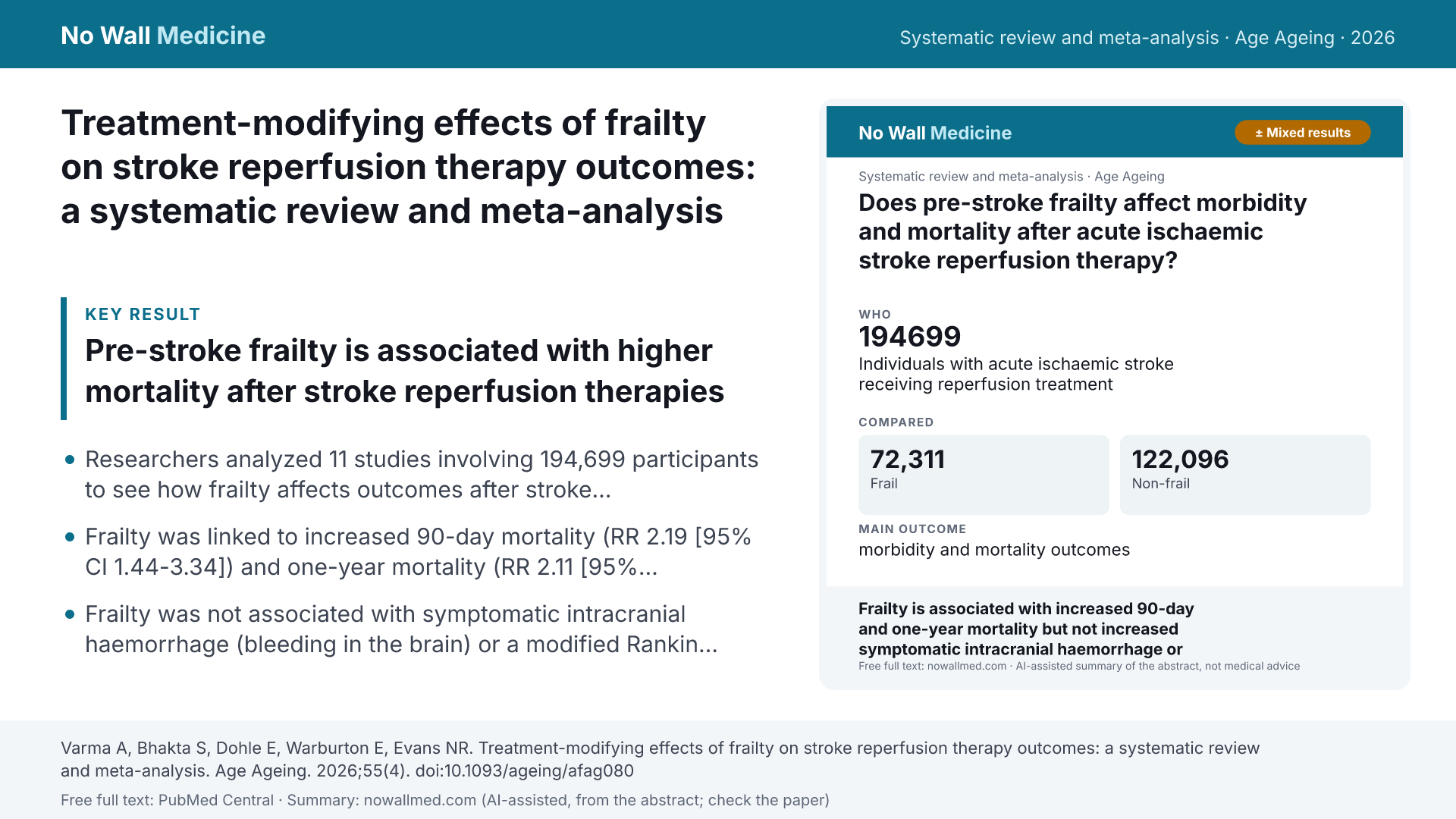
Pre-stroke frailty is associated with higher mortality after stroke reperfusion therapies
Treatment-modifying effects of frailty on stroke reperfusion therapy outcomes: a systematic review and meta-analysis
Systematic review and meta-analysisMixed results
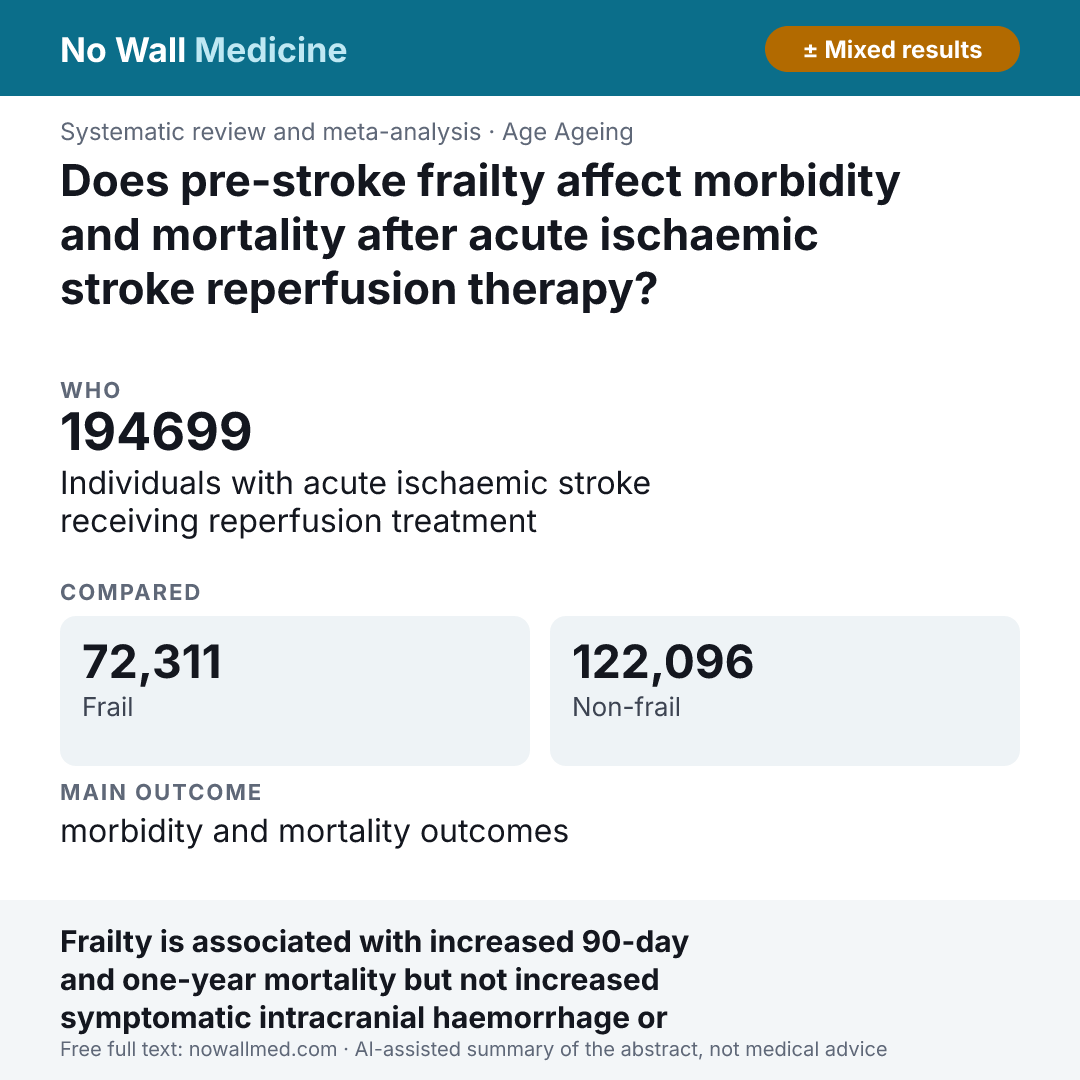
Does pre-stroke frailty affect morbidity and mortality after acute ischaemic stroke reperfusion therapy?
Who
194699
Individuals with acute ischaemic stroke receiving reperfusion treatment
Compared
72,311Frail
122,096Non-frail
Main outcome
morbidity and mortality outcomes
Result: 90-day mortality RR 2.19 (95% CI 1.44-3.34)
Bottom line: Frailty is associated with increased 90-day and one-year mortality but not increased symptomatic intracranial haemorrhage or disability.
Limitation: Some study heterogeneity and the need for large multi-centre prospective trials.
Age Ageing · 2026-04-12 · Save PNG
Clinical question: Does pre-stroke frailty affect morbidity and mortality after acute ischaemic stroke reperfusion therapy?
Why it matters: Existing studies investigating whether frailty modifies the effects of stroke reperfusion therapies have frequently been limited by small sample sizes.
Key points
- Researchers analyzed 11 studies involving 194,699 participants to see how frailty affects outcomes after stroke reperfusion treatments like clot removal or clot-dissolving medication.
- Frailty was linked to increased 90-day mortality (RR 2.19 [95% CI 1.44-3.34]) and one-year mortality (RR 2.11 [95% CI 1.6-2.78]).
- Frailty was not associated with symptomatic intracranial haemorrhage (bleeding in the brain) or a modified Rankin score 3-5, which measures post-stroke disability.
Limitation the authors note: The authors noted some study heterogeneity and highlighted the need for large multi-centre prospective trials.
Headline and key points written with AI from the paper’s abstract, with every number checked against it. Read the paper before relying on them.
Was this summary helpful?
Subject terms
Headline, design, result, key points, caveat and citation as plain text.
Cite this article
Varma A, Bhakta S, Dohle E, Warburton E, Evans NR. Treatment-modifying effects of frailty on stroke reperfusion therapy outcomes: a systematic review and meta-analysis. Age Ageing. 2026;55(4). doi:10.1093/ageing/afag080
Spotted a mistake? Suggest a correction