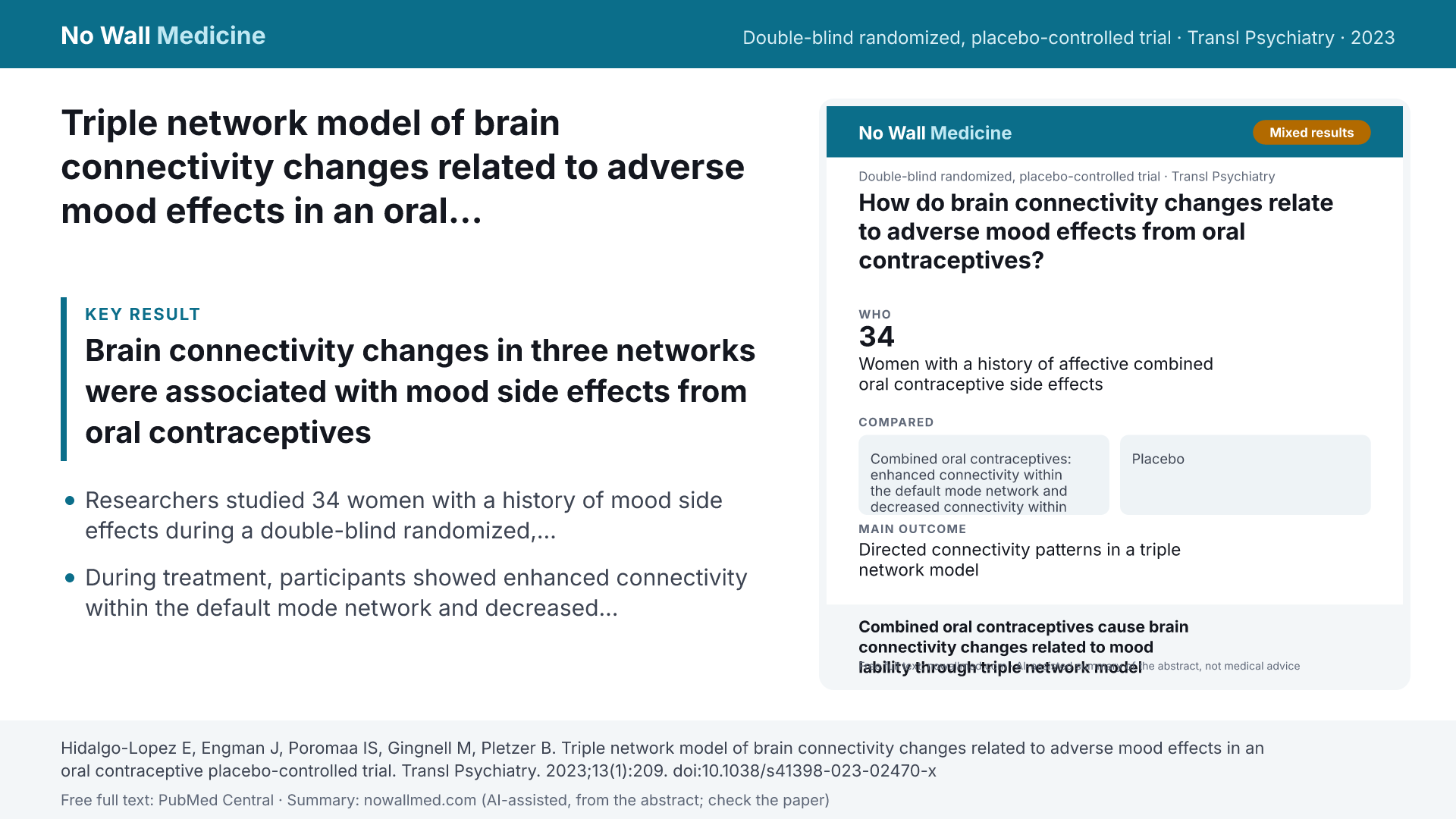
Brain connectivity changes in three networks were associated with mood side effects from oral contraceptives
Triple network model of brain connectivity changes related to adverse mood effects in an oral contraceptive placebo-controlled trial
Double-blind randomized, placebo-controlled trialMixed results
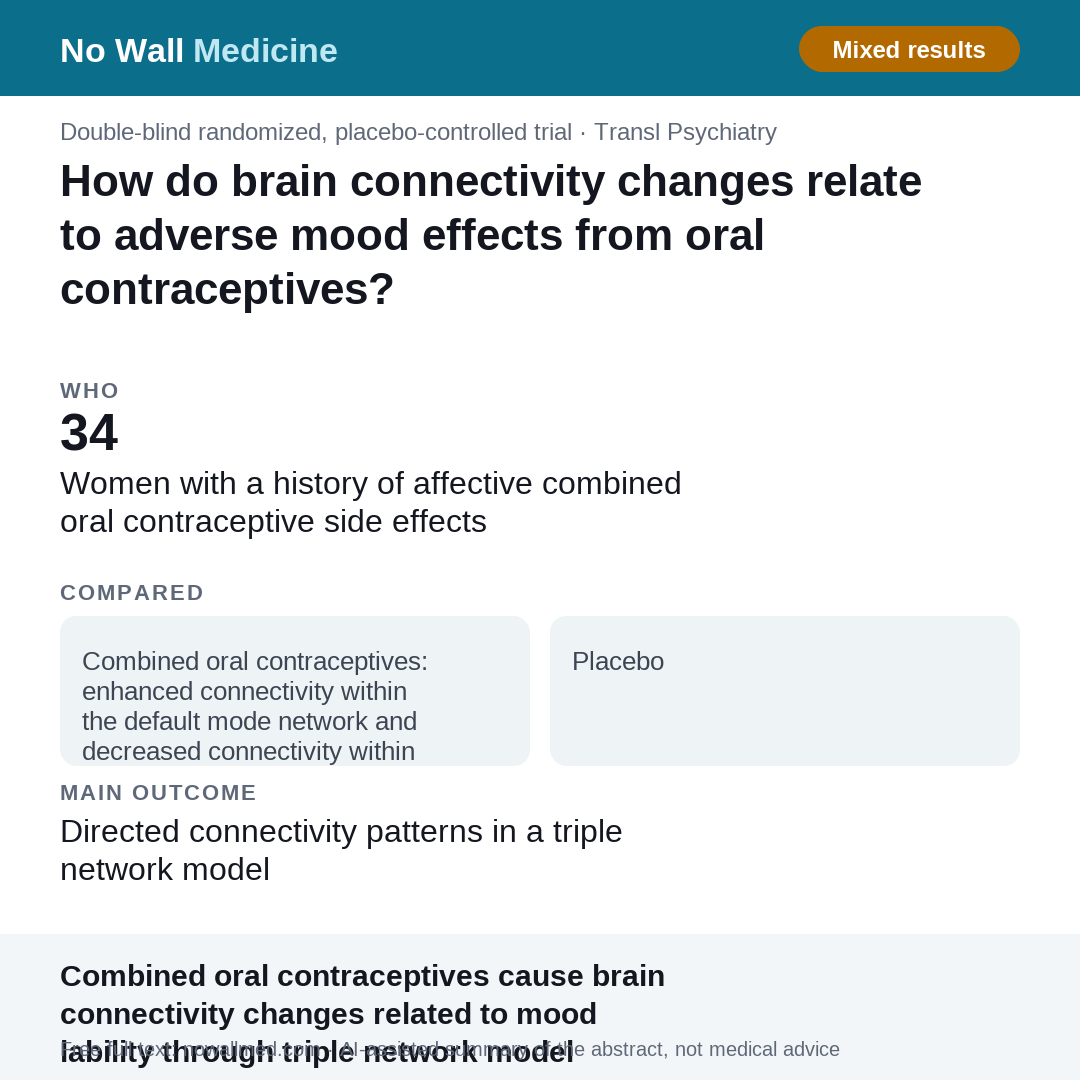
How do brain connectivity changes relate to adverse mood effects from oral contraceptives?
Who
34
Women with a history of affective combined oral contraceptive side effects
Compared
Combined oral contraceptives: enhanced connectivity within the default mode network and decreased connectivity within the executive control network
Placebo
Main outcome
Directed connectivity patterns in a triple network model
Bottom line: Combined oral contraceptives cause brain connectivity changes related to mood lability through triple network model alterations.
Transl Psychiatry · 2023-06-16Download image
Clinical question: How do brain connectivity changes relate to adverse mood effects from oral contraceptives?
Why it matters: The specific brain connectivity patterns that relate to adverse mood side effects from combined oral contraceptives are unknown.
Key points
- Researchers studied 34 women with a history of mood side effects during a double-blind randomized, placebo-controlled trial of an androgenic combined oral contraceptive.
- During treatment, participants showed enhanced connectivity within the default mode network and decreased connectivity within the executive control network.
- Mood lability was the most prominent side effect and was most consistently related to changes in brain connectivity patterns.
Headline and key points written with AI from the paper’s abstract, with every number checked against it. Read the paper before relying on them.
Was this summary helpful?
Subject terms
Cite this article
Hidalgo-Lopez E, Engman J, Poromaa IS, Gingnell M, Pletzer B. Triple network model of brain connectivity changes related to adverse mood effects in an oral contraceptive placebo-controlled trial. Transl Psychiatry. 2023. doi:10.1038/s41398-023-02470-x
Spotted a mistake? Suggest a correction
Top studies every Monday
The week’s key trials and guidelines in your specialties, plus any topics you follow. By email, free.
Get the weekly digest