Meta-analysis quantifies the prevalence and types of disabilities linked to tuberculosis
Tuberculosis related disability: a systematic review and meta-analysis
Systematic review and meta-analysisMixed results
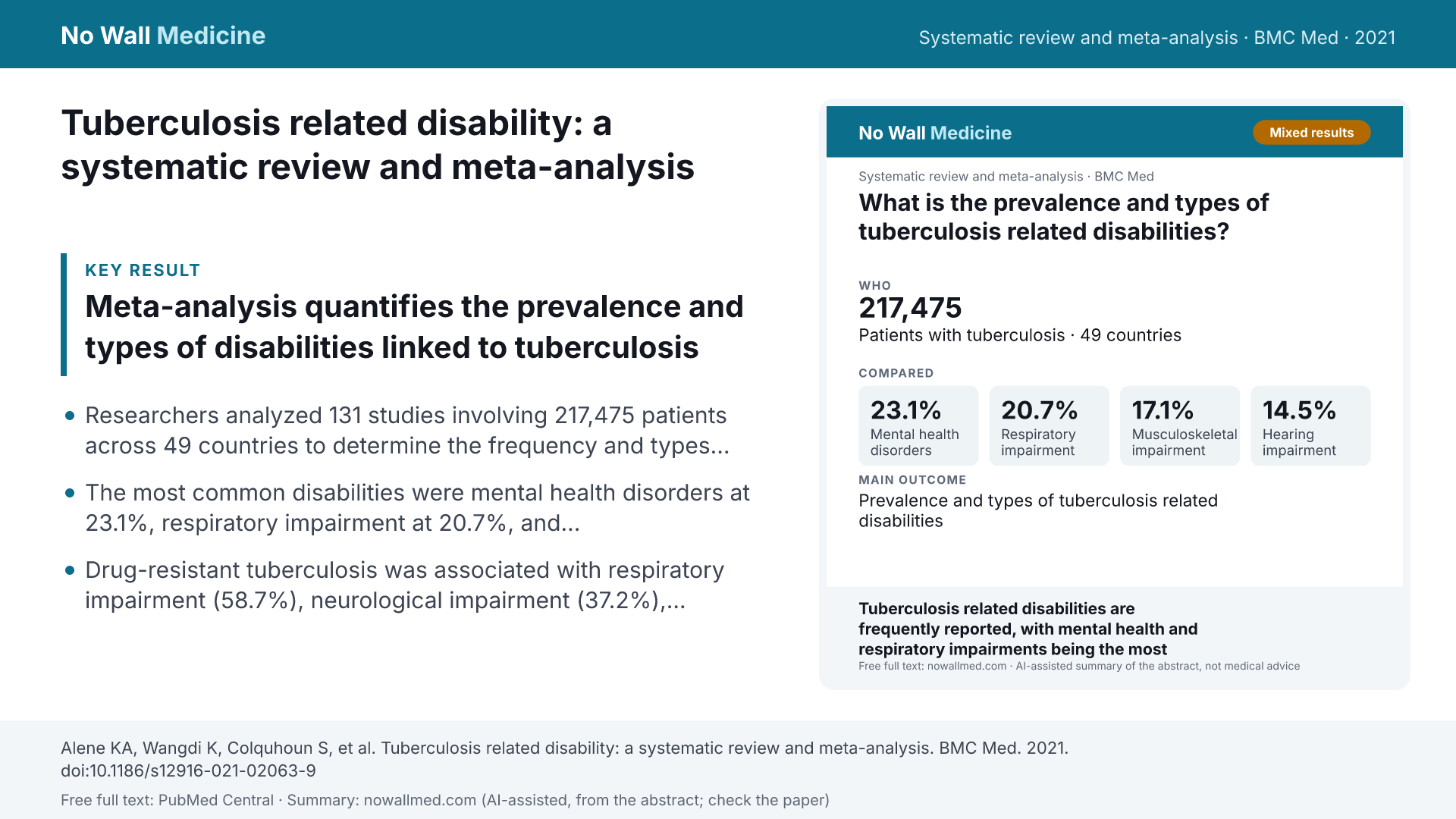
What is the prevalence and types of tuberculosis related disabilities?
Who
217,475
Patients with tuberculosis · 49 countries
Compared
23.1%Mental health disorders
20.7%Respiratory impairment
17.1%Musculoskeletal impairment
14.5%Hearing impairment
Main outcome
Prevalence and types of tuberculosis related disabilities
Bottom line: Tuberculosis related disabilities are frequently reported, with mental health and respiratory impairments being the most common types.
BMC Med · 2021-09-09Download image

Clinical question: What is the prevalence and types of tuberculosis related disabilities?
Why it matters: The specific prevalence and types of disabilities caused by tuberculosis have not been fully quantified.
Key points
- Researchers analyzed 131 studies involving 217,475 patients across 49 countries to determine the frequency and types of tuberculosis-related disabilities.
- The most common disabilities were mental health disorders at 23.1%, respiratory impairment at 20.7%, and musculoskeletal impairment at 17.1%.
- Drug-resistant tuberculosis was associated with respiratory impairment (58.7%), neurological impairment (37.2%), hearing impairment (25.0%), and mental health disorders (26.0%).
Headline and key points written with AI from the paper’s abstract, with every number checked against it. Read the paper before relying on them.
Was this summary helpful?
Subject terms
Cite this article
Alene KA, Wangdi K, Colquhoun S, Chani K, Islam T, Rahevar K. Tuberculosis related disability: a systematic review and meta-analysis. BMC Med. 2021. doi:10.1186/s12916-021-02063-9
Spotted a mistake? Suggest a correction
Top studies every Monday
The week’s key trials and guidelines in your specialties, plus any topics you follow. By email, free.
Get the weekly digest