Systemic therapy for skin diseases is linked to 4.3% latent tuberculosis conversion rate
Tuberculosis-Related Outcomes in Dermatologic Patients Receiving Systemic Therapy: A Systematic Review and Meta-Analysis
Systematic review and meta-analysisMixed results
What are the tuberculosis-related risks in dermatologic patients receiving systemic therapy?
Who
15005
Dermatologic patients receiving systemic therapy
Compared
4.3%Latent tuberculosis infection conversion
1.0%Active tuberculosis
Main outcome
Incidence of latent tuberculosis infection conversion and active tuberculosis
Bottom line: Tuberculosis risk varies by biologic mechanism and regional tuberculosis burden in patients receiving systemic dermatologic therapy.
JAMA Dermatol · 2026-07-15Download image
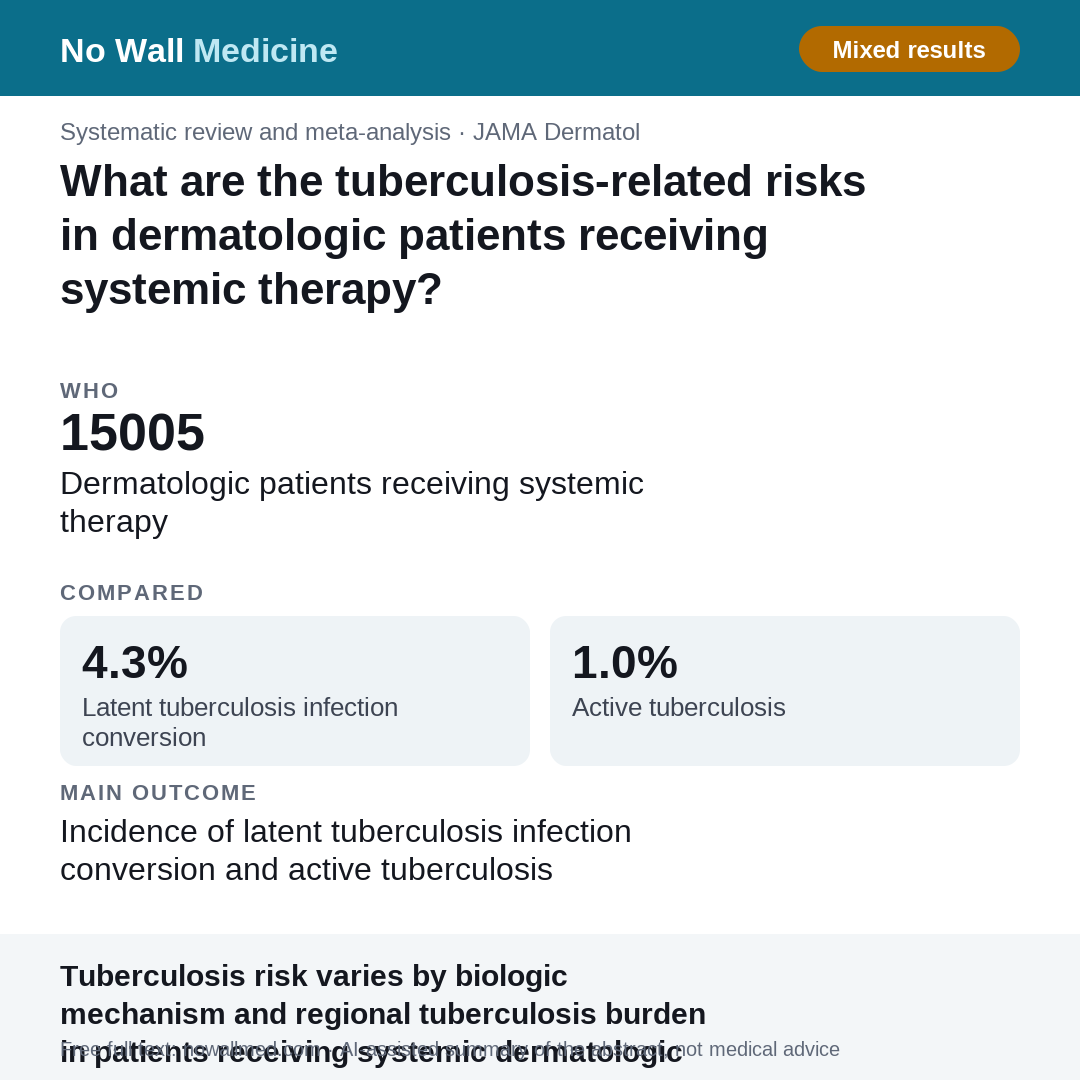
Clinical question: What are the tuberculosis-related risks in dermatologic patients receiving systemic therapy?
Why it matters: Previous research has shown inconsistent results across different biologic drug classes and has provided limited data on latent tuberculosis infection conversion.
Key points
- Researchers analyzed 31 studies involving 15,005 patients receiving systemic therapy for immune-mediated skin diseases.
- The pooled incidence of latent tuberculosis infection conversion was 4.3%, with the highest rates seen in patients using tumor necrosis factor inhibitors.
- The overall incidence of active tuberculosis was 1.0% and occurred more frequently in regions with a high tuberculosis burden.
Headline and key points written with AI from the paper’s abstract, with every number checked against it. Read the paper before relying on them.
Topics
Spotted a mistake? Suggest a correction