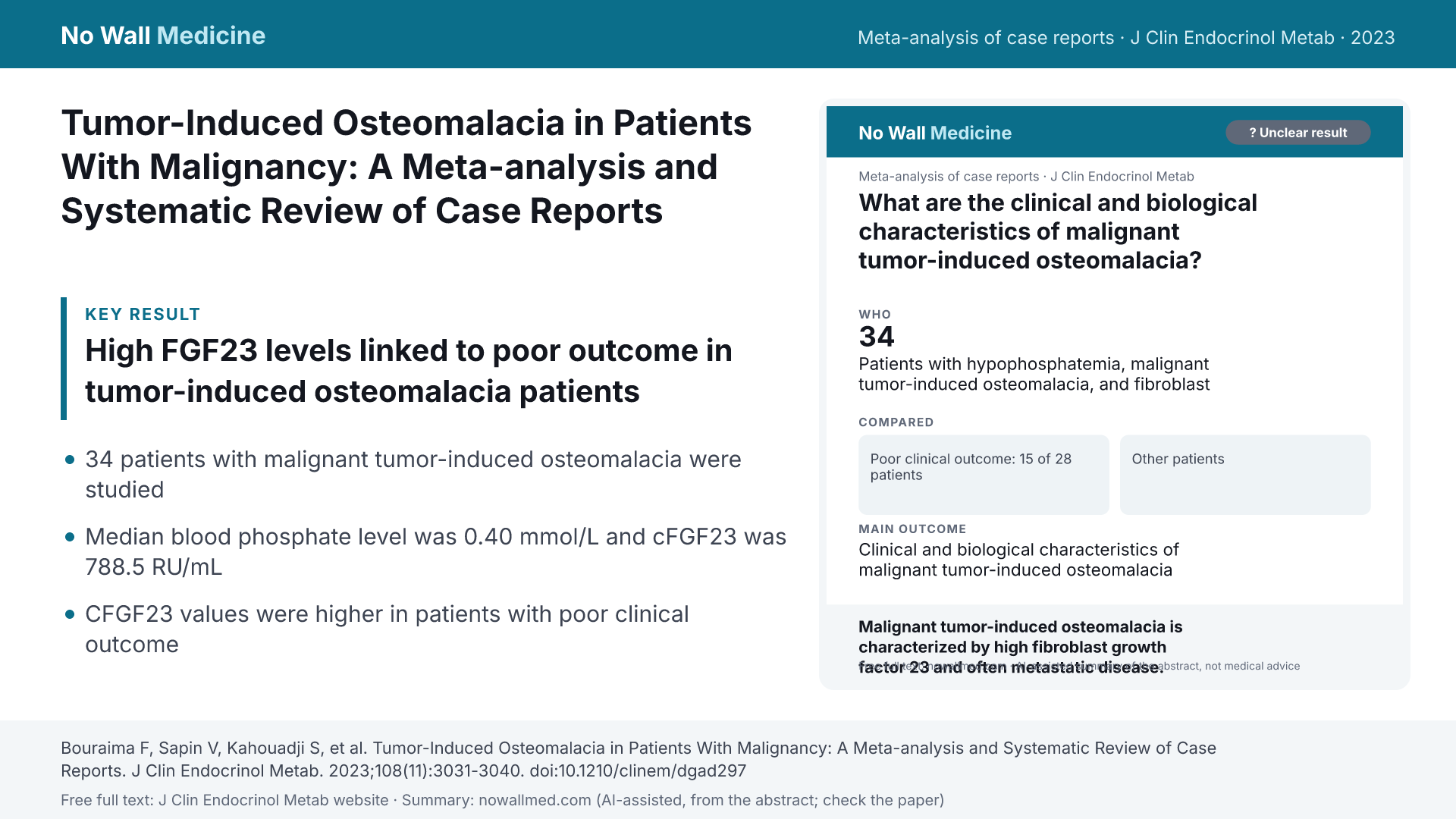
High FGF23 levels linked to poor outcome in tumor-induced osteomalacia patients
Tumor-Induced Osteomalacia in Patients With Malignancy: A Meta-analysis and Systematic Review of Case Reports
Meta-analysis of case reportsUnclear result
What are the clinical and biological characteristics of malignant tumor-induced osteomalacia?
Who
34
Patients with hypophosphatemia, malignant tumor-induced osteomalacia, and fibroblast growth factor 23 levels
Compared
Poor clinical outcome: 15 of 28 patients
Other patients
Main outcome
Clinical and biological characteristics of malignant tumor-induced osteomalacia
Bottom line: Malignant tumor-induced osteomalacia is characterized by high fibroblast growth factor 23 and often metastatic disease.
J Clin Endocrinol Metab · 2023-05-26Download image
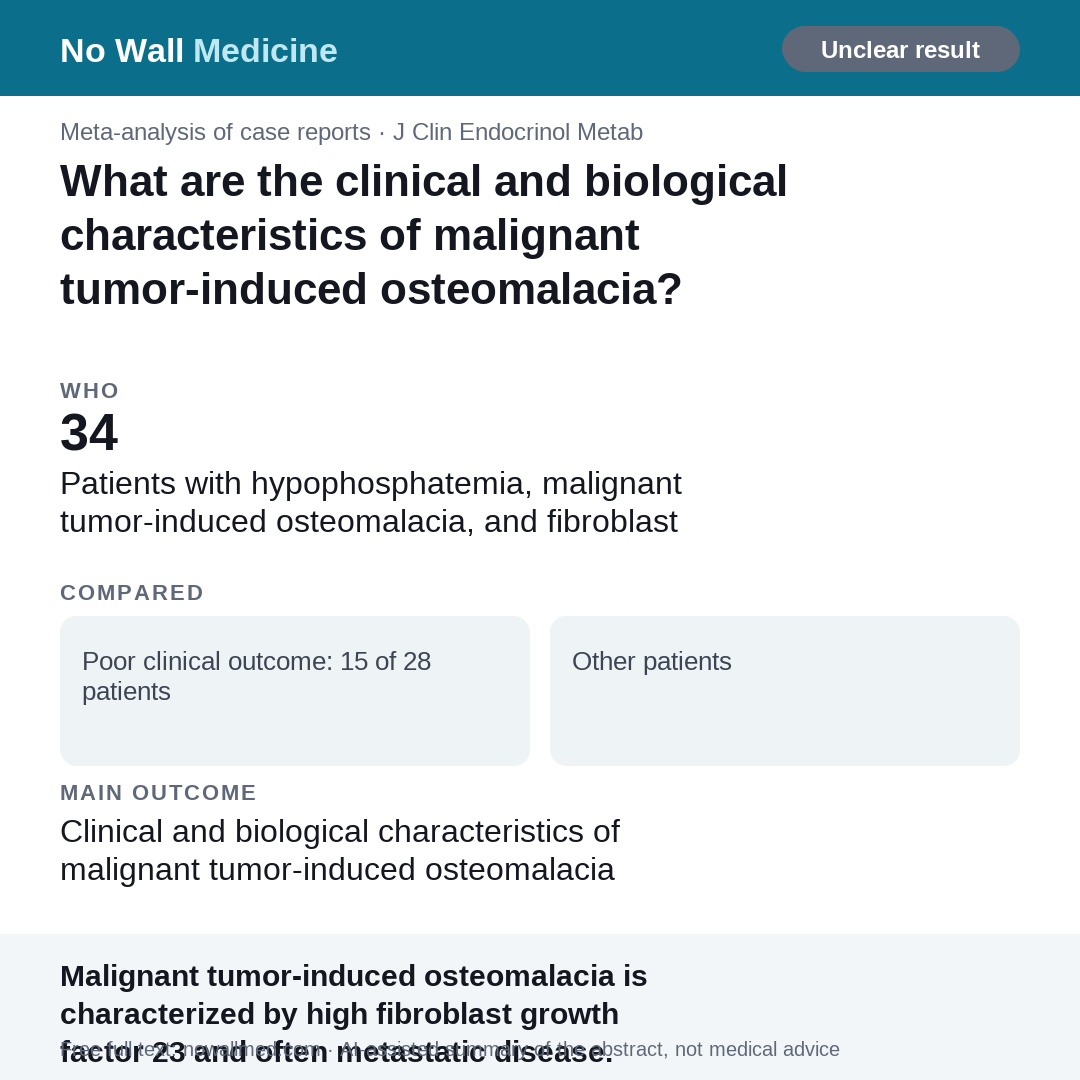
Clinical question: What are the clinical and biological characteristics of malignant tumor-induced osteomalacia?
Key points
- 34 patients with malignant tumor-induced osteomalacia were studied.
- Median blood phosphate level was 0.40 mmol/L and cFGF23 was 788.5 RU/mL.
- CFGF23 values were higher in patients with poor clinical outcome.
Headline and key points written with AI from the paper’s abstract, with every number checked against it. Read the paper before relying on them.
Was this summary helpful?
Subject terms
Headline, design, result, key points, caveat and citation as plain text.
Cite this article
Bouraima F, Sapin V, Kahouadji S, et al. Tumor-Induced Osteomalacia in Patients With Malignancy: A Meta-analysis and Systematic Review of Case Reports. J Clin Endocrinol Metab. 2023. doi:10.1210/clinem/dgad297
Spotted a mistake? Suggest a correction