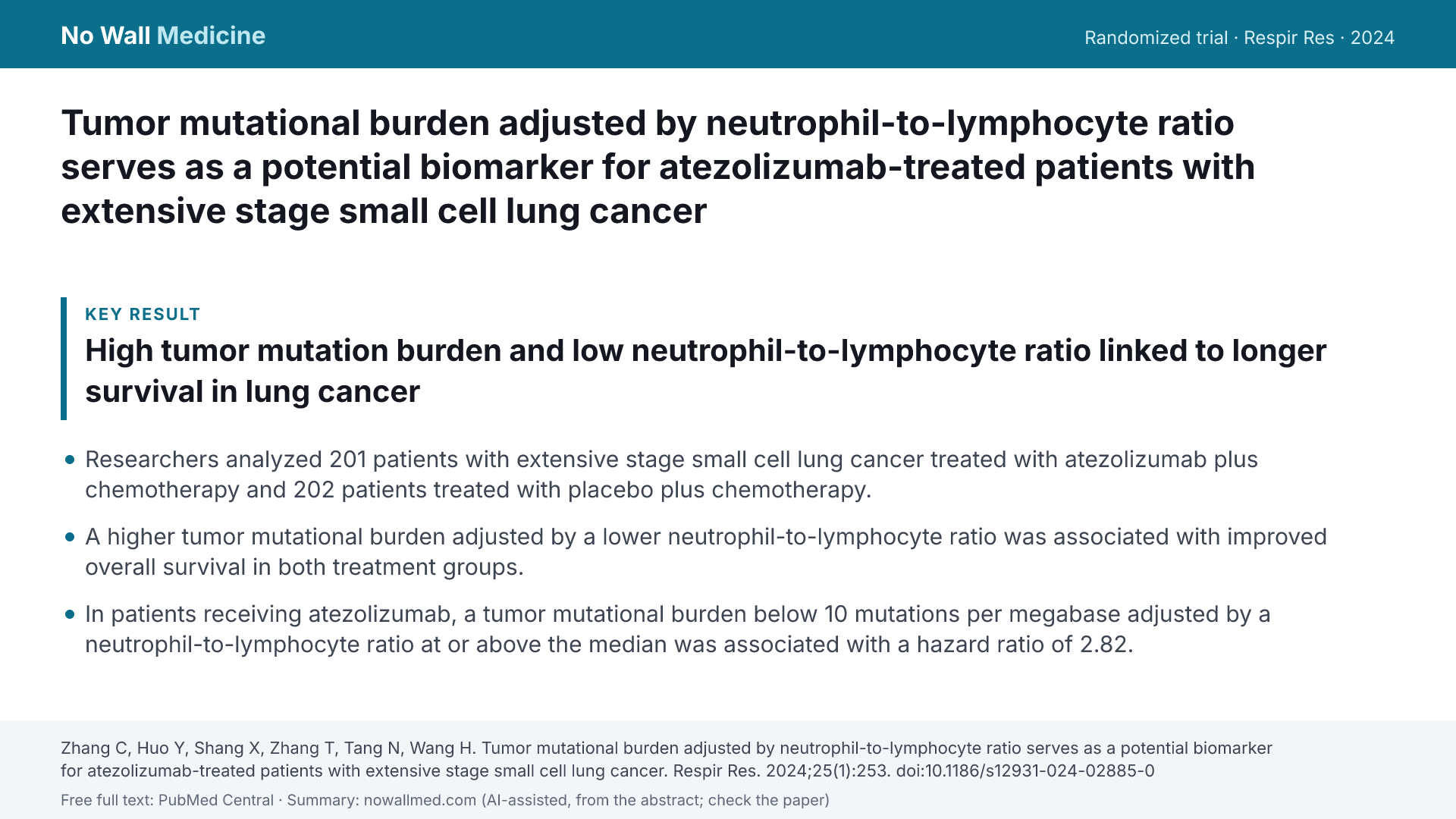
High tumor mutation burden and low neutrophil-to-lymphocyte ratio linked to longer survival in lung cancer
Tumor mutational burden adjusted by neutrophil-to-lymphocyte ratio serves as a potential biomarker for atezolizumab-treated patients with extensive stage small cell lung cancer
Why it matters: More accurate and efficient biomarkers are needed to predict how patients with small cell lung cancer respond to immune checkpoint inhibitors.
Key points
- Researchers analyzed 201 patients with extensive stage small cell lung cancer treated with atezolizumab plus chemotherapy and 202 patients treated with placebo plus chemotherapy.
- A higher tumor mutational burden adjusted by a lower neutrophil-to-lymphocyte ratio was associated with improved overall survival in both treatment groups.
- In patients receiving atezolizumab, a tumor mutational burden below 10 mutations per megabase adjusted by a neutrophil-to-lymphocyte ratio at or above the median was associated with a hazard ratio of 2.82.
Headline and key points written with AI from the paper’s abstract, with every number checked against it. Read the paper before relying on them.
Was this summary helpful?
Subject terms
Headline, design, result, key points, caveat and citation as plain text.
Cite this article
Zhang C, Huo Y, Shang X, Zhang T, Tang N, Wang H. Tumor mutational burden adjusted by neutrophil-to-lymphocyte ratio serves as a potential biomarker for atezolizumab-treated patients with extensive stage small cell lung cancer. Respir Res. 2024;25(1):253. doi:10.1186/s12931-024-02885-0
Spotted a mistake? Suggest a correction