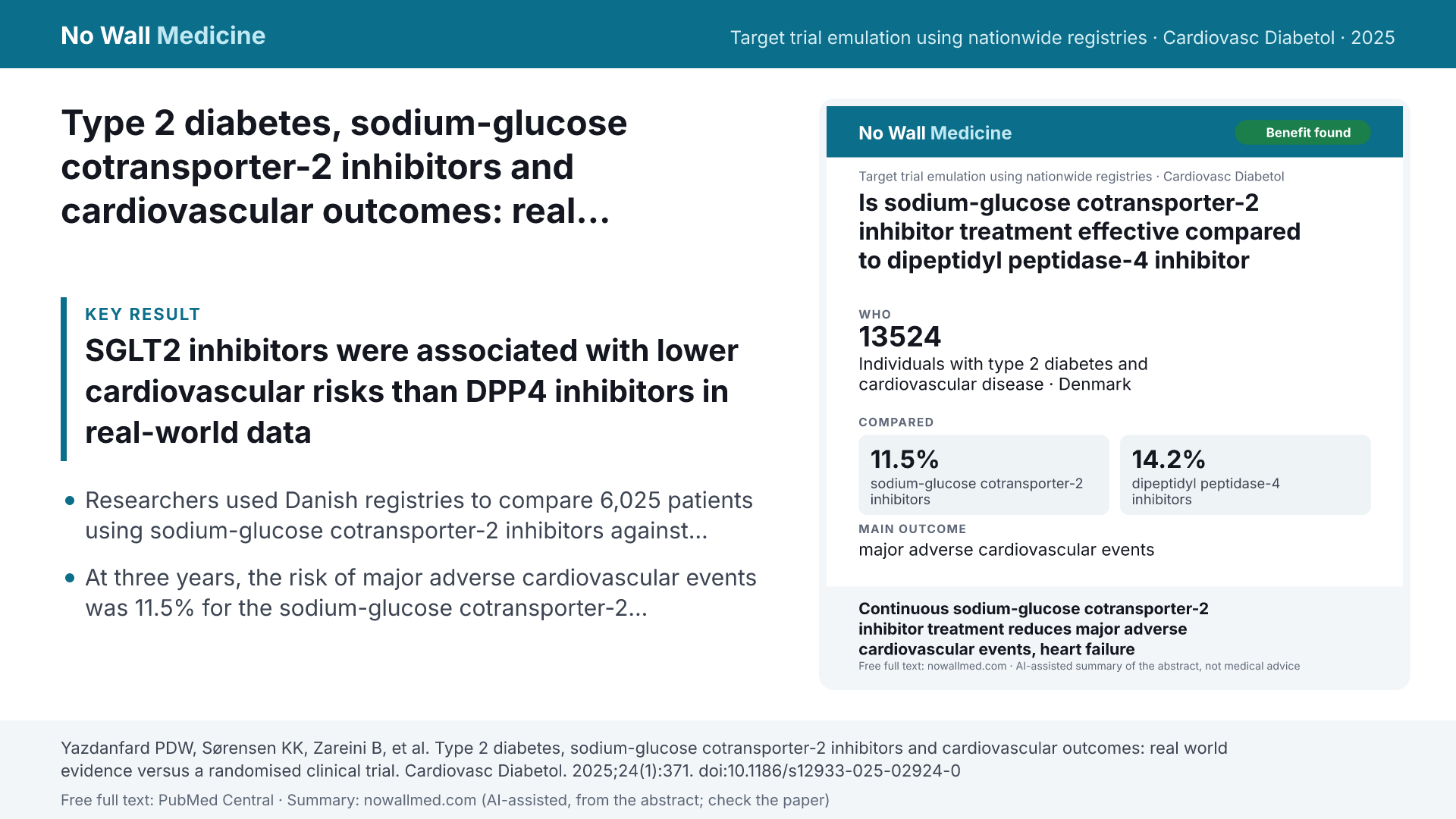
SGLT2 inhibitors were associated with lower cardiovascular risks than DPP4 inhibitors in real-world data
Type 2 diabetes, sodium-glucose cotransporter-2 inhibitors and cardiovascular outcomes: real world evidence versus a randomised clinical trial
Target trial emulation using nationwide registriesBenefit found
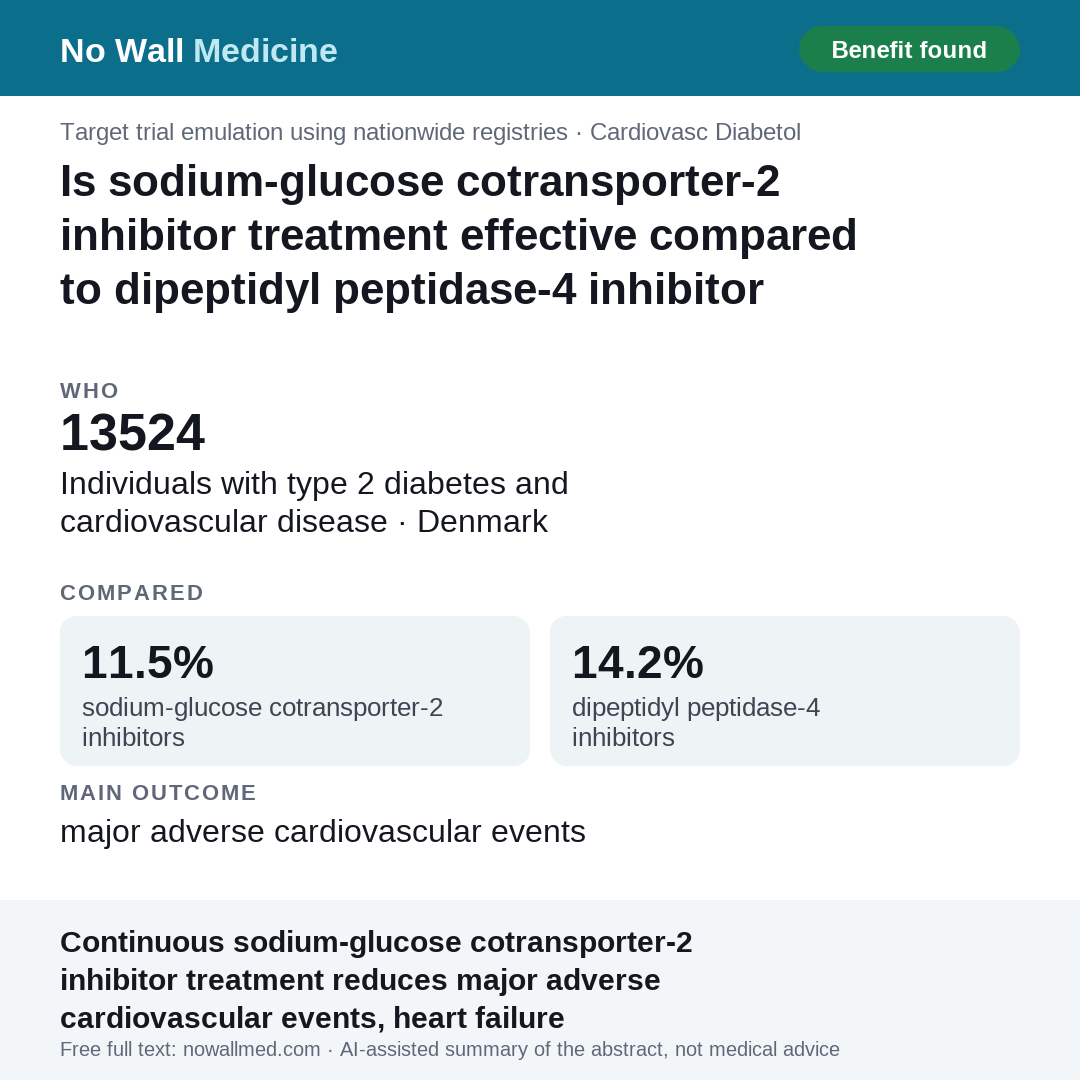
Is sodium-glucose cotransporter-2 inhibitor treatment effective compared to dipeptidyl peptidase-4 inhibitor treatment?
Who
13524
Individuals with type 2 diabetes and cardiovascular disease · Denmark
Compared
11.5%sodium-glucose cotransporter-2 inhibitors
14.2%dipeptidyl peptidase-4 inhibitors
Main outcome
major adverse cardiovascular events
Result: risk-difference: 2.8 percentage-points, 95% CI: 1.1-4.4%
Bottom line: Continuous sodium-glucose cotransporter-2 inhibitor treatment reduces major adverse cardiovascular events, heart failure hospitalizations, and mortality in real-world practice.
Cardiovasc Diabetol · 2025-09-30Download image
Clinical question: Is sodium-glucose cotransporter-2 inhibitor treatment effective compared to dipeptidyl peptidase-4 inhibitor treatment?
Why it matters: The controlled nature and selected populations of randomized clinical trials may limit how well their results apply to general real-world medical practice.
Key points
- Researchers used Danish registries to compare 6,025 patients using sodium-glucose cotransporter-2 inhibitors against 7,499 patients using dipeptidyl peptidase-4 inhibitors.
- At three years, the risk of major adverse cardiovascular events was 11.5% for the sodium-glucose cotransporter-2 inhibitor group versus 14.2% for the dipeptidyl peptidase-4 inhibitor group.
- Sodium-glucose cotransporter-2 inhibitor use was associated with a 5.1 percentage-point lower risk of heart failure hospitalizations and a 2.4 percentage-point lower risk of stroke.
Headline and key points written with AI from the paper’s abstract, with every number checked against it. Read the paper before relying on them.
Was this summary helpful?
Subject terms
Cite this article
Yazdanfard PDW, Sørensen KK, Zareini B, et al. Type 2 diabetes, sodium-glucose cotransporter-2 inhibitors and cardiovascular outcomes: real world evidence versus a randomised clinical trial. Cardiovasc Diabetol. 2025. doi:10.1186/s12933-025-02924-0
Spotted a mistake? Suggest a correction