Ultra-lung-protective ventilation did not reduce inflammation biomarkers in patients on life support
Ultra-lung-protective ventilation and biotrauma in severe ARDS patients on veno-venous extracorporeal membrane oxygenation: a randomized controlled study
Prospective randomized controlled studyNo clear difference
Does ultra-lung-protective ventilation reduce biotrauma in severe ARDS patients on veno-venous extracorporeal membrane oxygenation?
Who
39
Severe acute respiratory distress syndrome patients on veno-venous extracorporeal membrane oxygenation
Compared
Ultra-lung-protective ventilation: None of the concentrations of the pre-specified biomarkers differed
Lung-protective ventilation control: None of the concentrations of the pre-specified biomarkers differed
Main outcome
Alveolar and blood concentrations of inflammation and injury biomarkers
Bottom line: Ultra-lung-protective ventilation did not reduce biotrauma despite reducing mechanical power in severe ARDS patients.
Limitation: Enrollment was stopped for futility after the inclusion of 39 patients.
Crit Care · 2022-12-12Download image
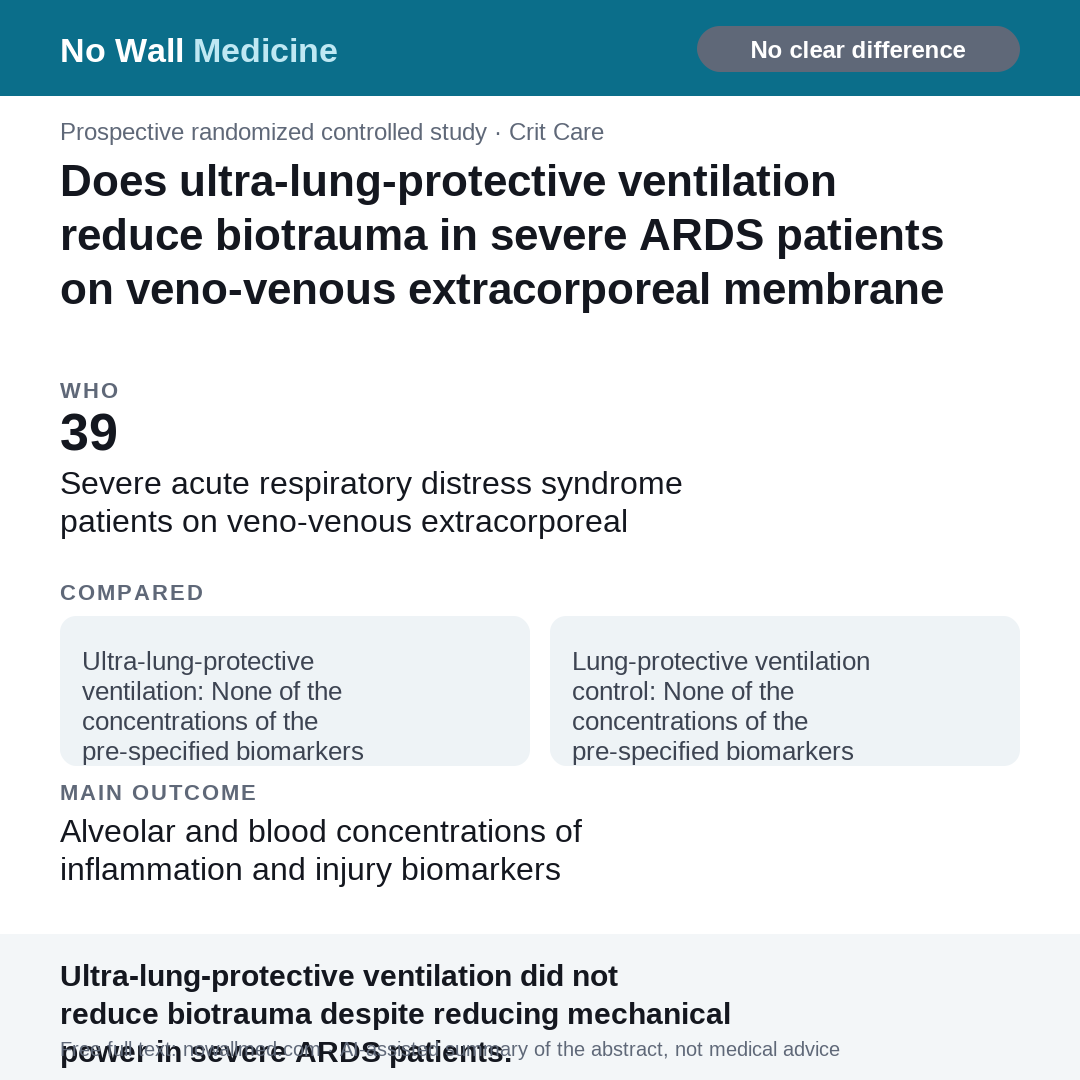
Clinical question: Does ultra-lung-protective ventilation reduce biotrauma in severe ARDS patients on veno-venous extracorporeal membrane oxygenation?
Why it matters: It is unknown if using extremely low ventilator settings during veno-venous extracorporeal membrane oxygenation can minimize lung injury and inflammation.
Key points
- Researchers randomized 39 patients with severe acute respiratory distress syndrome on veno-venous extracorporeal membrane oxygenation (a machine that assists breathing and circulation) to two different ventilator strategies.
- The ultra-lung-protective group had significantly lower tidal volume, respiratory rate, minute ventilation, plateau pressure, and mechanical power compared to the control group.
- No differences were found in the concentrations of pre-specified biomarkers of inflammation and injury, though a trend toward higher 60-day mortality was observed in the ultra-lung-protective group (45% vs 17%, p = 0.06).
Headline and key points written with AI from the paper’s abstract, with every number checked against it. Read the paper before relying on them.
Was this summary helpful?
Subject terms
Cite this article
Guervilly C, Fournier T, Chommeloux J, Arnaud L, Pinglis C, Baumstarck K. Ultra-lung-protective ventilation and biotrauma in severe ARDS patients on veno-venous extracorporeal membrane oxygenation: a randomized controlled study. Crit Care. 2022. doi:10.1186/s13054-022-04272-x
Spotted a mistake? Suggest a correction
Top studies every Monday
The week’s key trials and guidelines in your specialties, plus any topics you follow. By email, free.
Get the weekly digest