Ultrasound elastography methods show good reliability and moderate ability to distinguish back muscle disorders
Ultrasound elastography of back muscle biomechanical properties: a systematic review and meta-analysis of current methods
Systematic review and meta-analysisKey finding
How reliable, valid, and responsive are ultrasound elastography methods for back muscle biomechanics?
Who
3178
Patients with musculoskeletal disorders and controls
Compared
Strain imaging: pICC > 0.70
Shear wave imaging: pICC > 0.70
Vibration sonoelastography
Main outcome
Reliability, validity, and responsiveness of elastography methods
Bottom line: Ultrasound elastography reliably quantifies back muscle biomechanics and moderately discriminates musculoskeletal disorders from control conditions.
Insights Imaging · 2024-08-14 · Save PNG
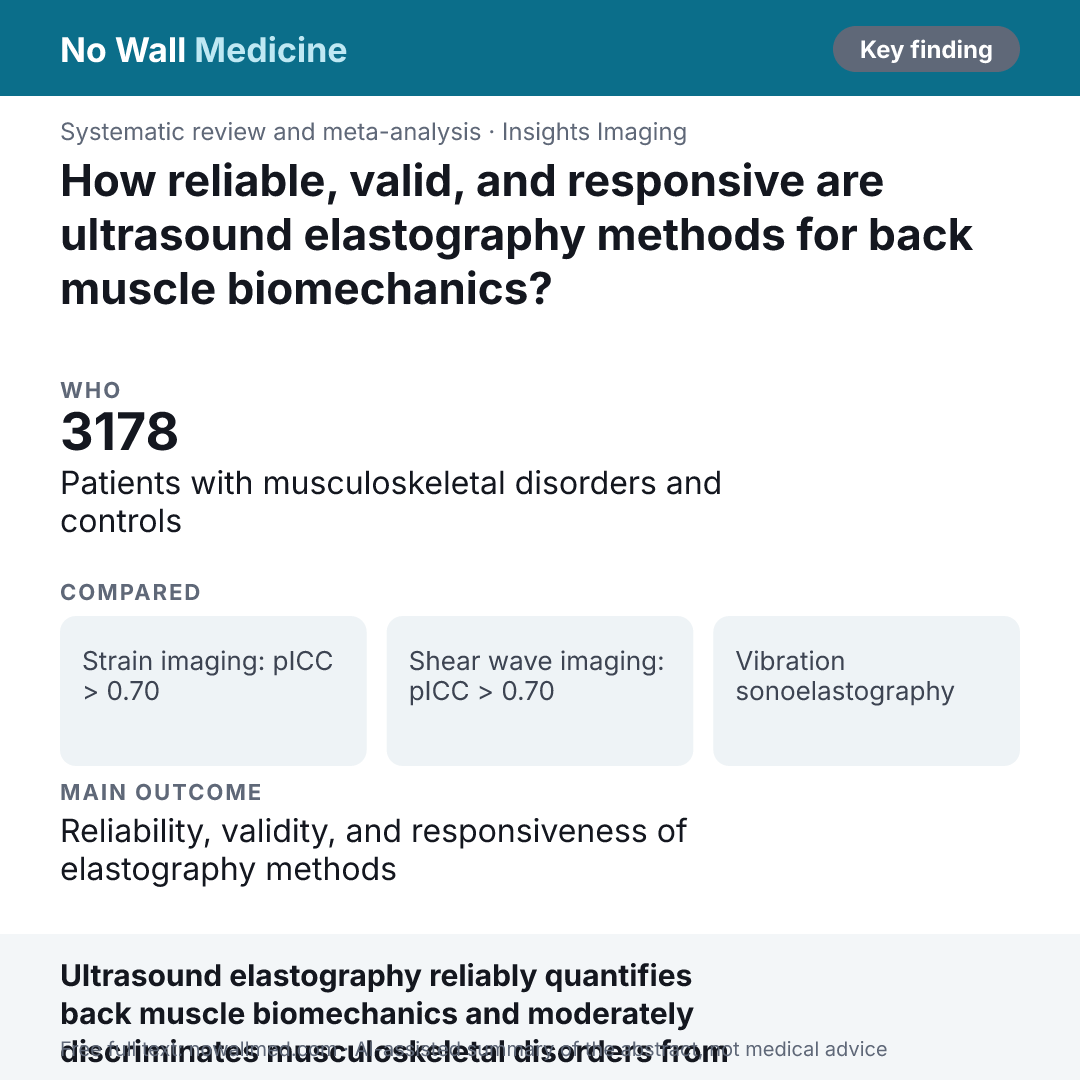
Clinical question: How reliable, valid, and responsive are ultrasound elastography methods for back muscle biomechanics?
Key points
- Researchers analyzed 79 studies involving 3178 participants to evaluate three ultrasound elastography methods for measuring back muscle properties.
- Strain imaging and shear wave imaging, a method using sound waves to measure stiffness, showed good reliability and a medium standardized mean difference of 0.58 and 0.60 to distinguish patients from controls.
- Shear wave imaging showed a very high standardized mean difference of 1.24 for detecting changes within a group over time.
Limitation the authors note: High heterogeneity, where the studies varied significantly from one another, limits the meta-analytic results.
Headline and key points written with AI from the paper’s abstract, with every number checked against it. Read the paper before relying on them.
Was this summary helpful?
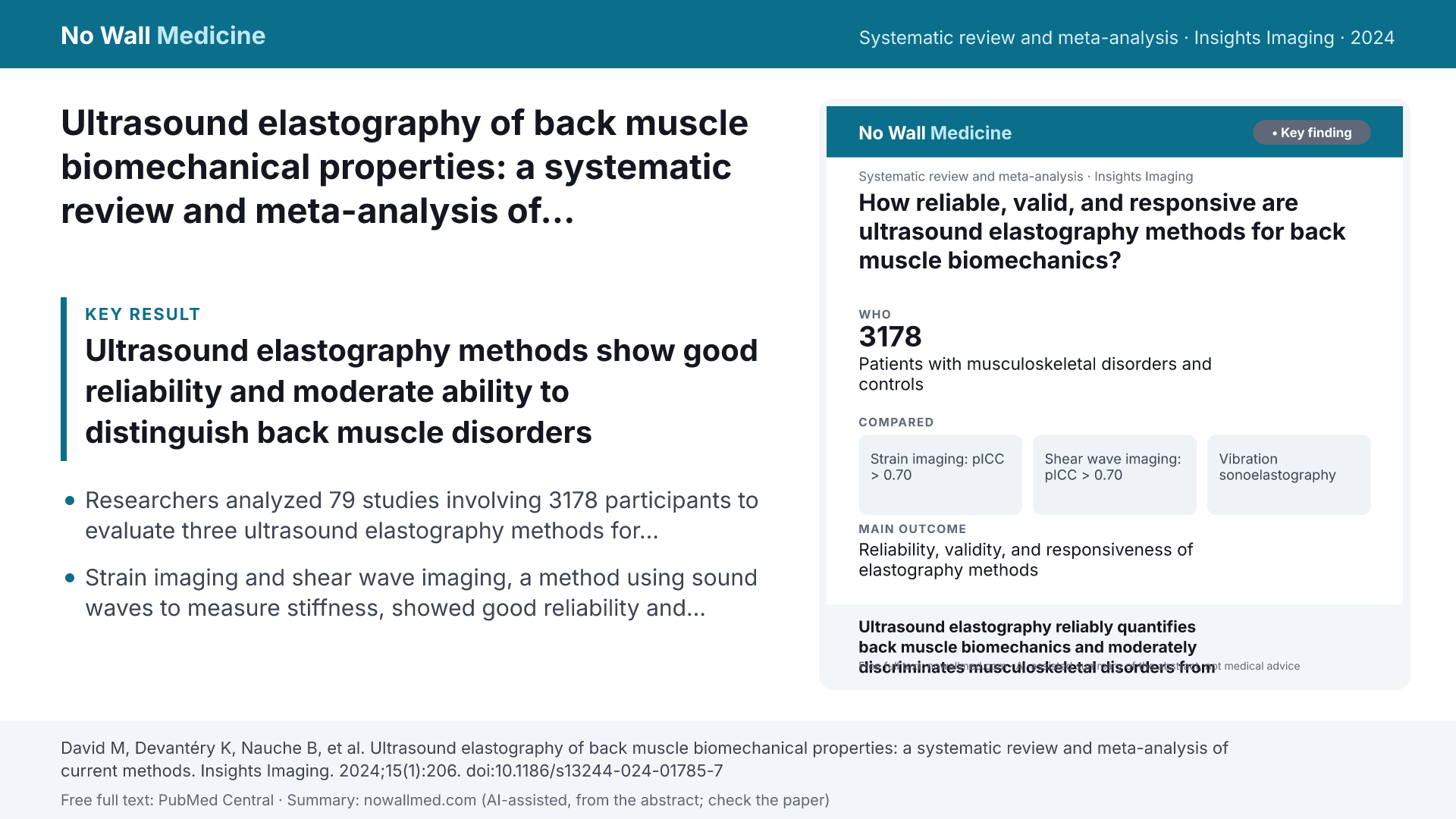
Headline, design, result, key points, caveat and citation as plain text.
Cite this article
David M, Devantéry K, Nauche B, et al. Ultrasound elastography of back muscle biomechanical properties: a systematic review and meta-analysis of current methods. Insights Imaging. 2024;15(1):206. doi:10.1186/s13244-024-01785-7
Spotted a mistake? Suggest a correction