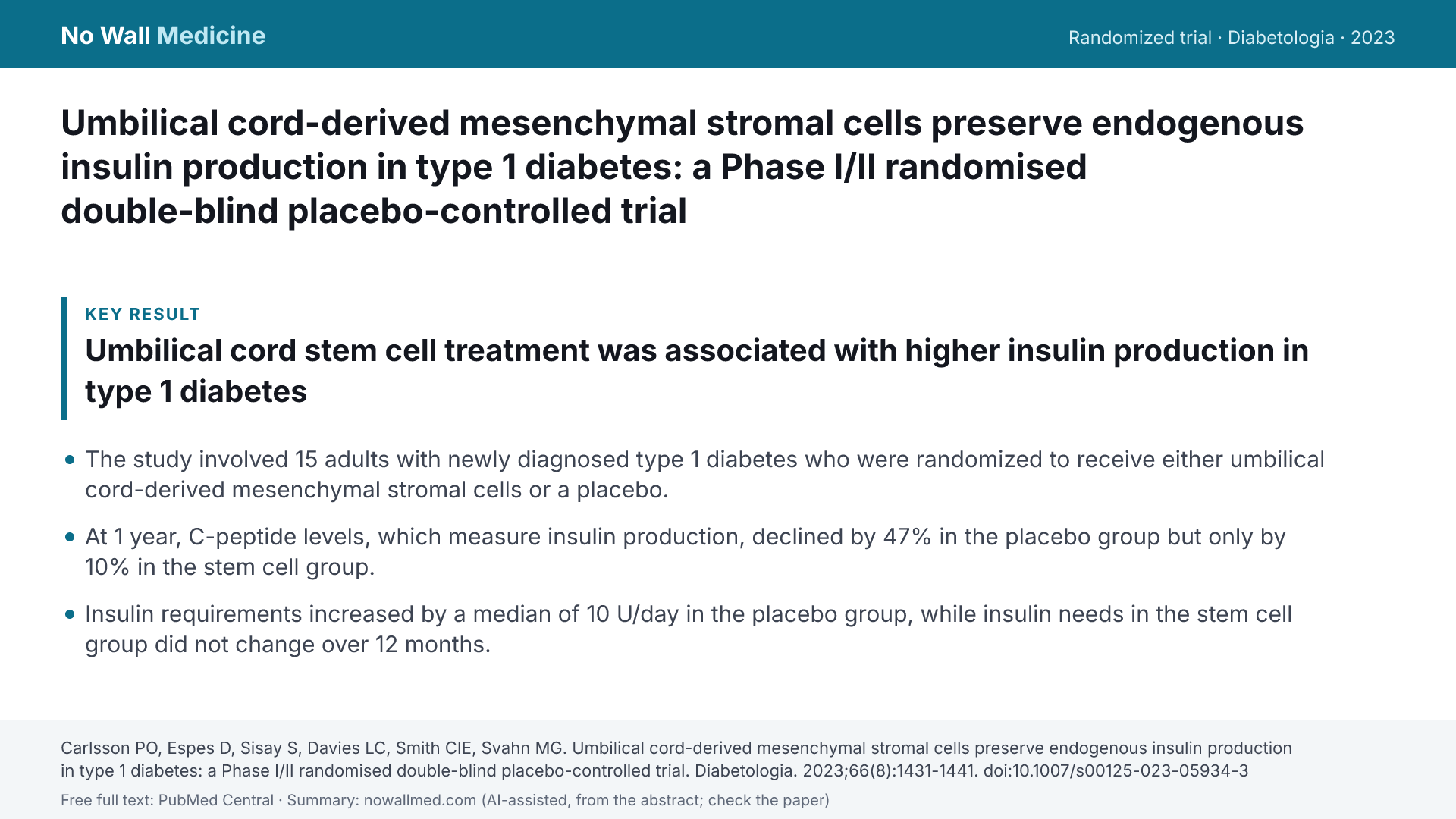
Umbilical cord-derived mesenchymal stromal cells preserve endogenous insulin production in type 1 diabetes: a Phase I/II randomised double-blind placebo-controlled trial
Key result: Umbilical cord stem cell treatment was associated with higher insulin production in type 1 diabetes
Key points
- The study involved 15 adults with newly diagnosed type 1 diabetes who were randomized to receive either umbilical cord-derived mesenchymal stromal cells or a placebo.
- At 1 year, C-peptide levels, which measure insulin production, declined by 47% in the placebo group but only by 10% in the stem cell group.
- Insulin requirements increased by a median of 10 U/day in the placebo group, while insulin needs in the stem cell group did not change over 12 months.
Discussion prompts
- Would these patients look like yours? Who was left out?
- Is the main outcome one that matters to patients?
- Is the difference large enough to change what you do?
Cite: Carlsson PO, Espes D, Sisay S, Davies LC, Smith CIE, Svahn MG. Umbilical cord-derived mesenchymal stromal cells preserve endogenous insulin production in type 1 diabetes: a Phase I/II randomised double-blind placebo-controlled trial. Diabetologia. 2023;66(8):1431-1441. doi:10.1007/s00125-023-05934-3
Free full text: PubMed Central · Summary and visual abstract: nowallmed.com/a/umbilical-cord-derived-mesenchymal-stromal-cells-preserve-endogenous-lwrmv8/ (AI-assisted from the abstract; check the paper before relying on it).