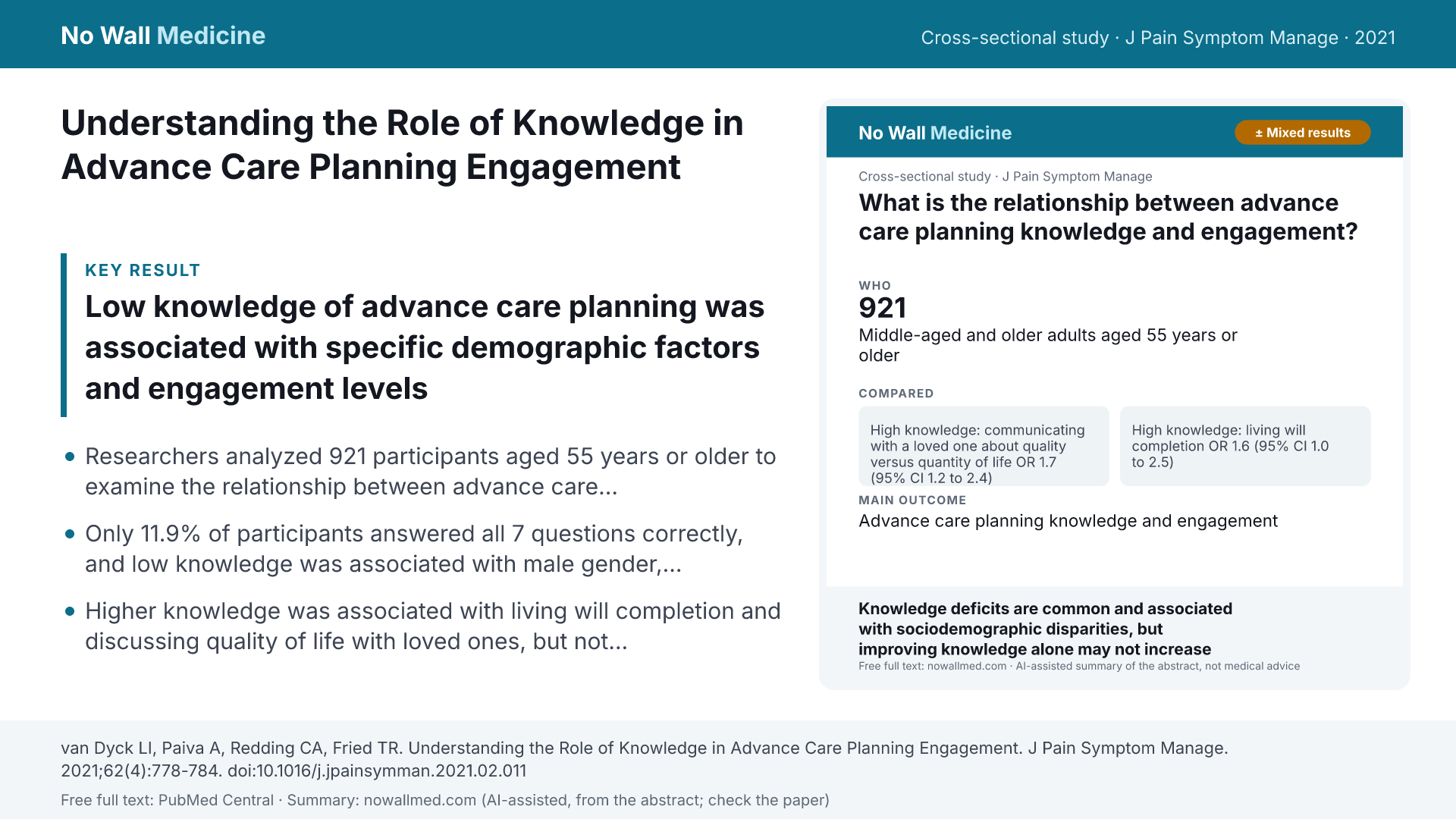
Low knowledge of advance care planning was associated with specific demographic factors and engagement levels
Understanding the Role of Knowledge in Advance Care Planning Engagement
Cross-sectional studyMixed results
What is the relationship between advance care planning knowledge and engagement?
Who
921
Middle-aged and older adults aged 55 years or older
Compared
High knowledge: communicating with a loved one about quality versus quantity of life OR 1.7 (95% CI 1.2 to 2.4)
High knowledge: living will completion OR 1.6 (95% CI 1.0 to 2.5)
Main outcome
Advance care planning knowledge and engagement
Bottom line: Knowledge deficits are common and associated with sociodemographic disparities, but improving knowledge alone may not increase engagement.
J Pain Symptom Manage · 2021-02-13 · Save PNG
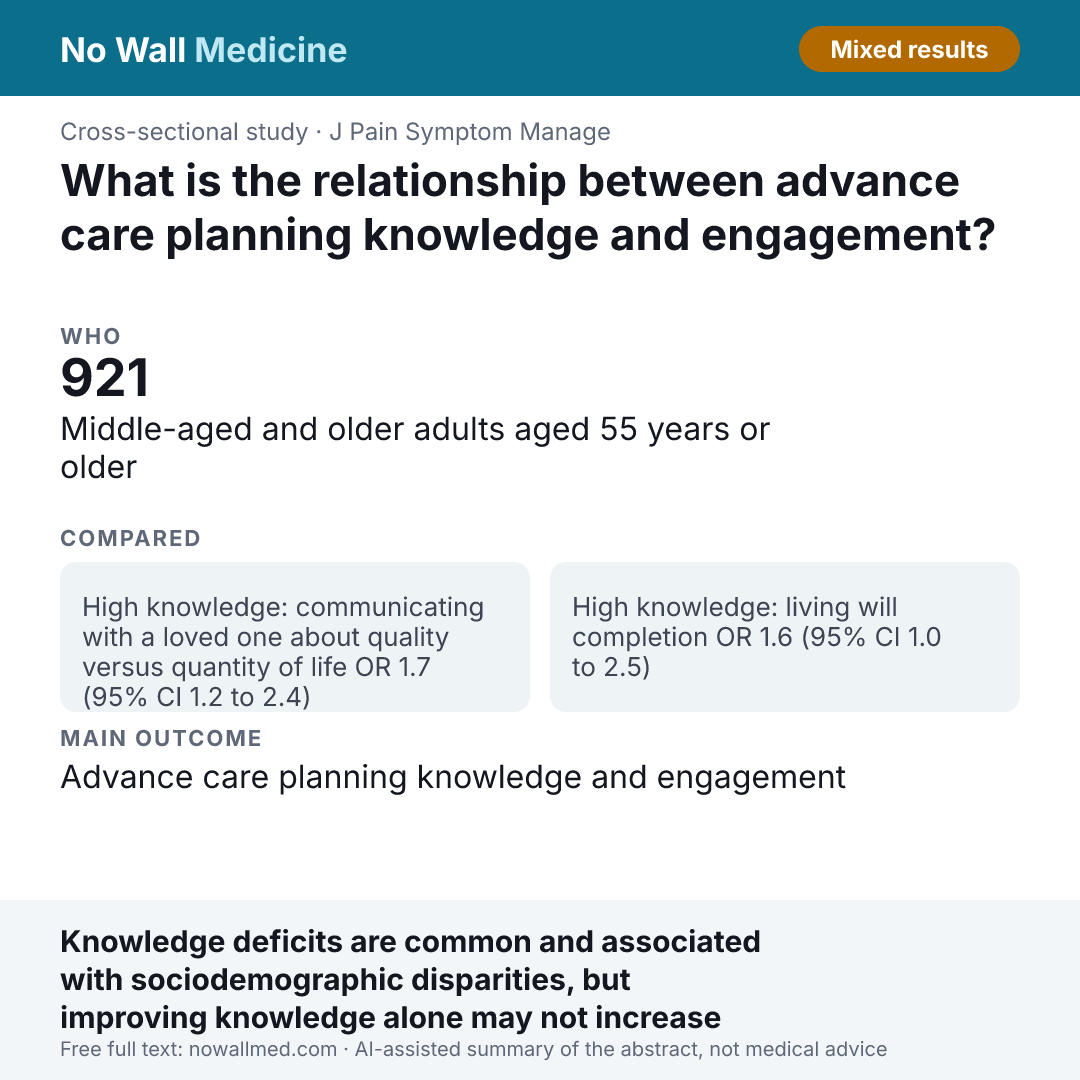
Clinical question: What is the relationship between advance care planning knowledge and engagement?
Key points
- Researchers analyzed 921 participants aged 55 years or older to examine the relationship between advance care planning knowledge and engagement.
- Only 11.9% of participants answered all 7 questions correctly, and low knowledge was associated with male gender, non-white race, older age, lower income, and lower education level.
- Higher knowledge was associated with living will completion and discussing quality of life with loved ones, but not with assigning a healthcare agent.
Headline and key points written with AI from the paper’s abstract, with every number checked against it. Read the paper before relying on them.
Was this summary helpful?
Subject terms
Headline, design, result, key points, caveat and citation as plain text.
Cite this article
van Dyck LI, Paiva A, Redding CA, Fried TR. Understanding the Role of Knowledge in Advance Care Planning Engagement. J Pain Symptom Manage. 2021;62(4):778-784. doi:10.1016/j.jpainsymman.2021.02.011
Spotted a mistake? Suggest a correction