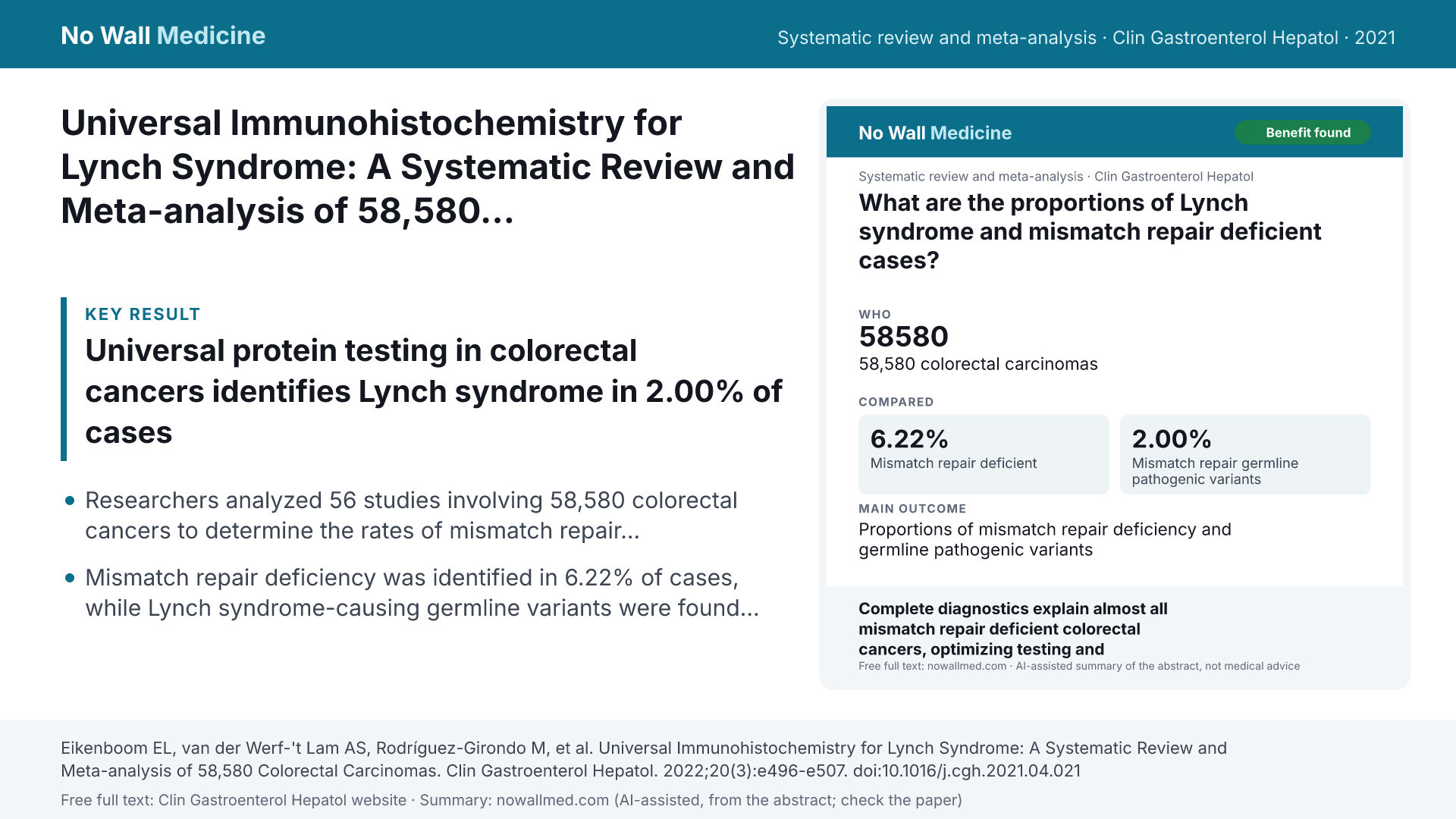
Universal Immunohistochemistry for Lynch Syndrome: A Systematic Review and Meta-analysis of 58,580 Colorectal Carcinomas
Key result: Universal protein testing in colorectal cancers identifies Lynch syndrome in 2.00% of cases
Key points
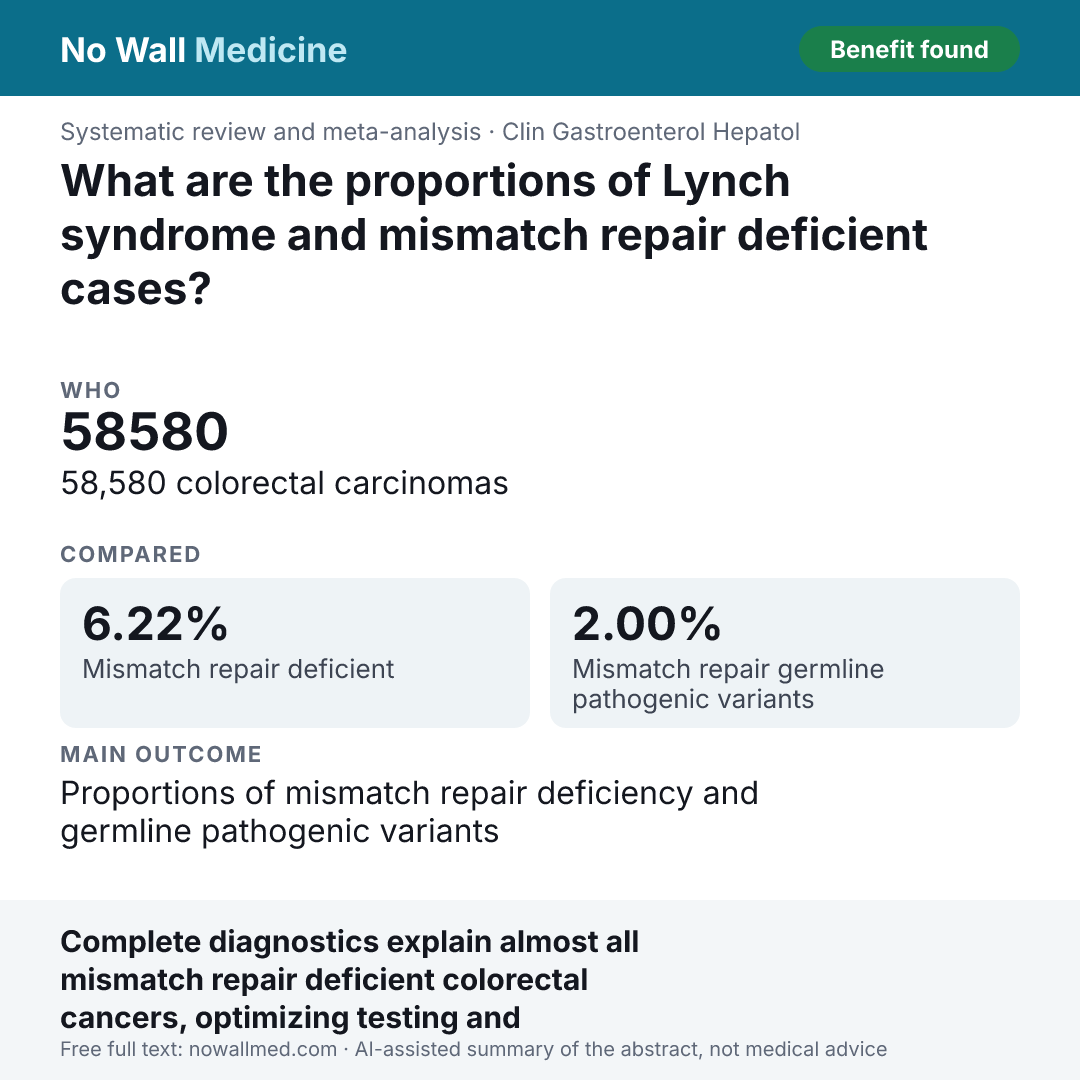
- Researchers analyzed 56 studies involving 58,580 colorectal cancers to determine the rates of mismatch repair deficiency (MMRd) and Lynch syndrome.
- Mismatch repair deficiency was identified in 6.22% of cases, while Lynch syndrome-causing germline variants were found in 2.00% of patients.
- In a subset of 6,848 cancers with complete diagnostics, 0.61% of mismatch repair deficient cases remained unexplained.
Why it matters: The health benefits and costs of universal protein testing for Lynch syndrome are unclear due to a lack of data on the proportions of Lynch syndrome and unexplained mismatch repair deficiency cases.
Discussion prompts
- Would these patients look like yours? Who was left out?
- Is the main outcome one that matters to patients?
- Is the difference large enough to change what you do?
Cite: Eikenboom EL, van der Werf-'t Lam AS, Rodríguez-Girondo M, et al. Universal Immunohistochemistry for Lynch Syndrome: A Systematic Review and Meta-analysis of 58,580 Colorectal Carcinomas. Clin Gastroenterol Hepatol. 2022;20(3):e496-e507. doi:10.1016/j.cgh.2021.04.021
Free full text: Clin Gastroenterol Hepatol website · Summary and visual abstract: nowallmed.com/a/universal-immunohistochemistry-for-lynch-syndrome-a-systematic-review-qv8pb7/ (AI-assisted from the abstract; check the paper before relying on it).