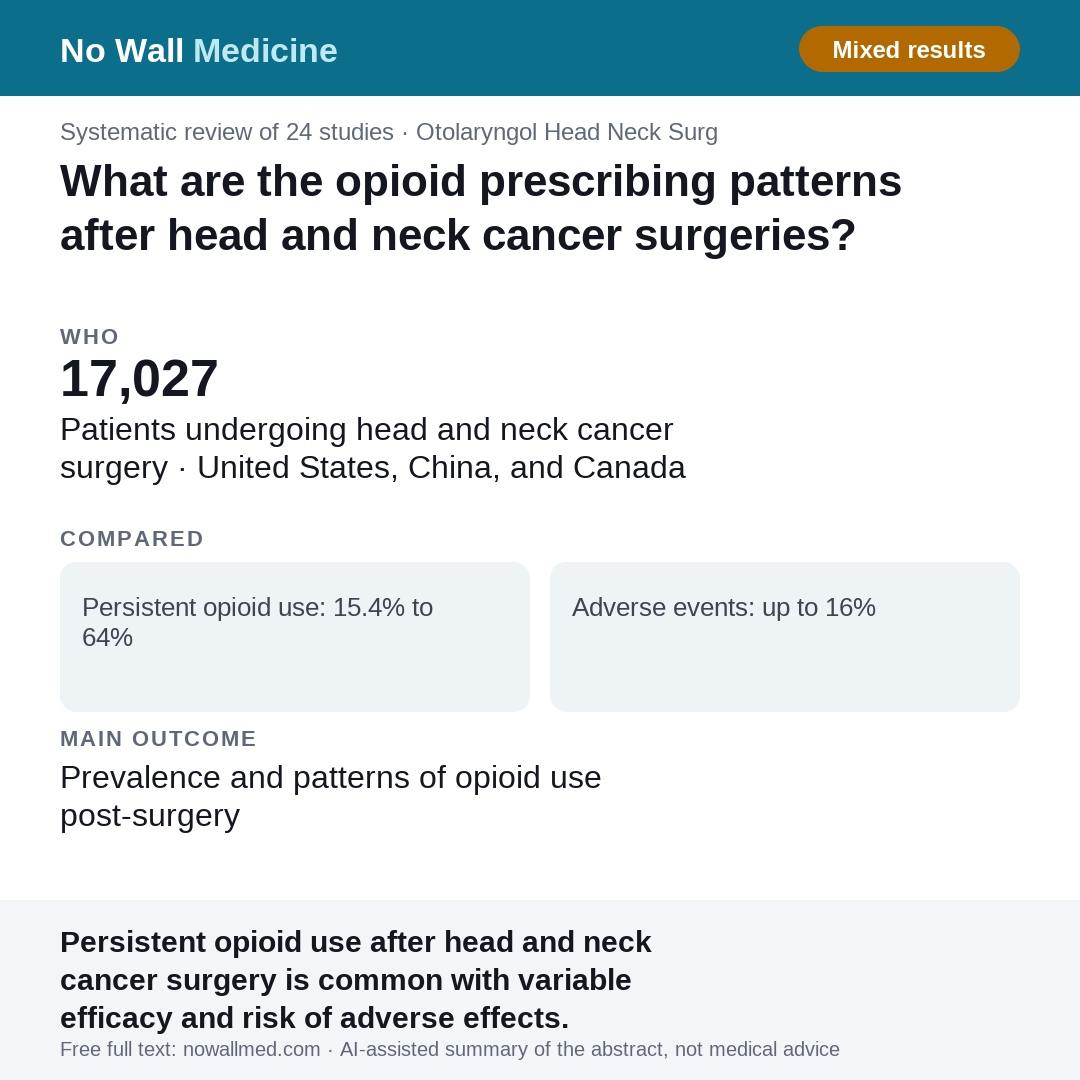
Persistent opioid use was found in 15.4% to 64% of head and neck cancer surgery patients
Unveiling Prescribing Patterns: A Systematic Review of Chronic Opioid Prescriptions After Head and Neck Cancer Surgeries
Systematic review of 24 studiesMixed results
What are the opioid prescribing patterns after head and neck cancer surgeries?
Who
17,027
Patients undergoing head and neck cancer surgery · United States, China, and Canada
Compared
Persistent opioid use: 15.4% to 64%
Adverse events: up to 16%
Main outcome
Prevalence and patterns of opioid use post-surgery
Bottom line: Persistent opioid use after head and neck cancer surgery is common with variable efficacy and risk of adverse effects.
Otolaryngol Head Neck Surg · 2025-02-17Download image
Clinical question: What are the opioid prescribing patterns after head and neck cancer surgeries?
Why it matters: The prevalence and patterns of opioid use and related side effects after head and neck cancer surgery are not fully understood.
Key points
- Researchers reviewed 24 studies involving 17,027 patients from the United States, China, and Canada to examine opioid prescribing patterns after major head and neck cancer surgery.
- Ongoing opioid prescriptions 90 days after treatment were noted in 15.4% to 64% of patients, and up to 16% of patients experienced side effects.
- Risk factors for long-term use included tobacco use, preoperative opioid use, higher cancer stage, and adjuvant treatment, while larger prescriptions were linked to shorter survival in advanced cancers.
Headline and key points written with AI from the paper’s abstract, with every number checked against it. Read the paper before relying on them.
Was this summary helpful?
Subject terms
Cite this article
Karki S, Stephanian B, Ramirez M, Moore MG, Campbell DA, Chen DW. Unveiling Prescribing Patterns: A Systematic Review of Chronic Opioid Prescriptions After Head and Neck Cancer Surgeries. Otolaryngol Head Neck Surg. 2025. doi:10.1002/ohn.1165
Spotted a mistake? Suggest a correction
Top studies every Monday
The week’s key trials and guidelines in your specialties, plus any topics you follow. By email, free.
Get the weekly digest