Upper gastrointestinal cancer risk following bariatric surgery: meta-analysis
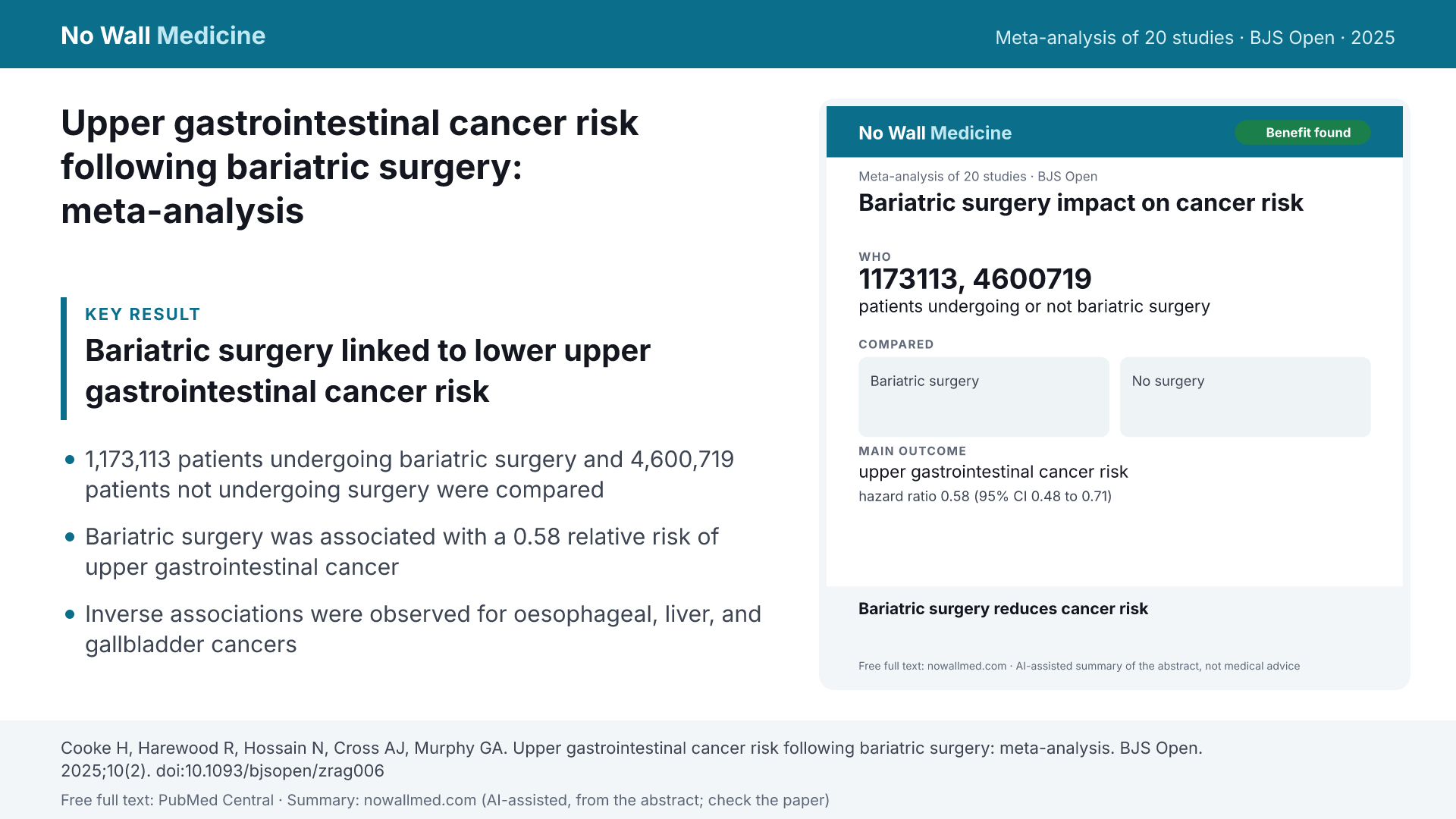
Key result: Bariatric surgery linked to lower upper gastrointestinal cancer risk
Meta-analysis of 20 studiesBenefit found
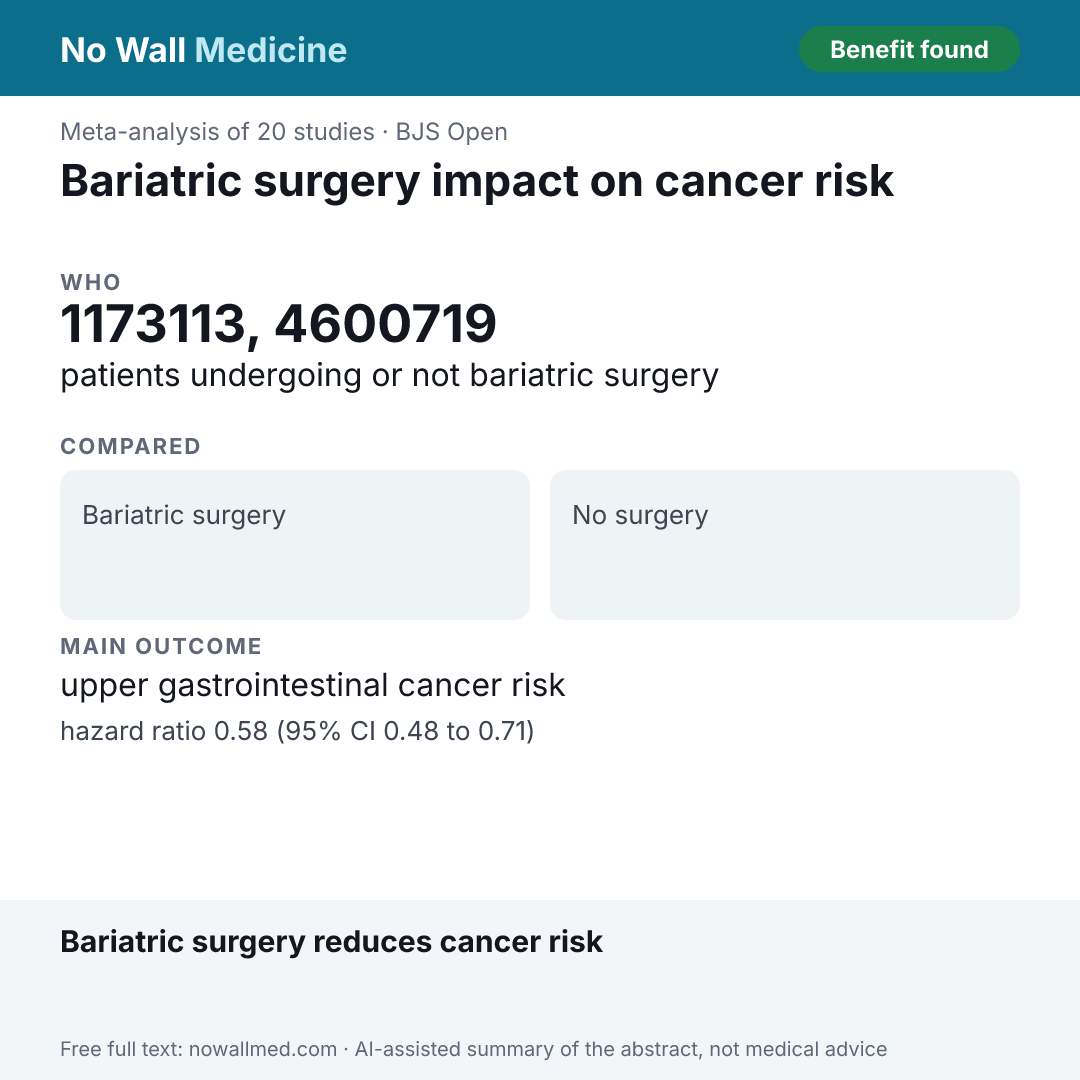
Bariatric surgery impact on cancer risk
Who
1173113, 4600719
patients undergoing or not bariatric surgery
Compared
Bariatric surgery
No surgery
Main outcome
upper gastrointestinal cancer risk
Result: hazard ratio 0.58 (95% CI 0.48 to 0.71)
Bottom line: Bariatric surgery reduces cancer risk
BJS Open · 2025-03-05 · Save PNG
Key points
- 1,173,113 patients undergoing bariatric surgery and 4,600,719 patients not undergoing surgery were compared.
- Bariatric surgery was associated with a 0.58 relative risk of upper gastrointestinal cancer.
- Inverse associations were observed for oesophageal, liver, and gallbladder cancers.
Limitation the authors note: Standardization in reporting surgical procedures is needed to clarify effects by bariatric surgery type
Discussion prompts
- Would these patients look like yours? Who was left out?
- Is the main outcome one that matters to patients?
- Is the difference large enough to change what you do?
Cite: Cooke H, Harewood R, Hossain N, Cross AJ, Murphy GA. Upper gastrointestinal cancer risk following bariatric surgery: meta-analysis. BJS Open. 2025;10(2). doi:10.1093/bjsopen/zrag006
Free full text: PubMed Central · Summary and visual abstract: nowallmed.com/a/upper-gastrointestinal-cancer-risk-following-bariatric-surgery-meta-drz41o/ (AI-assisted from the abstract; check the paper before relying on it).