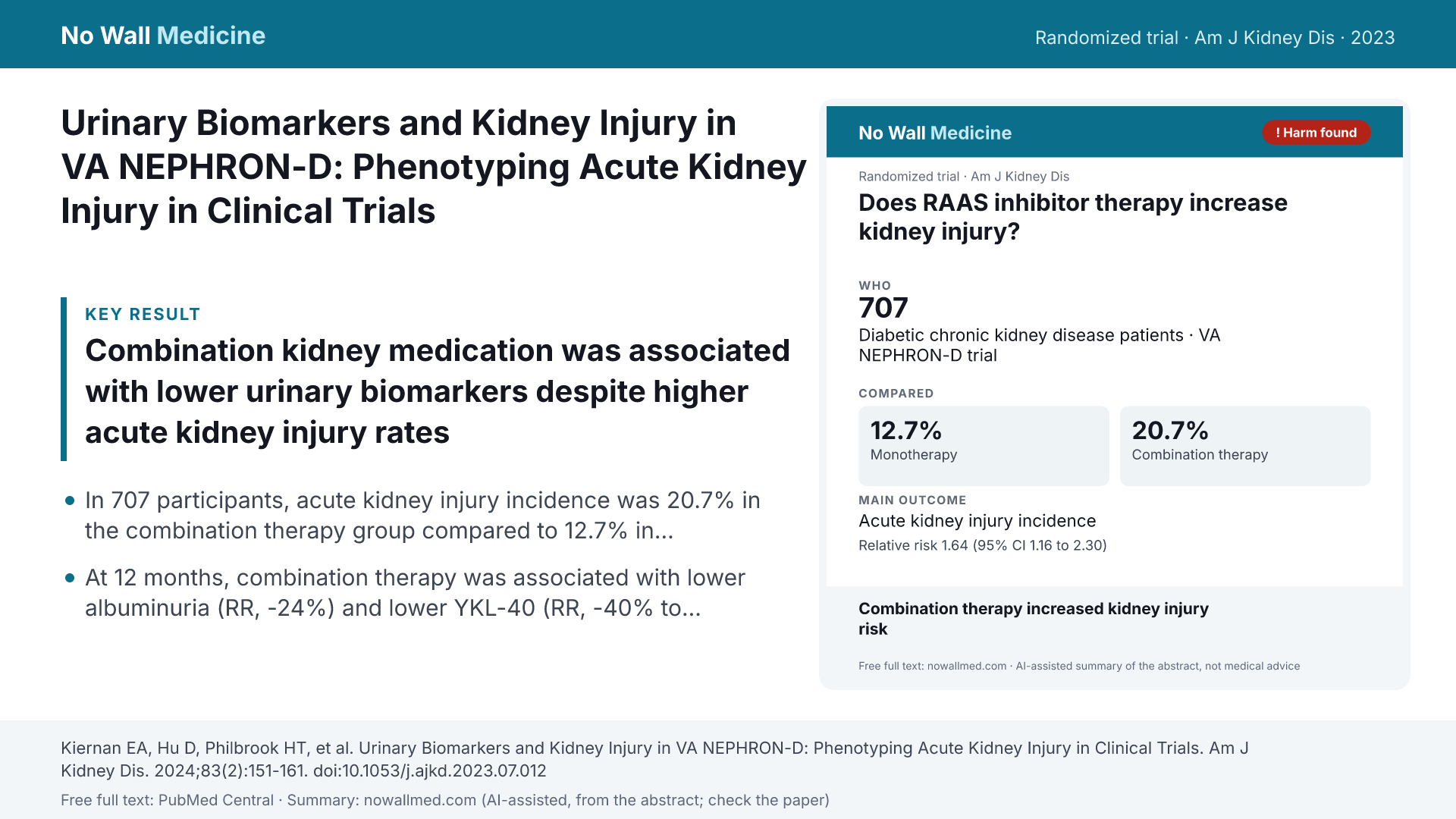
Combination kidney medication was associated with lower urinary biomarkers despite higher acute kidney injury rates
Urinary Biomarkers and Kidney Injury in VA NEPHRON-D: Phenotyping Acute Kidney Injury in Clinical Trials
Randomized trialHarm found
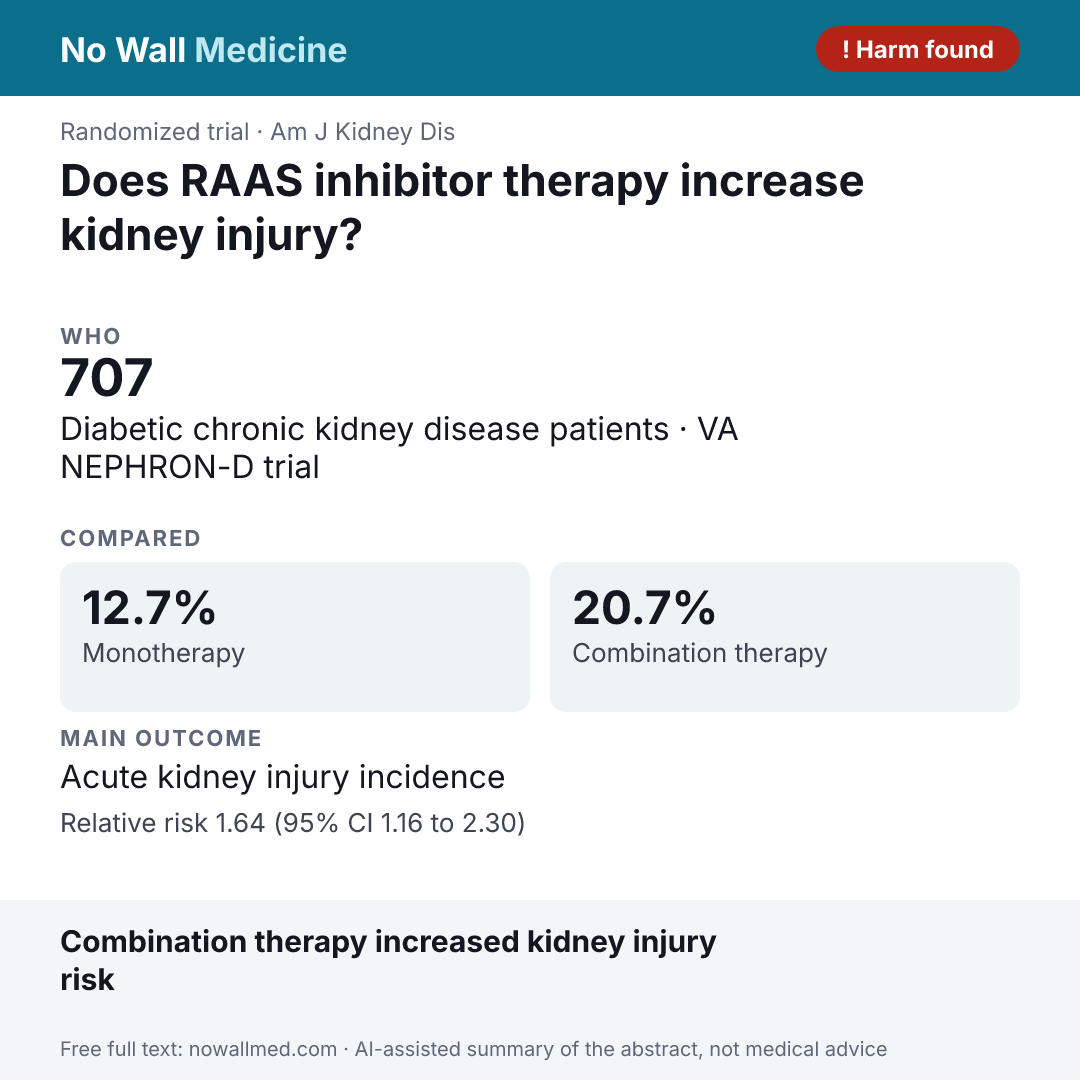
Does RAAS inhibitor therapy increase kidney injury?
Who
707
Diabetic chronic kidney disease patients · VA NEPHRON-D trial
Compared
12.7%Monotherapy
20.7%Combination therapy
Main outcome
Acute kidney injury incidence
Result: Relative risk 1.64 (95% CI 1.16 to 2.30)
Bottom line: Combination therapy increased kidney injury risk
Limitation: Biomarker measurement limited to two time points
Am J Kidney Dis · 2023-09-17 · Save PNG
Clinical question: Does RAAS inhibitor therapy increase kidney injury?
Key points
- In 707 participants, acute kidney injury incidence was 20.7% in the combination therapy group compared to 12.7% in the monotherapy group.
- At 12 months, combination therapy was associated with lower albuminuria (RR, -24%) and lower YKL-40 (RR, -40% to -44%) compared to monotherapy.
- Other biomarkers in the combination group were unchanged, including monocyte chemoattractant protein-1 (RR, -3%) and kidney injury molecule-1 (RR, -10%).
Limitation the authors note: Biomarker measurement was limited to 2 time points independent of acute kidney injury events.
Headline and key points written with AI from the paper’s abstract, with every number checked against it. Read the paper before relying on them.
Was this summary helpful?
Subject terms
Headline, design, result, key points, caveat and citation as plain text.
Cite this article
Kiernan EA, Hu D, Philbrook HT, et al. Urinary Biomarkers and Kidney Injury in VA NEPHRON-D: Phenotyping Acute Kidney Injury in Clinical Trials. Am J Kidney Dis. 2024;83(2):151-161. doi:10.1053/j.ajkd.2023.07.012
Spotted a mistake? Suggest a correction