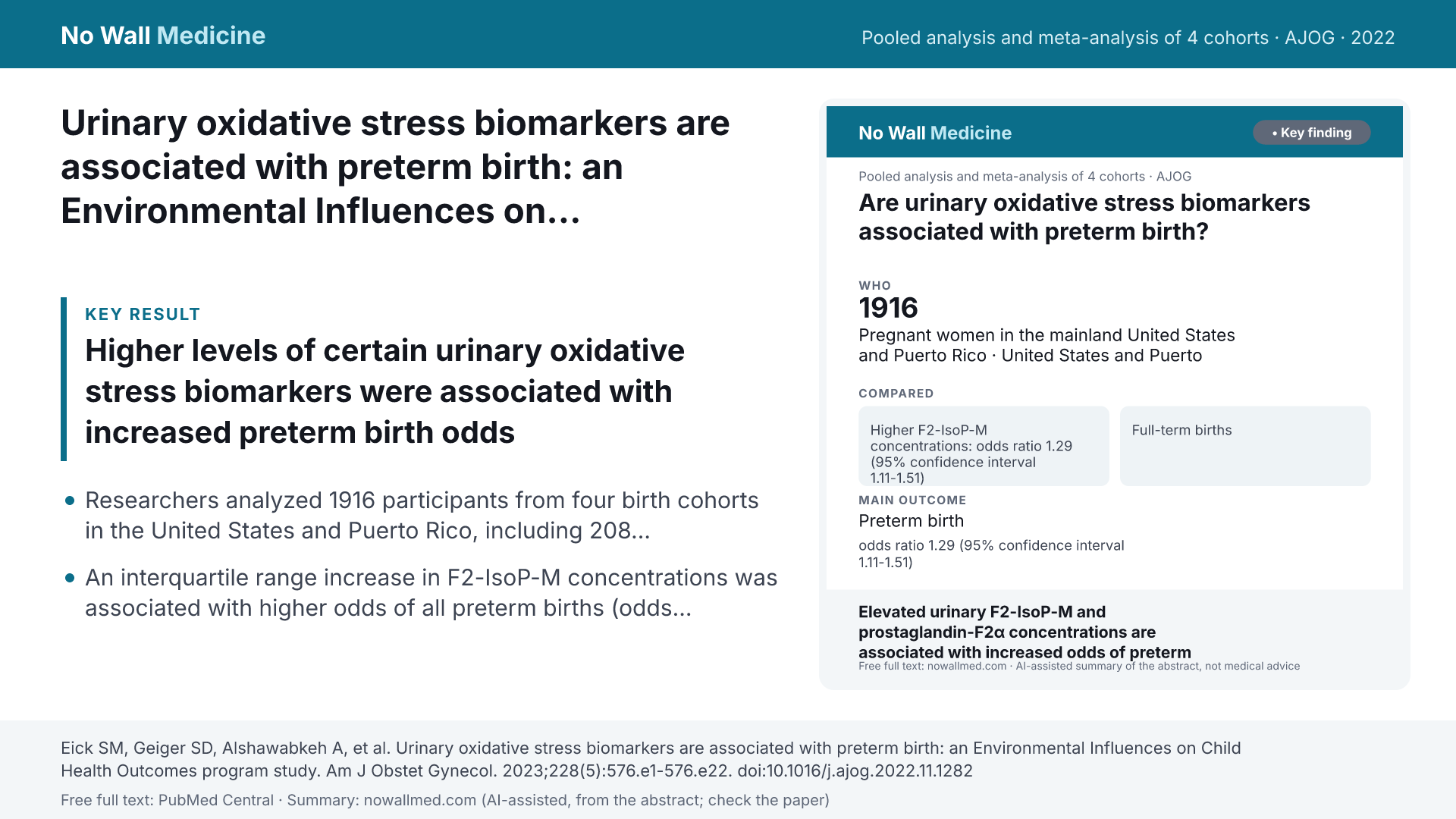
Higher levels of certain urinary oxidative stress biomarkers were associated with increased preterm birth odds
Urinary oxidative stress biomarkers are associated with preterm birth: an Environmental Influences on Child Health Outcomes program study
Pooled analysis and meta-analysis of 4 cohortsBenefit found
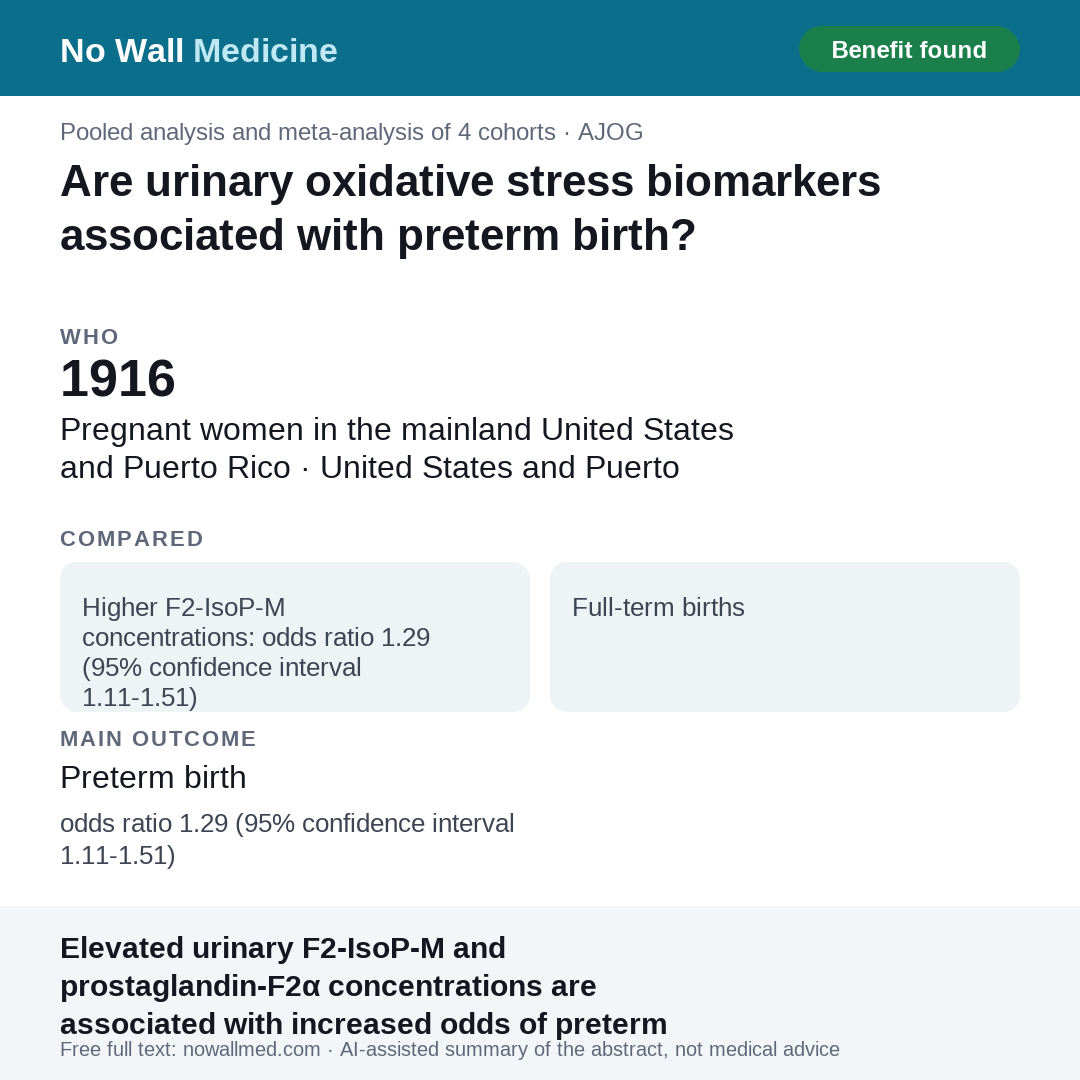
Are urinary oxidative stress biomarkers associated with preterm birth?
Who
1916
Pregnant women in the mainland United States and Puerto Rico · United States and Puerto Rico
Compared
Higher F2-IsoP-M concentrations: odds ratio 1.29 (95% confidence interval 1.11-1.51)
Full-term births
Main outcome
Preterm birth
Result: odds ratio 1.29 (95% confidence interval 1.11-1.51)
Bottom line: Elevated urinary F2-IsoP-M and prostaglandin-F2α concentrations are associated with increased odds of preterm birth.
Limitation: Most previous studies were conducted in racially and demographically homogenous populations.
AJOG · 2022-11-15Download image
Clinical question: Are urinary oxidative stress biomarkers associated with preterm birth?
Why it matters: Previous studies on the link between oxidative stress and preterm birth often used racially and demographically homogenous populations that do not reflect United States diversity.
Key points
- Researchers analyzed 1916 participants from four birth cohorts in the United States and Puerto Rico, including 208 preterm births and 1708 full-term births.
- An interquartile range increase in F2-IsoP-M concentrations was associated with higher odds of all preterm births (odds ratio, 1.29; 95% confidence interval, 1.11-1.51).
- The association between F2-IsoP-M and preterm birth was stronger for spontaneous preterm birth (odds ratio, 1.47; 95% confidence interval, 1.16-1.90).
Headline and key points written with AI from the paper’s abstract, with every number checked against it. Read the paper before relying on them.
Was this summary helpful?
Subject terms
Cite this article
Eick SM, Geiger SD, Alshawabkeh A, et al. Urinary oxidative stress biomarkers are associated with preterm birth: an Environmental Influences on Child Health Outcomes program study. AJOG. 2022. doi:10.1016/j.ajog.2022.11.1282
Spotted a mistake? Suggest a correction