Urinary cathepsin D protein was associated with rapid kidney function decline in type 1 diabetes
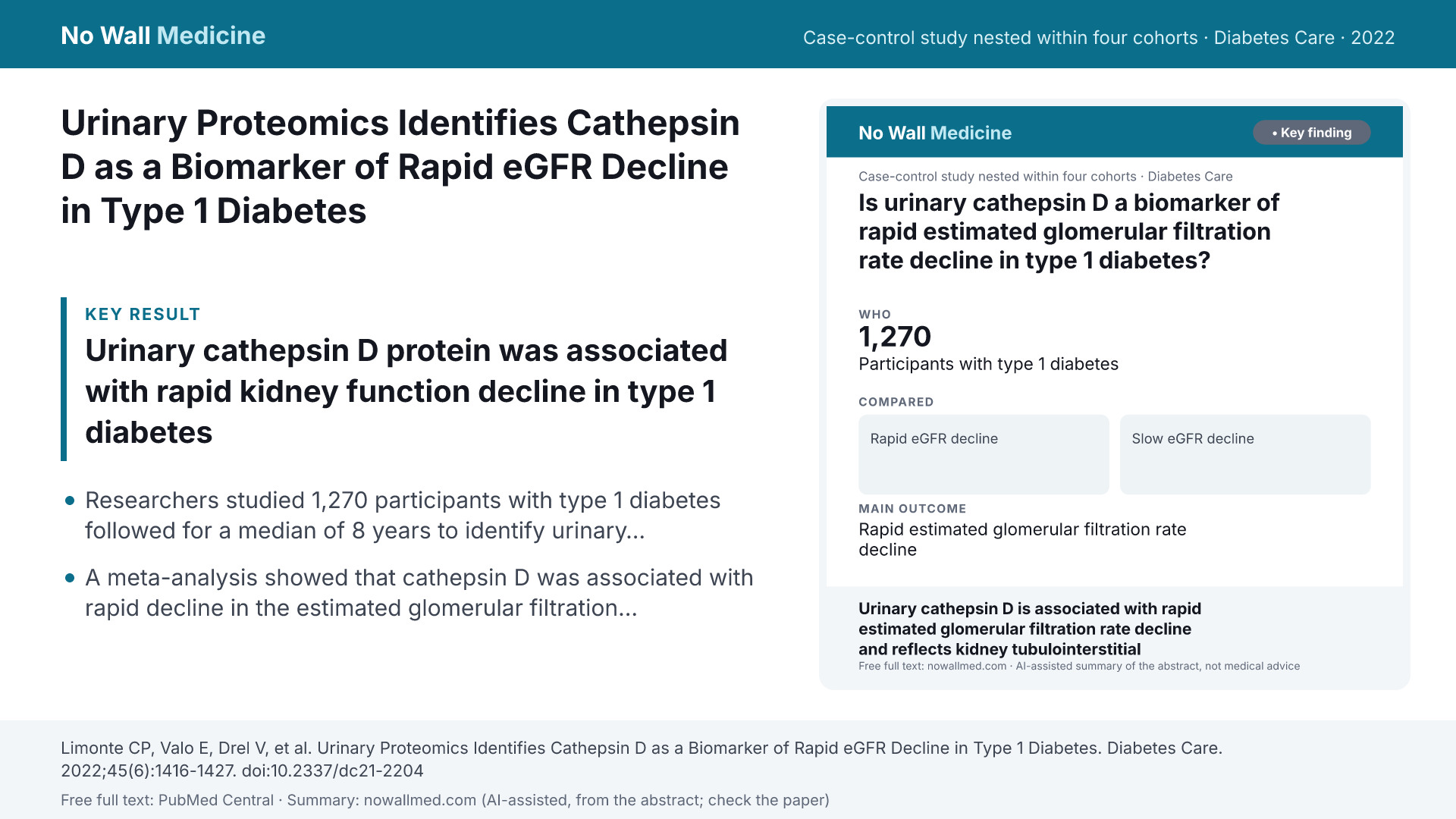
Urinary Proteomics Identifies Cathepsin D as a Biomarker of Rapid eGFR Decline in Type 1 Diabetes
Case-control study nested within four cohortsKey finding
Is urinary cathepsin D a biomarker of rapid estimated glomerular filtration rate decline in type 1 diabetes?
Who
1,270
Participants with type 1 diabetes
Compared
Rapid eGFR decline
Slow eGFR decline
Main outcome
Rapid estimated glomerular filtration rate decline
Result: odds ratio 1.29 per SD (95% CI 1.07-1.55)
Bottom line: Urinary cathepsin D is associated with rapid estimated glomerular filtration rate decline and reflects kidney tubulointerstitial injury.
Diabetes Care · 2022-04-05 · Save PNG
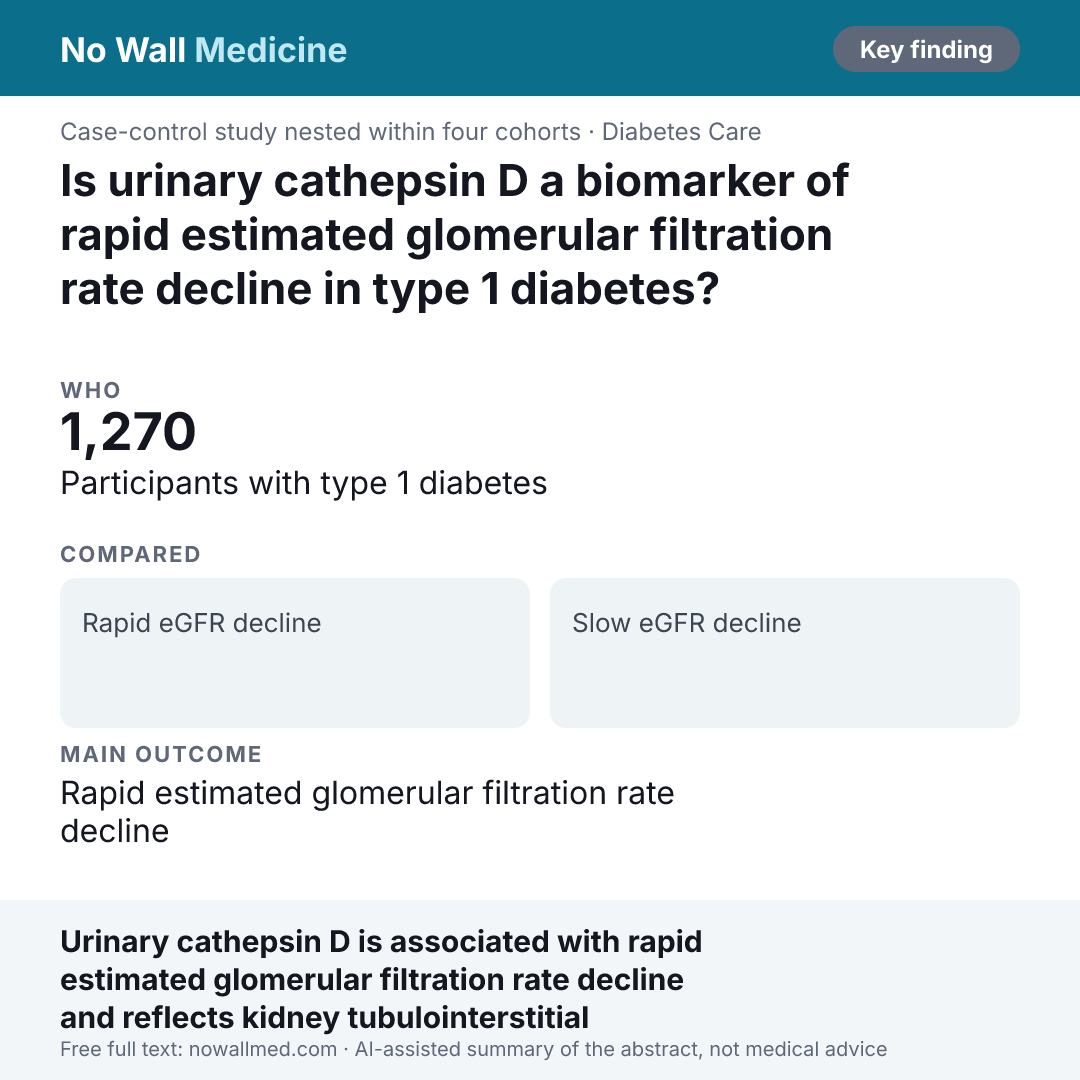
Clinical question: Is urinary cathepsin D a biomarker of rapid estimated glomerular filtration rate decline in type 1 diabetes?
Key points
- Researchers studied 1,270 participants with type 1 diabetes followed for a median of 8 years to identify urinary proteins linked to kidney function loss.
- A meta-analysis showed that cathepsin D was associated with rapid decline in the estimated glomerular filtration rate, which is a measure of kidney filtration, with an odds ratio of 1.29 per standard deviation.
- Urinary cathepsin D was also associated with tubulointerstitial injury, which is damage to the kidney's filtering tubules and surrounding tissue.
Headline and key points written with AI from the paper’s abstract, with every number checked against it. Read the paper before relying on them.
Was this summary helpful?
Subject terms
Headline, design, result, key points, caveat and citation as plain text.
Cite this article
Limonte CP, Valo E, Drel V, et al. Urinary Proteomics Identifies Cathepsin D as a Biomarker of Rapid eGFR Decline in Type 1 Diabetes. Diabetes Care. 2022;45(6):1416-1427. doi:10.2337/dc21-2204
Spotted a mistake? Suggest a correction