Ursodeoxycholic acid did not increase fecal cholesterol excretion or lower LDL cholesterol in humans
Ursodeoxycholic Acid for Trans Intestinal Cholesterol Excretion Stimulation: A Randomized Placebo Controlled Crossover Study
Randomized, double-blind, placebo-controlled, cross-over trialHarm found
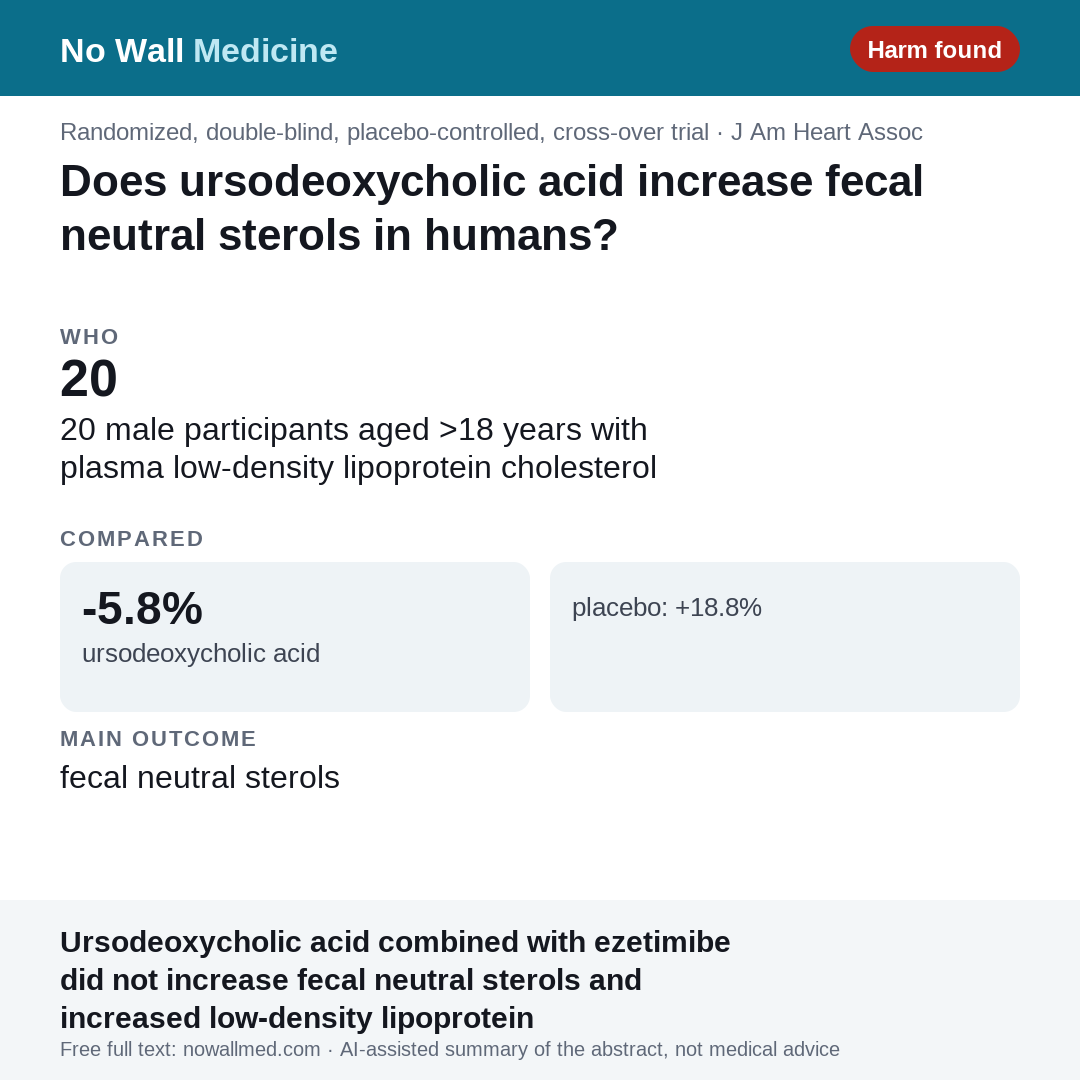
Does ursodeoxycholic acid increase fecal neutral sterols in humans?
Who
20
20 male participants aged >18 years with plasma low-density lipoprotein cholesterol ≥2.6 mmol/L
Compared
-5.8%ursodeoxycholic acid
placebo: +18.8%
Main outcome
fecal neutral sterols
Bottom line: Ursodeoxycholic acid combined with ezetimibe did not increase fecal neutral sterols and increased low-density lipoprotein cholesterol.
J Am Heart Assoc · 2024-10-08Download image
Clinical question: Does ursodeoxycholic acid increase fecal neutral sterols in humans?
Why it matters: It was unknown if increasing the hydrophilicity of the bile acid pool through ursodeoxycholic acid would stimulate the trans intestinal cholesterol excretion pathway in humans.
Key points
- Researchers studied 20 men with low-density lipoprotein cholesterol levels of 2.6 mmol/L or higher using a randomized, double-blind, placebo-controlled crossover trial.
- Ursodeoxycholic acid treatment increased plasma LDL cholesterol by 0.39 mmol/L (+8.1% versus -3.64%, P=0.002) compared to placebo.
- Fecal neutral sterols, a measure of cholesterol excretion, did not change between the ursodeoxycholic acid and placebo groups (P=0.51).
Headline and key points written with AI from the paper’s abstract, with every number checked against it. Read the paper before relying on them.
Topics
Cite this article
Oostveen RF, Kaiser Y, Hartgers ML, Meessen ECE, Grefhorst A, Hovingh GK. Ursodeoxycholic Acid for Trans Intestinal Cholesterol Excretion Stimulation: A Randomized Placebo Controlled Crossover Study. J Am Heart Assoc. 2024. doi:10.1161/JAHA.124.035259
Spotted a mistake? Suggest a correction
Top studies every Monday
The week’s key trials and guidelines in your specialties, by email. Free.
Get the weekly digest