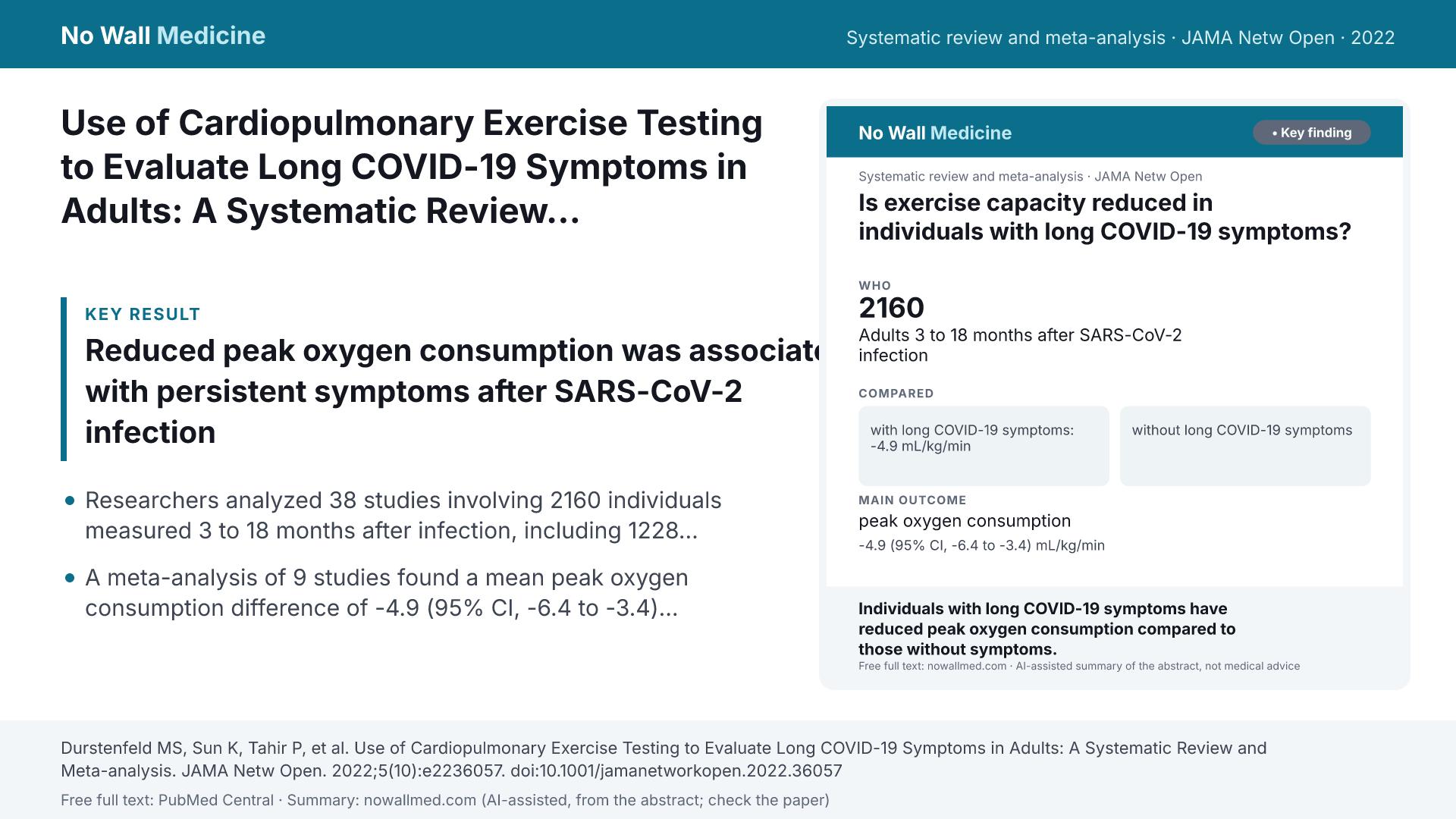
Reduced peak oxygen consumption was associated with persistent symptoms after SARS-CoV-2 infection
Use of Cardiopulmonary Exercise Testing to Evaluate Long COVID-19 Symptoms in Adults: A Systematic Review and Meta-analysis
Systematic review and meta-analysisKey finding
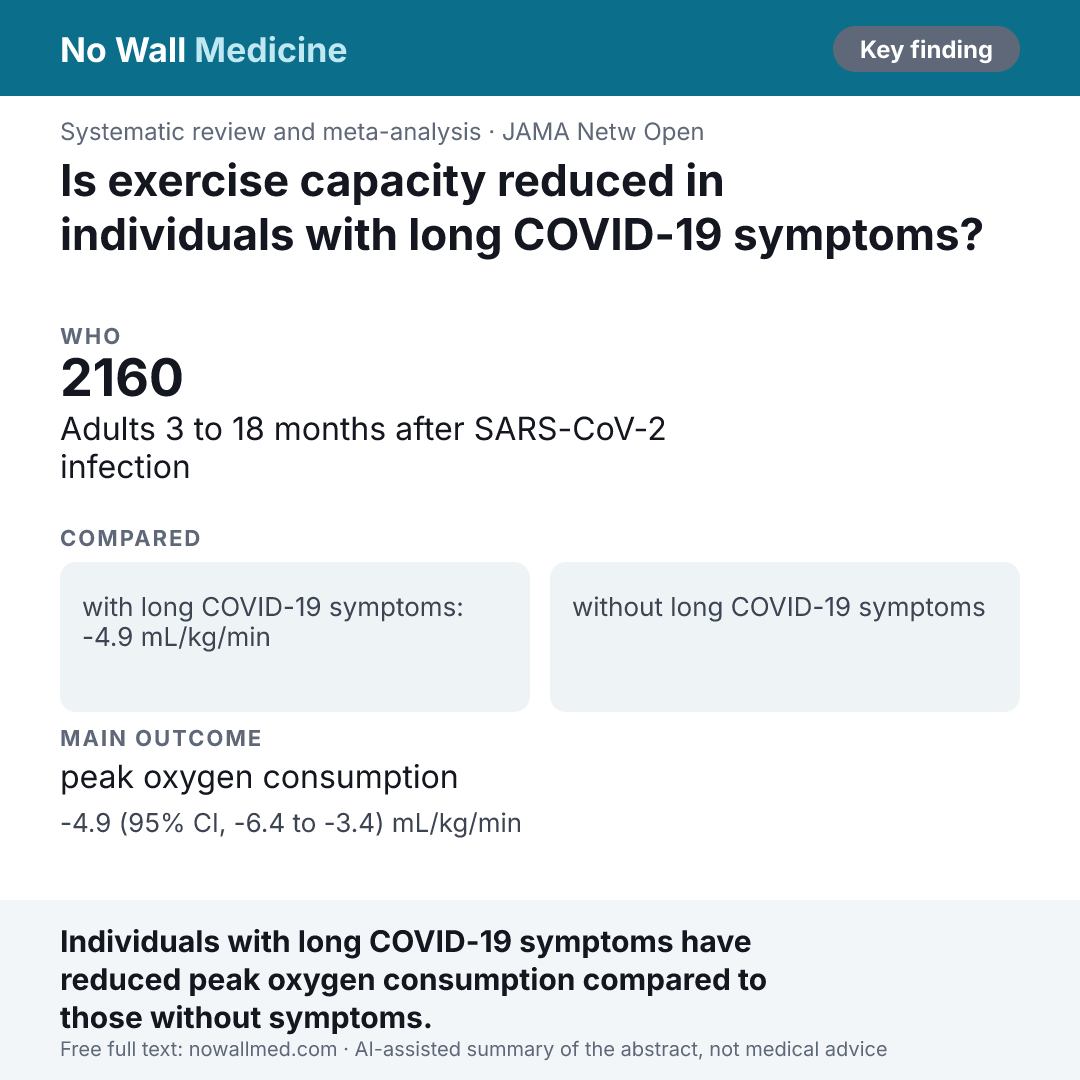
Is exercise capacity reduced in individuals with long COVID-19 symptoms?
Who
2160
Adults 3 to 18 months after SARS-CoV-2 infection
Compared
with long COVID-19 symptoms: -4.9 mL/kg/min
without long COVID-19 symptoms
Main outcome
peak oxygen consumption
Result: -4.9 (95% CI, -6.4 to -3.4) mL/kg/min
Bottom line: Individuals with long COVID-19 symptoms have reduced peak oxygen consumption compared to those without symptoms.
Limitation: Small sample sizes, selection bias, confounding, and varying symptom definitions and interpretations.
JAMA Netw Open · 2022-10-03 · Save PNG
Clinical question: Is exercise capacity reduced in individuals with long COVID-19 symptoms?
Key points
- Researchers analyzed 38 studies involving 2160 individuals measured 3 to 18 months after infection, including 1228 people with long COVID-19 symptoms.
- A meta-analysis of 9 studies found a mean peak oxygen consumption difference of -4.9 (95% CI, -6.4 to -3.4) mL/kg/min in those with symptoms.
- Common physiological patterns included deconditioning and peripheral limitations, though dysfunctional breathing and chronotropic incompetence were also described.
Limitation the authors note: The existing literature was limited by small sample sizes, selection bias, confounding, and varying symptom definitions and cardiopulmonary exercise testing interpretations.
Headline and key points written with AI from the paper’s abstract, with every number checked against it. Read the paper before relying on them.
Was this summary helpful?
Subject terms
Headline, design, result, key points, caveat and citation as plain text.
Cite this article
Durstenfeld MS, Sun K, Tahir P, et al. Use of Cardiopulmonary Exercise Testing to Evaluate Long COVID-19 Symptoms in Adults: A Systematic Review and Meta-analysis. JAMA Netw Open. 2022;5(10):e2236057. doi:10.1001/jamanetworkopen.2022.36057
Spotted a mistake? Suggest a correction