CPR feedback devices during training improve quality metrics for chest compressions and recoil
Use of CPR feedback devices in resuscitation training: A systematic review and meta-analysis of randomized controlled trials
Systematic review and meta-analysis of randomized controlled trialsBenefit found
Does using cardiopulmonary resuscitation feedback devices during training improve performance metrics?
Who
4579
Participants in cardiopulmonary resuscitation training
Compared
With feedback devices
No feedback
Main outcome
CPR quality metrics, skill acquisition, and retention
Result: standardized mean difference 0.76 (95%CI 0.02 - 1.50) for mean compression depth
Bottom line: Using cardiopulmonary resuscitation feedback devices during training improves key quality metrics of performance with moderate to high certainty.
Limitation: No studies evaluated patient survival, clinical performance in resuscitation, or cost-effectiveness; large heterogeneity.
Resusc Plus · 2025-03-22Download image
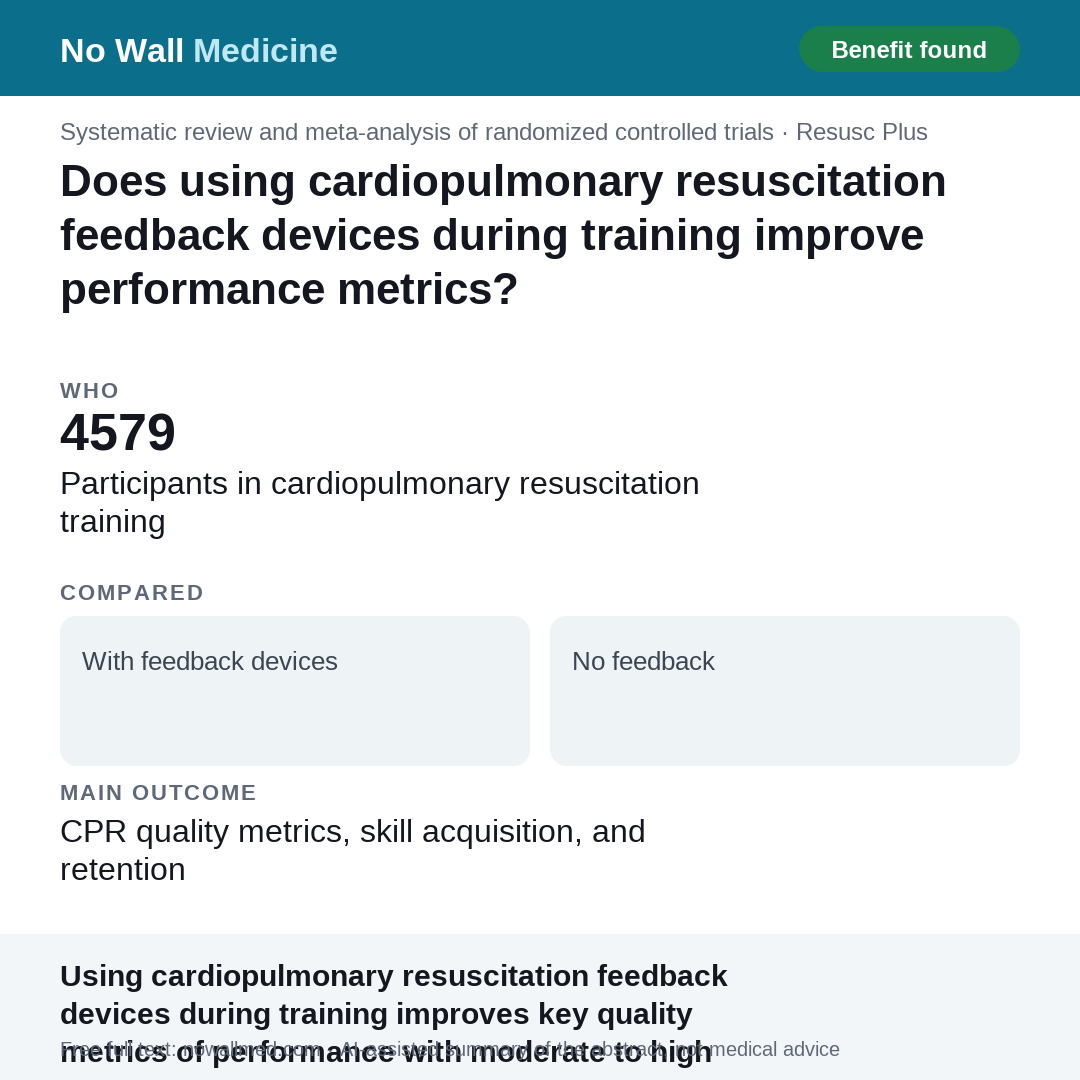
Clinical question: Does using cardiopulmonary resuscitation feedback devices during training improve performance metrics?
Why it matters: It is unknown if incorporating feedback devices into cardiopulmonary resuscitation training improves patient survival, clinical performance, or cost-effectiveness.
Key points
- Researchers analyzed 20 randomized controlled trials involving 4579 participants to compare training with and without feedback devices.
- Using feedback devices was associated with improved mean compression depth (0.76), depth compliance (0.98), mean rate (0.29), rate compliance (0.44), and recoil compliance (0.53).
- No studies evaluated whether these devices affect patient survival, clinical performance during actual resuscitation, or cost-effectiveness.
Limitation the authors note: The authors noted large heterogeneity across analyses and a lack of studies evaluating patient survival, clinical performance, or cost-effectiveness.
Headline and key points written with AI from the paper’s abstract, with every number checked against it. Read the paper before relying on them.
Was this summary helpful?
Cite this article
Lin Y, Lockey A, Donoghue A, Greif R, Cortegiani A, Farquharson B. Use of CPR feedback devices in resuscitation training: A systematic review and meta-analysis of randomized controlled trials. Resusc Plus. 2025. doi:10.1016/j.resplu.2025.100939
Spotted a mistake? Suggest a correction
Top studies every Monday
The week’s key trials and guidelines in your specialties, plus any topics you follow. By email, free.
Get the weekly digest