Genetic proxies for ACE inhibitors and calcium channel blockers were associated with better kidney function
Using Mendelian randomization study to assess the renal effects of antihypertensive drugs
Mendelian randomization studyMixed results
What are the renal effects of different antihypertensive drug classes?
Who
Genetic proxies for antihypertensives and kidney function data · UK Biobank and Chronic Kidney Disease Genetics Consortium
Compared
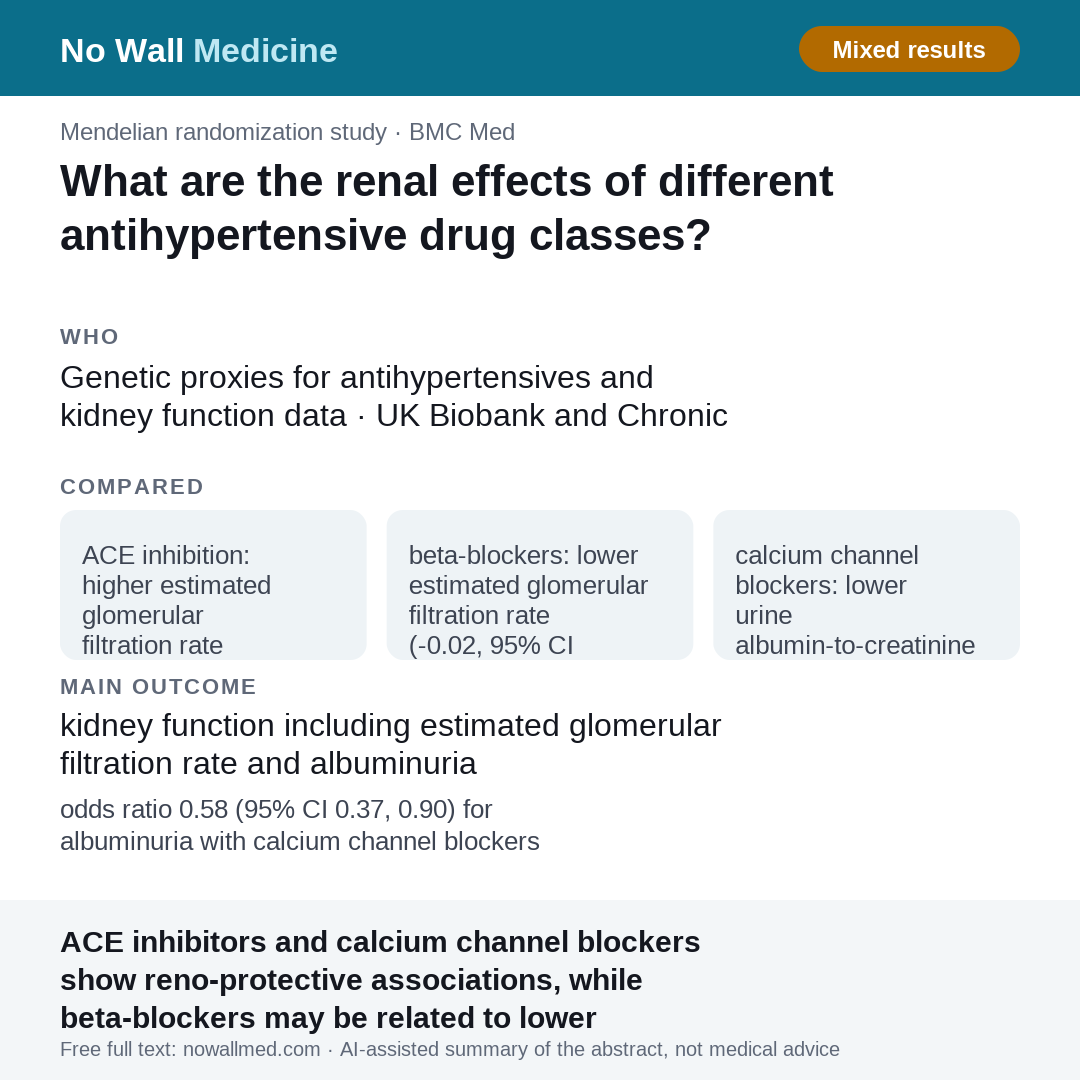
ACE inhibition: higher estimated glomerular filtration rate (effect size 0.06, 95% CI 0.008, 0.11)
beta-blockers: lower estimated glomerular filtration rate (-0.02, 95% CI -0.04, -0.004)
calcium channel blockers: lower urine albumin-to-creatinine ratio (-0.15, 95% CI -0.28, -0.02)
Main outcome
kidney function including estimated glomerular filtration rate and albuminuria
Result: odds ratio 0.58 (95% CI 0.37, 0.90) for albuminuria with calcium channel blockers
Bottom line: ACE inhibitors and calcium channel blockers show reno-protective associations, while beta-blockers may be related to lower estimated glomerular filtration rate.
BMC Med · 2021-03-26Download image
Clinical question: What are the renal effects of different antihypertensive drug classes?
Why it matters: Large randomized controlled trials comparing the renal effects of different classes of blood pressure medications are lacking.
Key points
- Researchers used Mendelian randomization to analyze genetic proxies for antihypertensive drugs and their links to kidney function markers in the UK Biobank and CKDGen datasets.
- Genetically predicted ACE inhibition was associated with higher estimated glomerular filtration rate (a measure of kidney filtration), while calcium channel blockers were associated with lower urine albumin-to-creatinine ratio.
- Genetic proxies for beta-blockers were associated with lower estimated glomerular filtration rate, with an effect size of -0.02 (95% CI -0.04, -0.004).
Headline and key points written with AI from the paper’s abstract, with every number checked against it. Read the paper before relying on them.
Was this summary helpful?
Subject terms
Cite this article
Zhao JV, Schooling CM. Using Mendelian randomization study to assess the renal effects of antihypertensive drugs. BMC Med. 2021. doi:10.1186/s12916-021-01951-4
Spotted a mistake? Suggest a correction
Top studies every Monday
The week’s key trials and guidelines in your specialties, plus any topics you follow. By email, free.
Get the weekly digest