Circulating tumor DNA shows high specificity but low sensitivity for predicting cancer recurrence
Utility of ctDNA in predicting relapse in solid tumors after curative therapy: a meta-analysis
Meta-analysis of 39 studiesMixed results
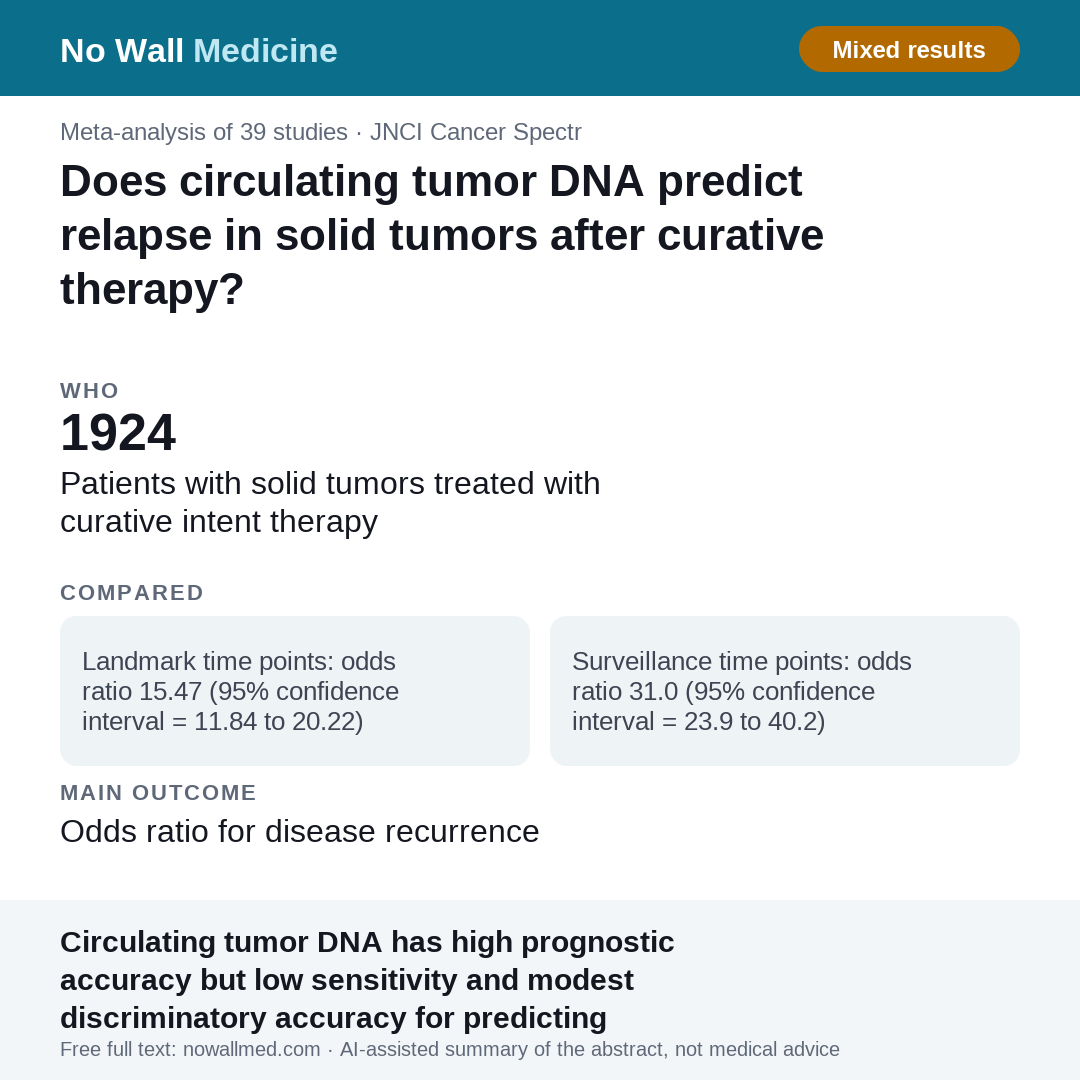
Does circulating tumor DNA predict relapse in solid tumors after curative therapy?
Who
1924
Patients with solid tumors treated with curative intent therapy
Compared
Landmark time points: odds ratio 15.47 (95% confidence interval = 11.84 to 20.22)
Surveillance time points: odds ratio 31.0 (95% confidence interval = 23.9 to 40.2)
Main outcome
Odds ratio for disease recurrence
Result: odds ratio 15.47 (95% CI 11.84 to 20.22) at landmark
Bottom line: Circulating tumor DNA has high prognostic accuracy but low sensitivity and modest discriminatory accuracy for predicting relapse.
Limitation: Adequately designed clinical trials are required to demonstrate clinical utility.
JNCI Cancer Spectr · 2023-05-27Download image
Clinical question: Does circulating tumor DNA predict relapse in solid tumors after curative therapy?
Why it matters: Uncertainty exists regarding the clinical validity of monitoring circulating tumor DNA at specific landmark or multiple surveillance time points after curative therapy for solid tumors.
Key points
- Researchers analyzed 39 studies involving 1924 patients for landmark testing and 1516 patients for surveillance testing of circulating tumor DNA, which is small fragments of DNA found in the blood.
- The pooled odds ratio for recurrence was 15.47 at landmark time points and 31.0 at surveillance time points, with surveillance sensitivity at 82.2% and specificity at 94.1%.
- Landmark analysis showed a lower sensitivity of 58.3% and a specificity of 92%, resulting in modest discriminatory accuracy.
Headline and key points written with AI from the paper’s abstract, with every number checked against it. Read the paper before relying on them.
Was this summary helpful?
Subject terms
Cite this article
Mittal A, Molto Valiente C, Tamimi F, Di Iorio M, Al-Showbaki L, Cescon DW. Utility of ctDNA in predicting relapse in solid tumors after curative therapy: a meta-analysis. JNCI Cancer Spectr. 2023. doi:10.1093/jncics/pkad040
Spotted a mistake? Suggest a correction
Top studies every Monday
The week’s key trials and guidelines in your specialties, plus any topics you follow. By email, free.
Get the weekly digest