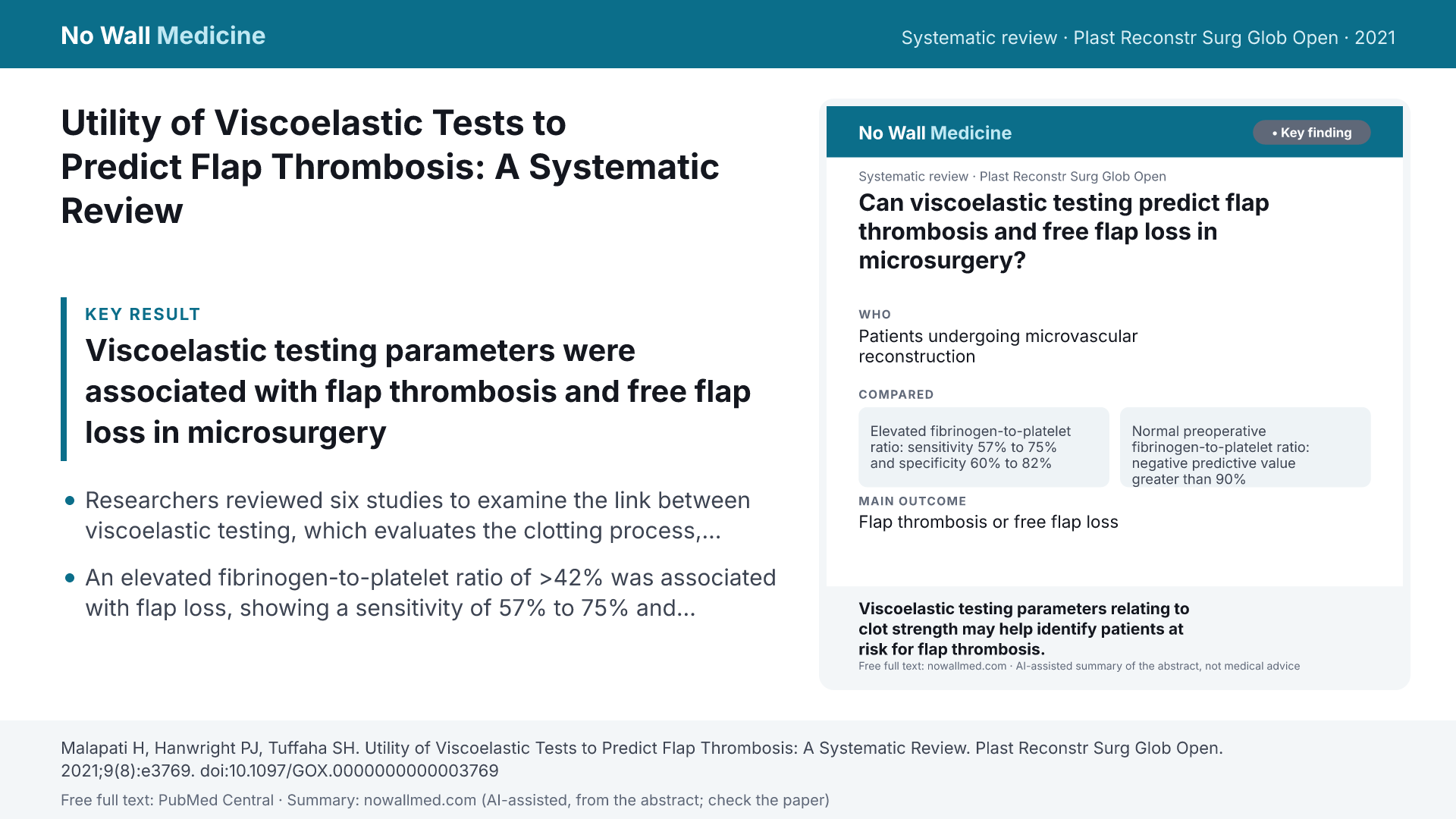
Utility of Viscoelastic Tests to Predict Flap Thrombosis: A Systematic Review
Key result: Viscoelastic testing parameters were associated with flap thrombosis and free flap loss in microsurgery
Systematic reviewKey finding
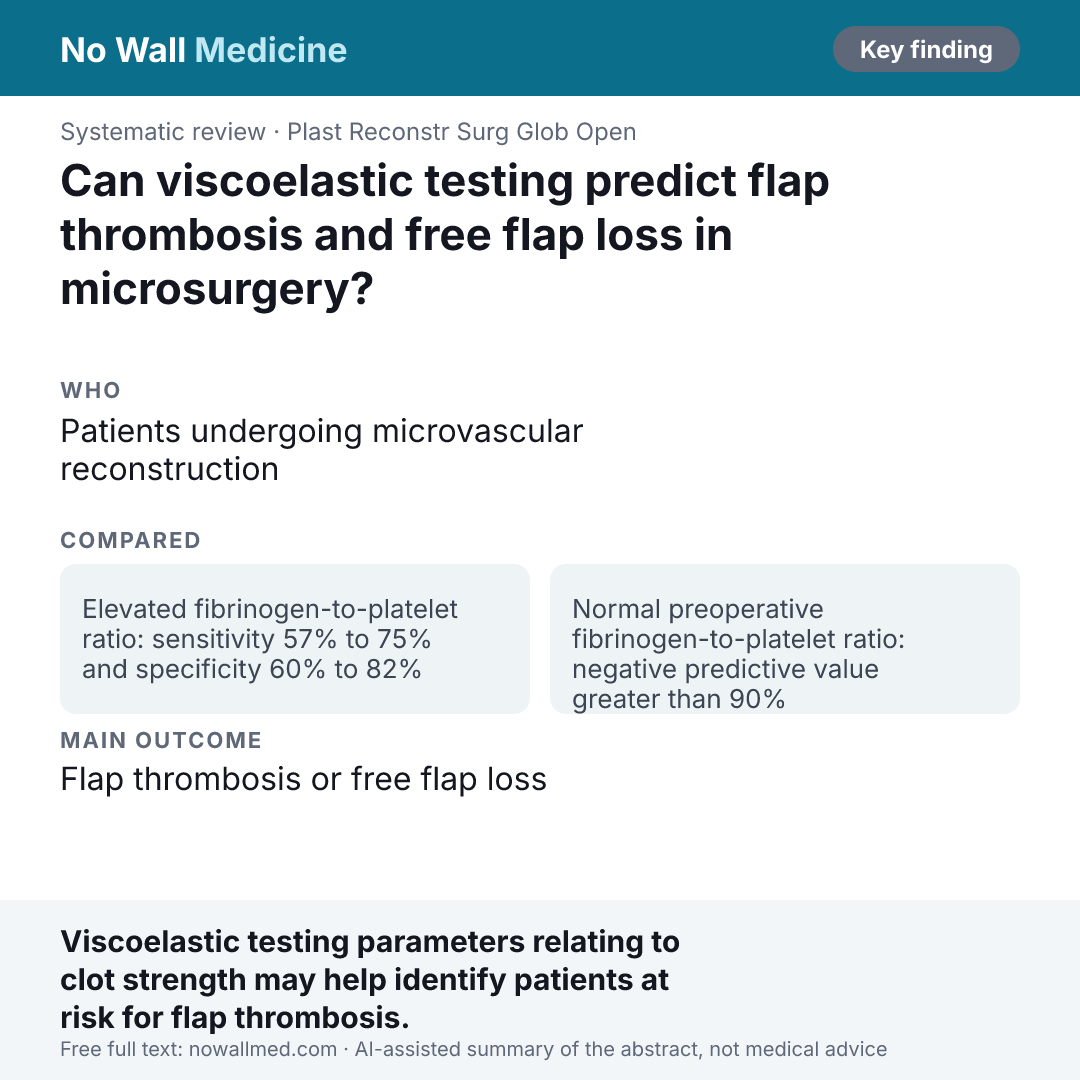
Can viscoelastic testing predict flap thrombosis and free flap loss in microsurgery?
Who
Patients undergoing microvascular reconstruction
Compared
Elevated fibrinogen-to-platelet ratio: sensitivity 57% to 75% and specificity 60% to 82%
Normal preoperative fibrinogen-to-platelet ratio: negative predictive value greater than 90%
Main outcome
Flap thrombosis or free flap loss
Bottom line: Viscoelastic testing parameters relating to clot strength may help identify patients at risk for flap thrombosis.
Limitation: Heterogenous study design and outcome reporting precluded a formal meta-analysis.
Plast Reconstr Surg Glob Open · 2021-08-12 · Save PNG
Key points
- Researchers reviewed six studies to examine the link between viscoelastic testing, which evaluates the clotting process, and complications in microvascular reconstruction.
- An elevated fibrinogen-to-platelet ratio of >42% was associated with flap loss, showing a sensitivity of 57% to 75% and a specificity of 60% to 82%.
- A normal preoperative fibrinogen-to-platelet ratio was associated with a negative predictive value for flap failure of greater than 90% in all studies reporting a correlation.
Discussion prompts
- Would these patients look like yours? Who was left out?
- Is the main outcome one that matters to patients?
- Is the difference large enough to change what you do?
Cite: Malapati H, Hanwright PJ, Tuffaha SH. Utility of Viscoelastic Tests to Predict Flap Thrombosis: A Systematic Review. Plast Reconstr Surg Glob Open. 2021;9(8):e3769. doi:10.1097/GOX.0000000000003769
Free full text: PubMed Central · Summary and visual abstract: nowallmed.com/a/utility-of-viscoelastic-tests-to-predict-flap-thrombosis-a-systematic-17z3iwj/ (AI-assisted from the abstract; check the paper before relying on it).