Variation in approaches to antimicrobial use surveillance in high-income secondary care settings: a systematic review
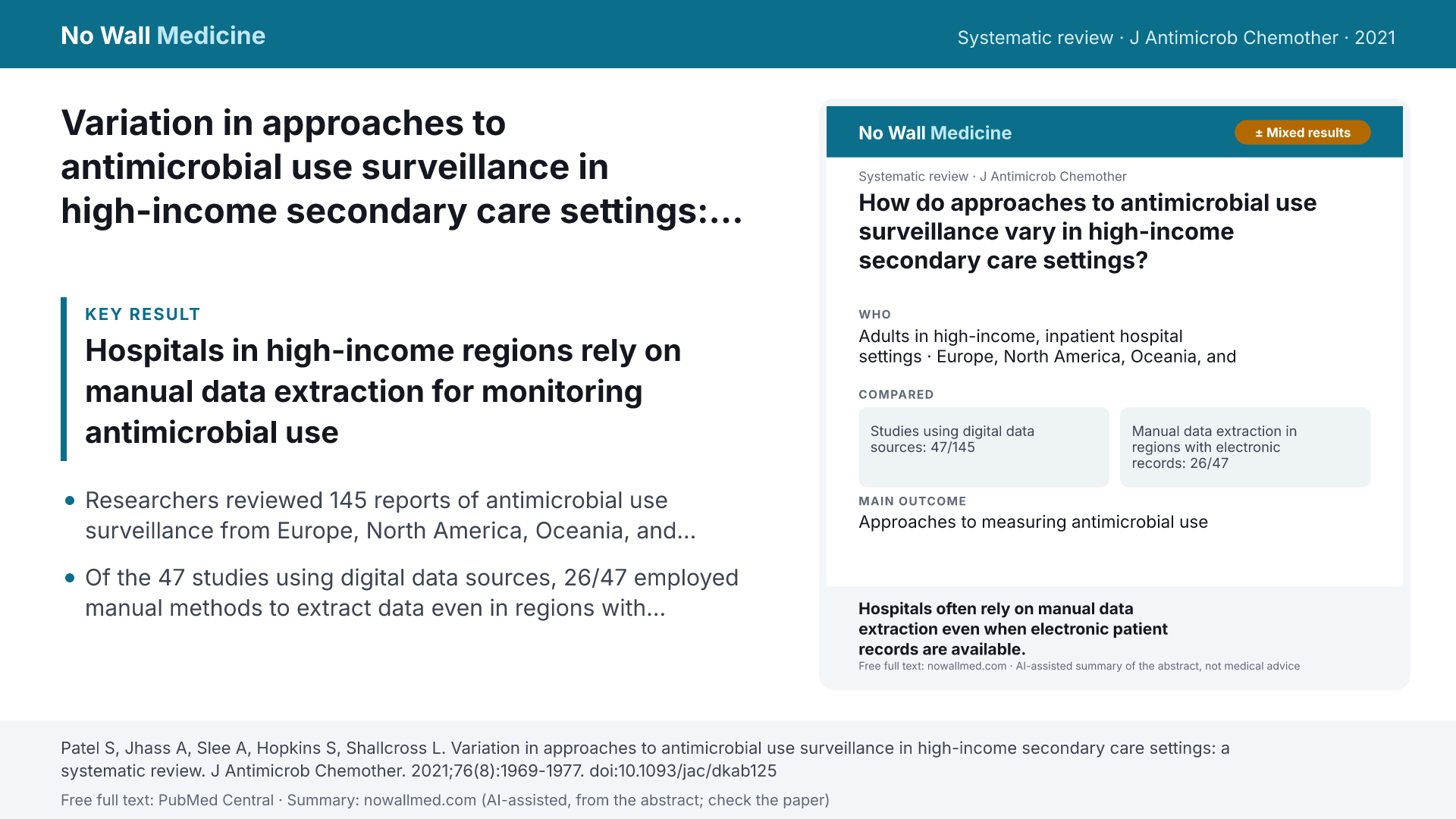
Key result: Hospitals in high-income regions rely on manual data extraction for monitoring antimicrobial use
Systematic reviewMixed results
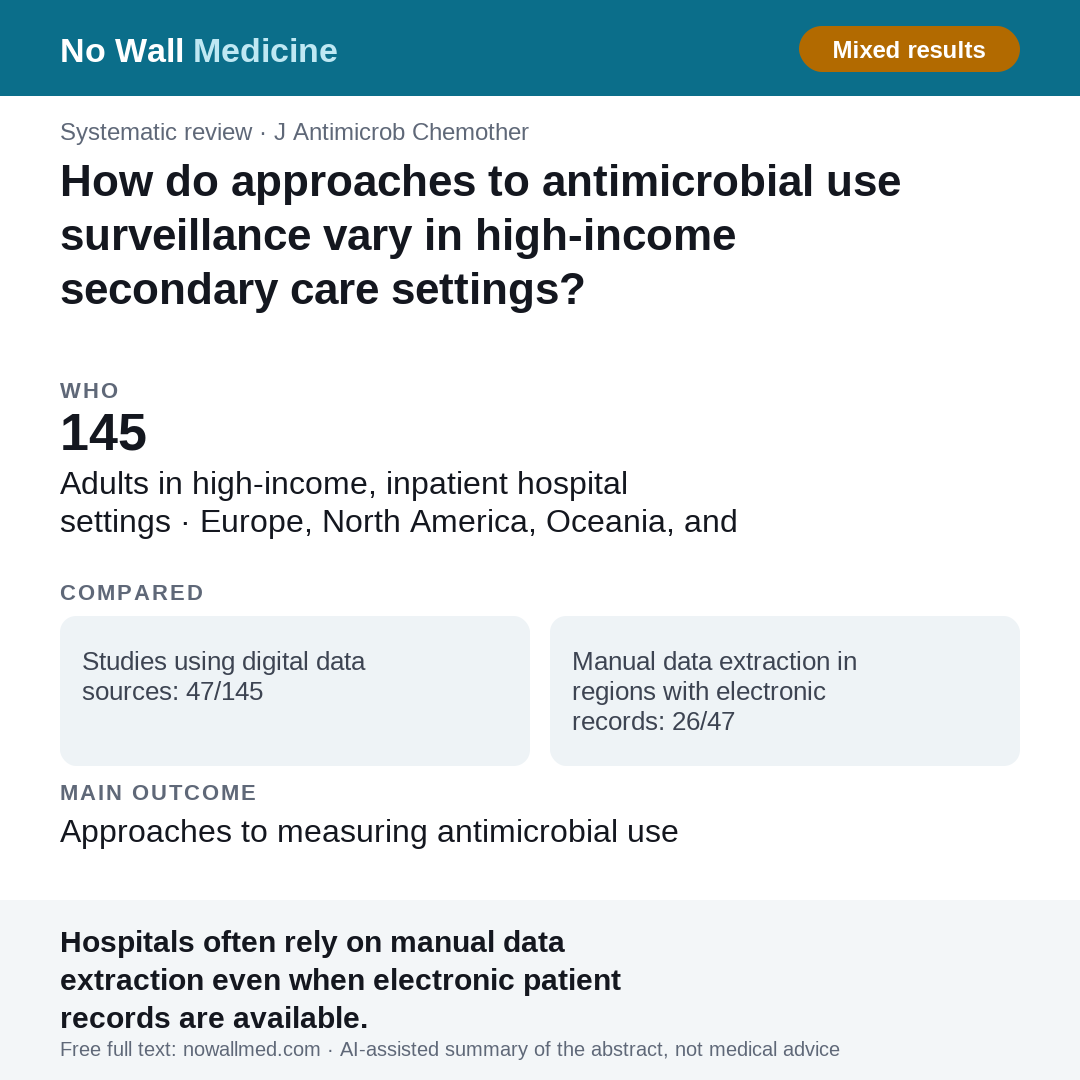
How do approaches to antimicrobial use surveillance vary in high-income secondary care settings?
Who
Adults in high-income, inpatient hospital settings · Europe, North America, Oceania, and Asia
Compared
Studies using digital data sources: 47/145
Manual data extraction in regions with electronic records: 26/47
Main outcome
Approaches to measuring antimicrobial use
Bottom line: Hospitals often rely on manual data extraction even when electronic patient records are available.
J Antimicrob Chemother · 2021-04-25Download image
Key points
- Researchers reviewed 145 reports of antimicrobial use surveillance from Europe, North America, Oceania, and Asia published between 1977 and 2018.
- Of the 47 studies using digital data sources, 26/47 employed manual methods to extract data even in regions with electronic patient records.
- Clinically trained professionals were the most common group involved in surveillance, representing 87/93 of the identified staff.
Discussion prompts
- Would these patients look like yours? Who was left out?
- Is the main outcome one that matters to patients?
- Is the difference large enough to change what you do?
Cite: Patel S, Jhass A, Slee A, Hopkins S, Shallcross L. Variation in approaches to antimicrobial use surveillance in high-income secondary care settings: a systematic review. J Antimicrob Chemother. 2021. doi:10.1093/jac/dkab125
Free full text: PubMed Central · Summary and visual abstract: nowallmed.com/a/variation-in-approaches-to-antimicrobial-use-surveillance-in-high-1litek1/ (AI-assisted from the abstract; check the paper before relying on it).