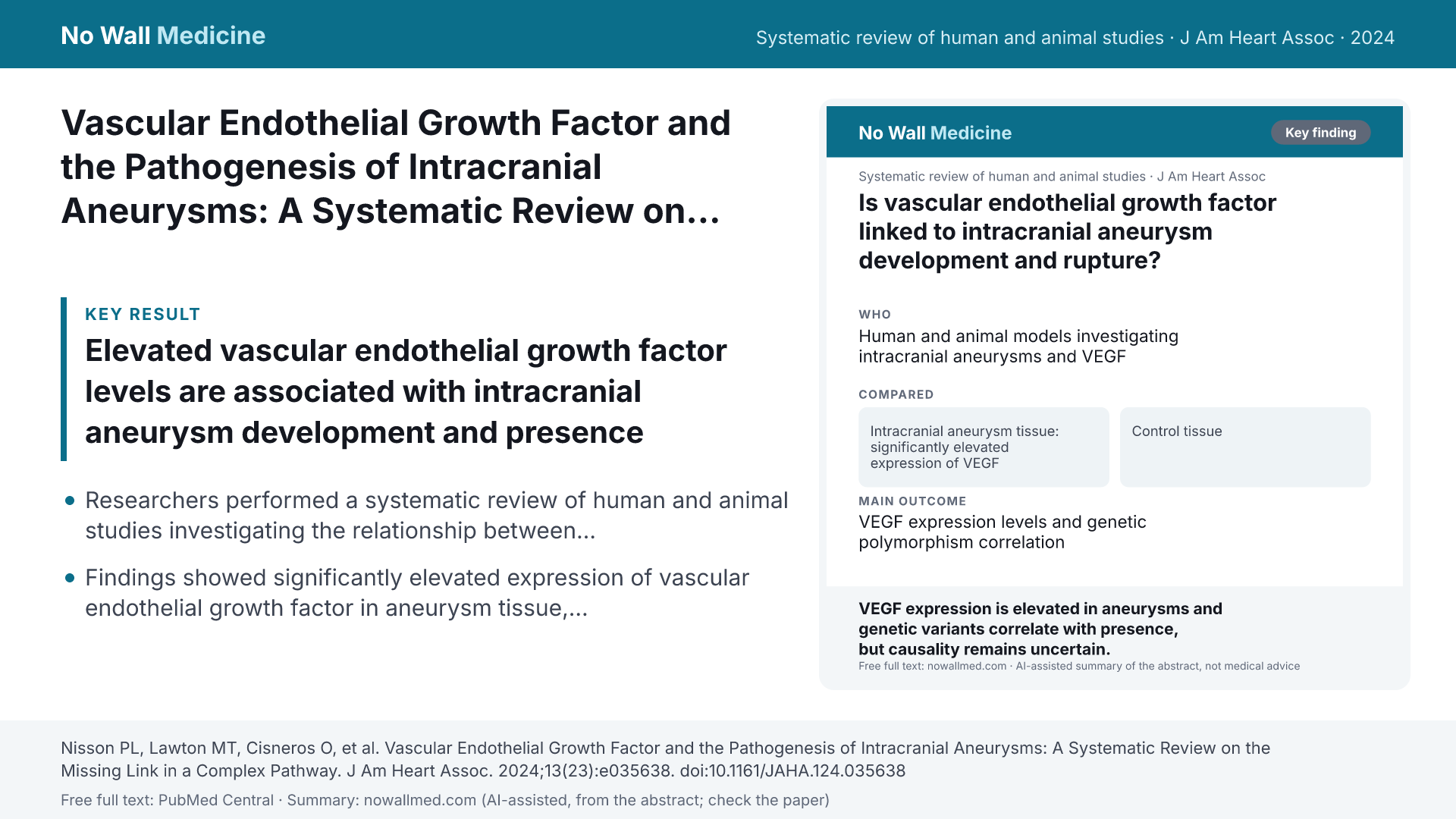
Vascular Endothelial Growth Factor and the Pathogenesis of Intracranial Aneurysms: A Systematic Review on the Missing Link in a Complex Pathway
Key result: Elevated vascular endothelial growth factor levels are associated with intracranial aneurysm development and presence
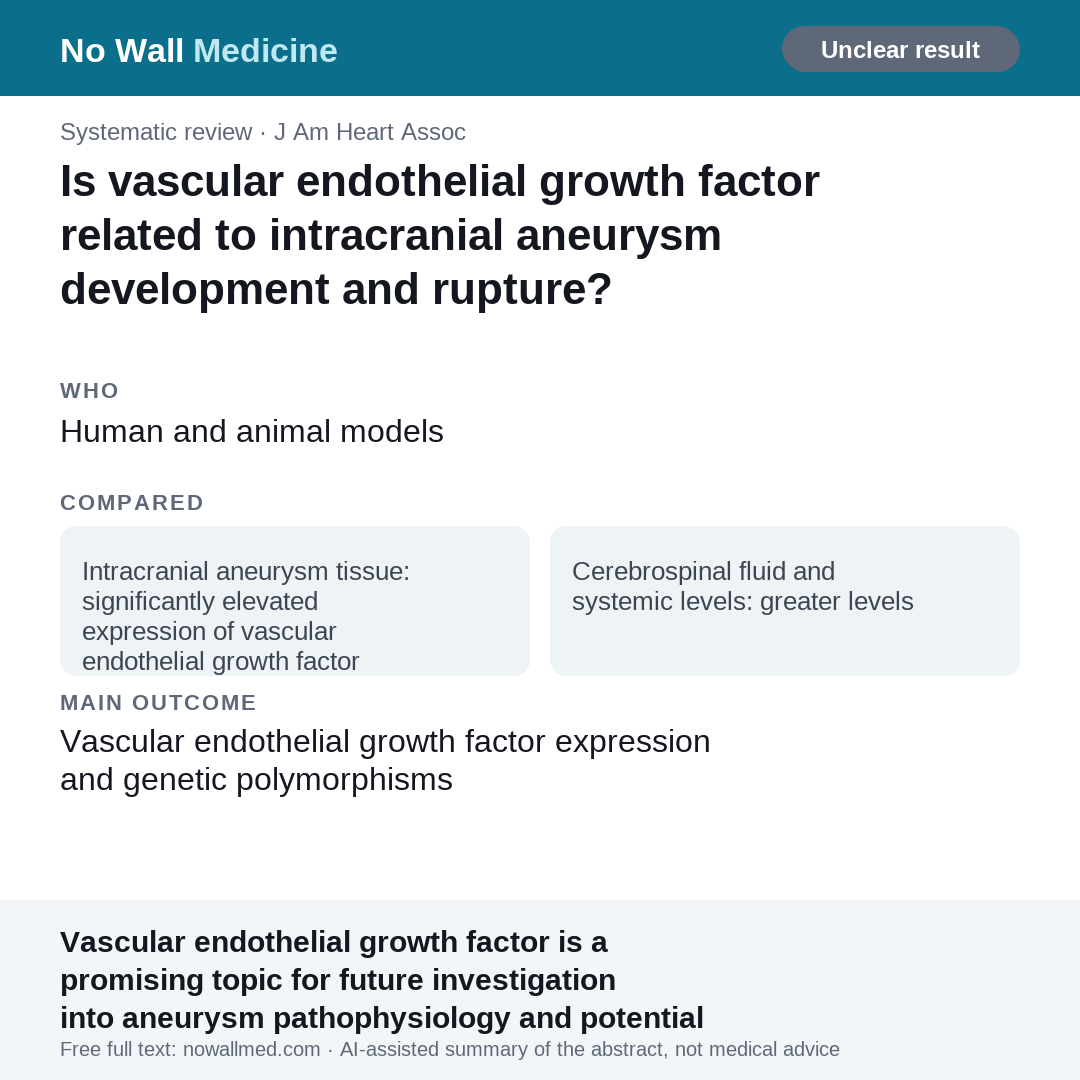
Systematic reviewUnclear result
Is vascular endothelial growth factor related to intracranial aneurysm development and rupture?
Who
Human and animal models
Compared
Intracranial aneurysm tissue: significantly elevated expression of vascular endothelial growth factor
Cerebrospinal fluid and systemic levels: greater levels
Main outcome
Vascular endothelial growth factor expression and genetic polymorphisms
Bottom line: Vascular endothelial growth factor is a promising topic for future investigation into aneurysm pathophysiology and potential therapeutic targets.
J Am Heart Assoc · 2024-11-22Download image
Key points
- Researchers performed a systematic review of human and animal studies investigating the relationship between vascular endothelial growth factor and intracranial aneurysms.
- Findings showed significantly elevated expression of vascular endothelial growth factor in aneurysm tissue, cerebrospinal fluid, and systemic levels.
- Genetic variations in vascular endothelial growth factor were significantly correlated with the presence of intracranial aneurysms.
Discussion prompts
- Would these patients look like yours? Who was left out?
- Is the main outcome one that matters to patients?
- Is the difference large enough to change what you do?
Cite: Nisson PL, Lawton MT, Cisneros O, et al. Vascular Endothelial Growth Factor and the Pathogenesis of Intracranial Aneurysms: A Systematic Review on the Missing Link in a Complex Pathway. J Am Heart Assoc. 2024. doi:10.1161/JAHA.124.035638
Free full text: PubMed Central · Summary and visual abstract: nowallmed.com/a/vascular-endothelial-growth-factor-and-the-pathogenesis-of-86j6ze/ (AI-assisted from the abstract; check the paper before relying on it).