CSL346 did not reduce urinary albumin-creatinine ratio in patients with diabetic kidney disease
Vascular Endothelial Growth Factor-B Blockade with CSL346 in Diabetic Kidney Disease: A Phase 2A Randomized Controlled Trial
Randomized, double-blind, placebo-controlled, phase 2a studyNo clear difference
Does CSL346 reduce urinary albumin-creatinine ratio in diabetic kidney disease?
Who
114
Participants with type 2 diabetes mellitus and diabetic kidney disease · International
Compared
Combined CSL346 dose groups
Placebo
Main outcome
change from baseline in log-transformed urinary albumin-creatinine ratio
Result: 4.0% (95% confidence interval, -14.7 to 26.8)
Bottom line: CSL346 did not reduce urinary albumin-creatinine ratio compared to placebo at 16 weeks.
JASN · 2024-08-16Download image
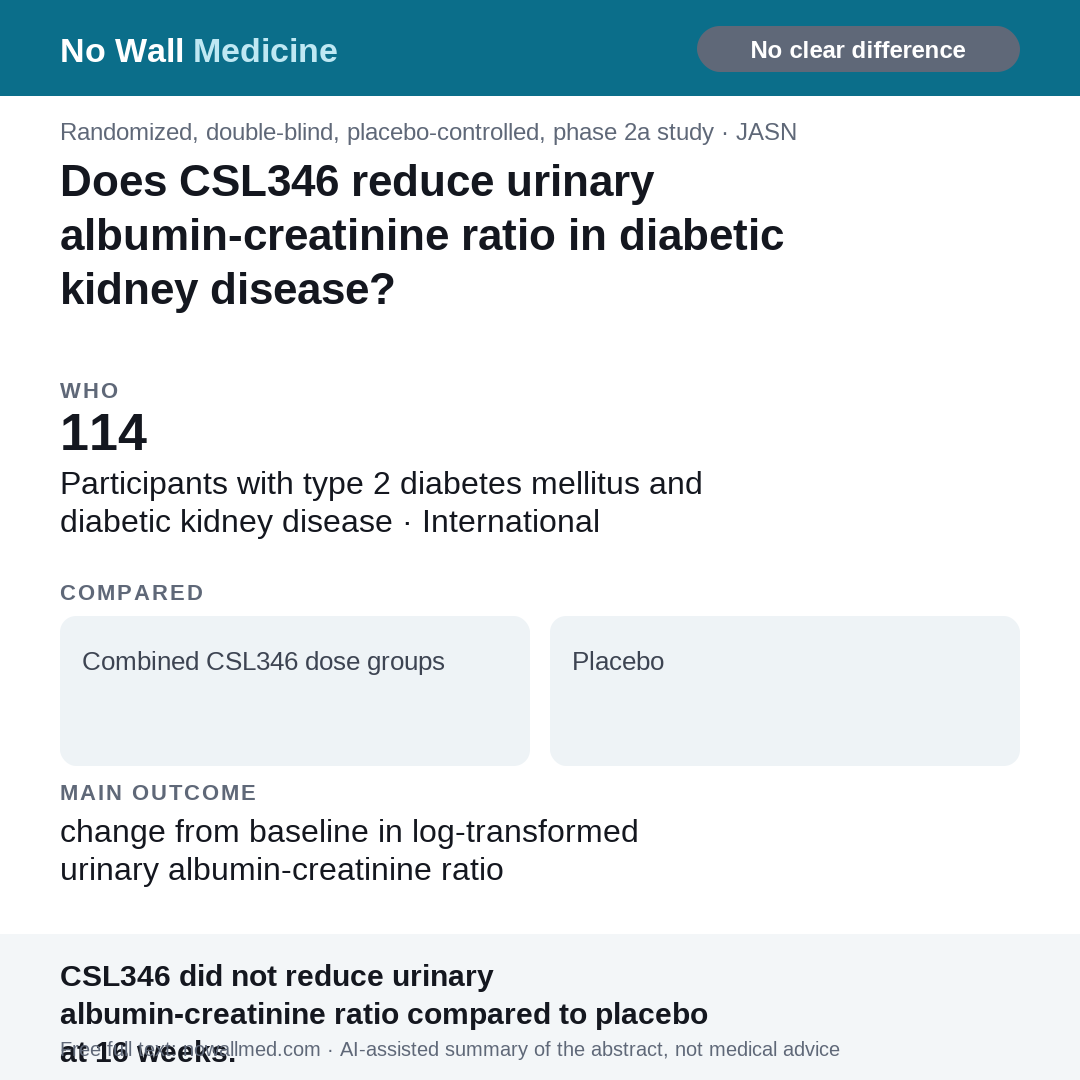
Clinical question: Does CSL346 reduce urinary albumin-creatinine ratio in diabetic kidney disease?
Why it matters: It was unknown if targeting vascular endothelial growth factor B with the monoclonal antibody CSL346 could improve markers of diabetic kidney disease progression in humans.
Key points
- The study randomized 114 participants with type 2 diabetes and diabetic kidney disease to receive CSL346 at 8 or 16 mg/kg or a placebo.
- CSL346 did not significantly reduce the urinary albumin-creatinine ratio at week 16 compared to placebo, with a difference of 4.0% (95% confidence interval, -14.7 to 26.8).
- The 16 mg/kg dose of CSL346 was associated with significantly higher diastolic blood pressure compared to placebo, with differences between +3.8 and +5.3 mm Hg.
Headline and key points written with AI from the paper’s abstract, with every number checked against it. Read the paper before relying on them.
Was this summary helpful?
Cite this article
Cooper M, Cherney DZI, Greene TH, Heerspink HJL, Jardine M, Lewis JB. Vascular Endothelial Growth Factor-B Blockade with CSL346 in Diabetic Kidney Disease: A Phase 2A Randomized Controlled Trial. JASN. 2024. doi:10.1681/ASN.0000000000000438
Spotted a mistake? Suggest a correction
Top studies every Monday
The week’s key trials and guidelines in your specialties, plus any topics you follow. By email, free.
Get the weekly digest