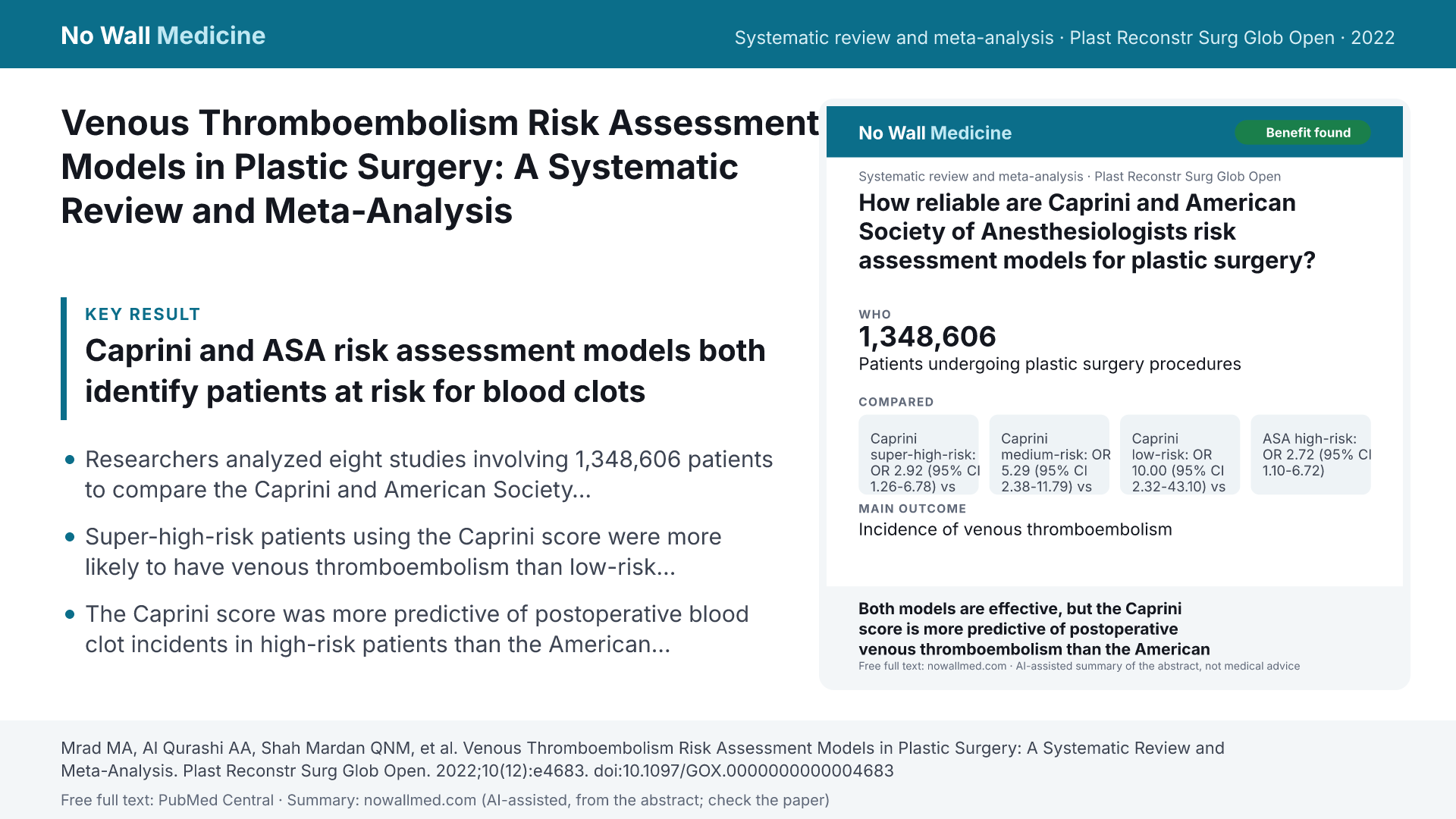
Caprini and ASA risk assessment models both identify patients at risk for blood clots
Venous Thromboembolism Risk Assessment Models in Plastic Surgery: A Systematic Review and Meta-Analysis
Systematic review and meta-analysisBenefit found
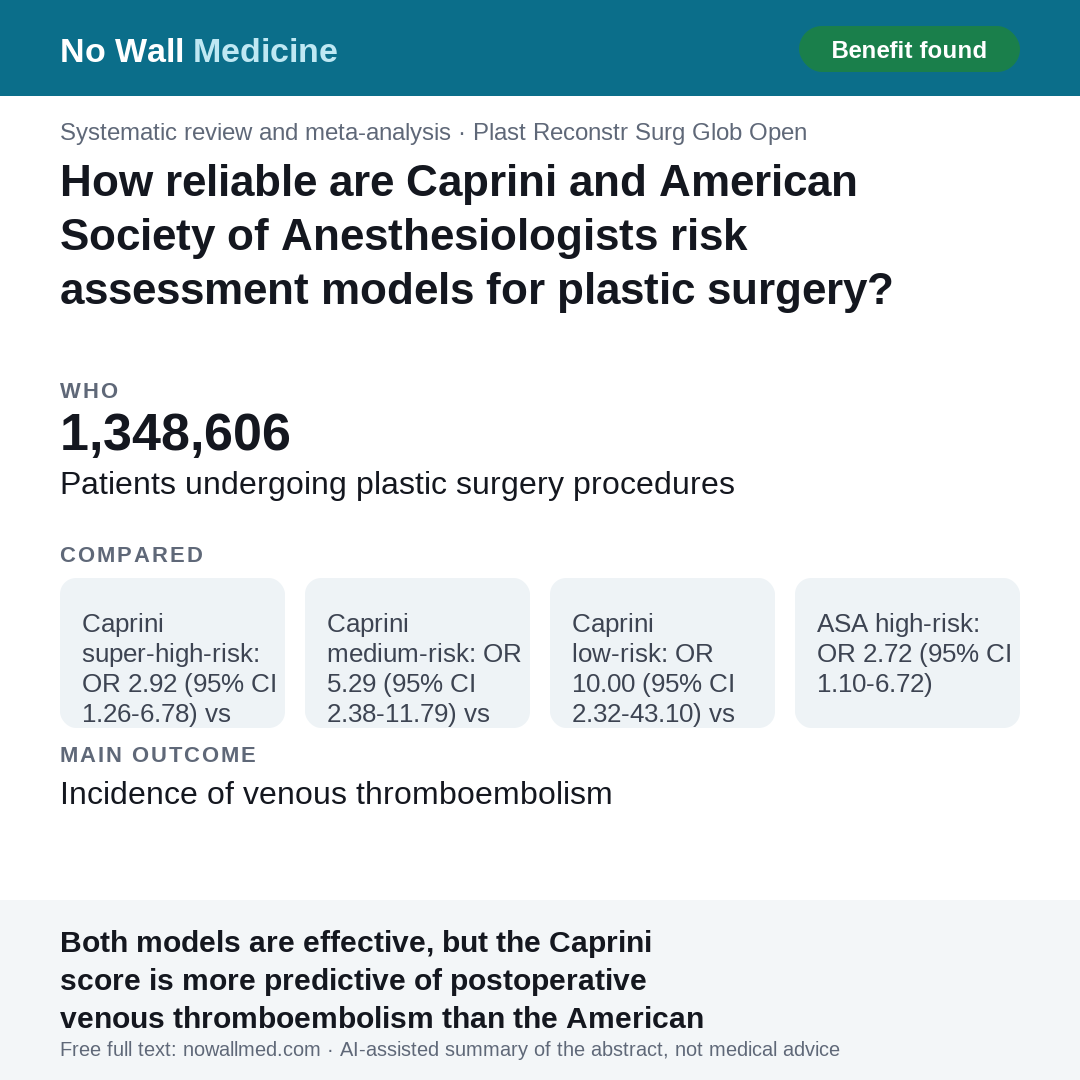
How reliable are Caprini and American Society of Anesthesiologists risk assessment models for plastic surgery?
Who
1,348,606
Patients undergoing plastic surgery procedures
Compared
Caprini super-high-risk: OR 2.92 (95% CI 1.26-6.78) vs high-risk
Caprini medium-risk: OR 5.29 (95% CI 2.38-11.79) vs low-risk
Caprini low-risk: OR 10.00 (95% CI 2.32-43.10) vs counterparts
ASA high-risk: OR 2.72 (95% CI 1.10-6.72)
Main outcome
Incidence of venous thromboembolism
Bottom line: Both models are effective, but the Caprini score is more predictive of postoperative venous thromboembolism than the American Society of Anesthesiologists grading.
Limitation: Lack of high-quality evidence and heterogeneity in risk assessment model data
Plast Reconstr Surg Glob Open · 2022-12-08Download image
Clinical question: How reliable are Caprini and American Society of Anesthesiologists risk assessment models for plastic surgery?
Key points
- Researchers analyzed eight studies involving 1,348,606 patients to compare the Caprini and American Society of Anesthesiologists physical status classification models.
- Super-high-risk patients using the Caprini score were more likely to have venous thromboembolism than low-risk patients with an odds ratio of 10.00.
- The Caprini score was more predictive of postoperative blood clot incidents in high-risk patients than the American Society of Anesthesiologists grading system.
Headline and key points written with AI from the paper’s abstract, with every number checked against it. Read the paper before relying on them.
Was this summary helpful?
Cite this article
Mrad MA, Al Qurashi AA, Shah Mardan QNM, Al Ghamdi AA, Al Jabr FA, Almenhali AA. Venous Thromboembolism Risk Assessment Models in Plastic Surgery: A Systematic Review and Meta-Analysis. Plast Reconstr Surg Glob Open. 2022. doi:10.1097/GOX.0000000000004683
Spotted a mistake? Suggest a correction
Top studies every Monday
The week’s key trials and guidelines in your specialties, plus any topics you follow. By email, free.
Get the weekly digest