BMP-9 and BMP-10 regulate pulmonary vascular resilience through complex pathways
Solving an enigma: the BMP-9/10 axis as a key regulator of pulmonary vascular resilience
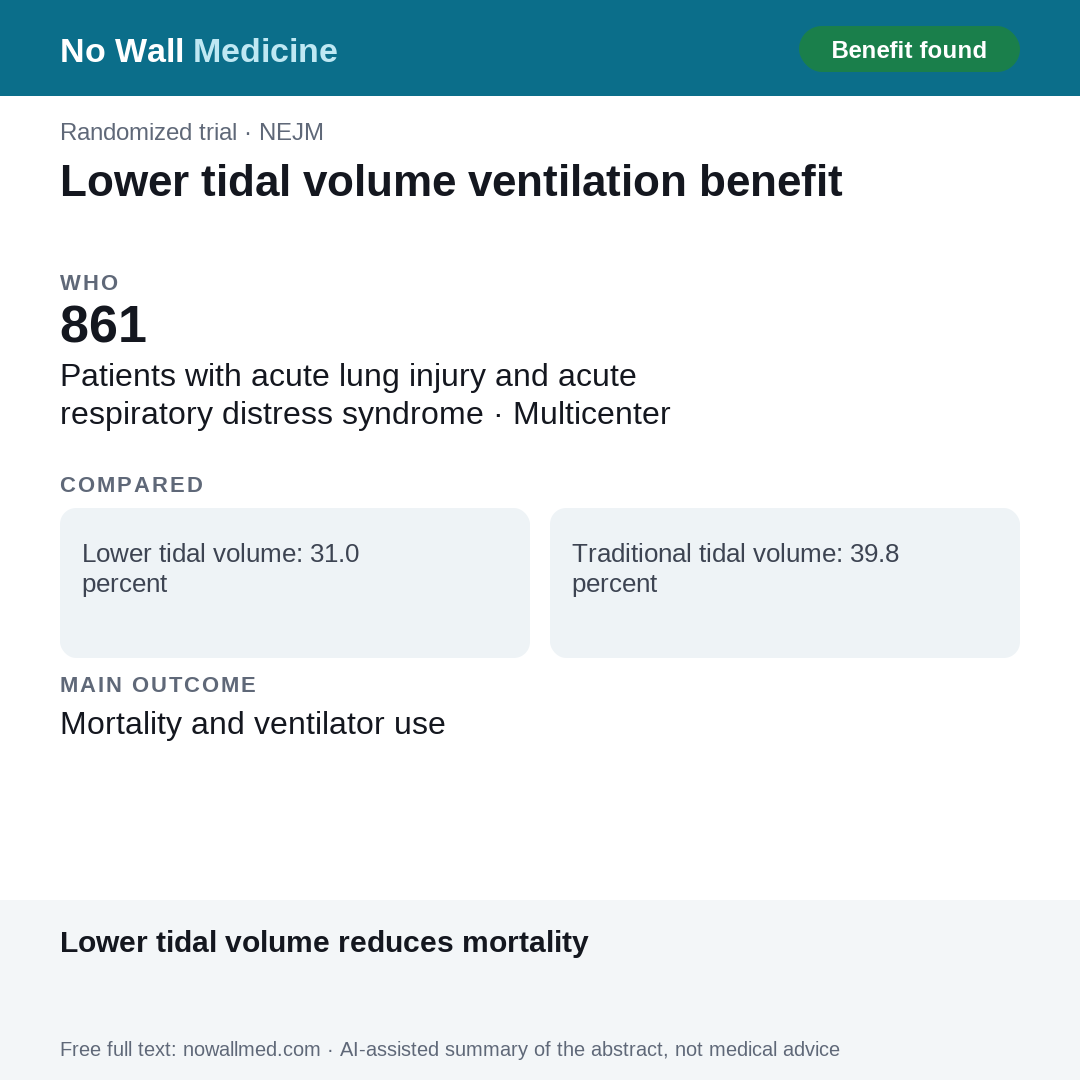
Ventilation with lower tidal volumes as compared with traditional tidal volumes for acute lung injury and the acute respiratory distress syndrome
Why it matters: Made low tidal volume ventilation the standard of care for acute respiratory distress syndrome (ARDS).
Related landmark trials: PROSEVA
Context written by the No Wall Medicine team.
Bottom line: Lower tidal volume ventilation decreases mortality and increases days without ventilator use.
Does lower tidal volume ventilation improve outcomes in acute lung injury and acute respiratory distress syndrome?
Multicenter, randomized trial. Multiple centers, 861 patients enrolled
861 patients with acute lung injury and acute respiratory distress syndrome
death before discharge and days without ventilator use. 31.0 percent vs. 39.8 percent, P=0.007, and 12+/-11 vs. 10+/-11 days, P=0.007
Written with AI from the abstract; every number was checked against it. Details such as eligibility criteria may be missing because the abstract does not give them. Read the paper before relying on it.
Headline and key points written with AI from the paper’s abstract, with every number checked against it. Read the paper before relying on them.
Spotted a mistake? Suggest a correction
Solving an enigma: the BMP-9/10 axis as a key regulator of pulmonary vascular resilience
Needle aspiration versus intercostal chest drain for secondary spontaneous pneumothorax (the PRINCE-SSP trial): a pragmatic, open-label, multicentre, non-inferiority, randomised controlled trial
Safety and efficacy of inhaled itraconazole in adults with asthma and allergic bronchopulmonary aspergillosis (PUR1900-ABPA): a randomised, double-blind, parallel group, placebo-controlled, multicentre, phase 2 trial
Combination acetazolamide and supplemental oxygen markedly improves ventilatory control instability and OSA severity