Ventriculoperitoneal shunt and transverse sinus stenting have similar outcomes for idiopathic intracranial hypertension
Ventriculoperitoneal shunt versus transverse sinus stenting in idiopathic intracranial hypertension: A systematic review and meta-analysis
Systematic review and meta-analysisNo clear difference
Are ventriculoperitoneal shunting and transverse sinus stenting comparable for idiopathic intracranial hypertension?
Who
Adult idiopathic intracranial hypertension patients
Compared
Transverse sinus stenting: 84.1% visual improvement
Ventriculoperitoneal shunting: 83.3% visual improvement
Main outcome
Visual improvement, headache improvement, and revision rates
Bottom line: Ventriculoperitoneal shunting and transverse sinus stenting provide comparable clinical outcomes in idiopathic intracranial hypertension.
Limitation: Evidence derived from non-randomized, indirect comparisons with substantial indication bias.
Brain Spine · 2026-08-07Download image
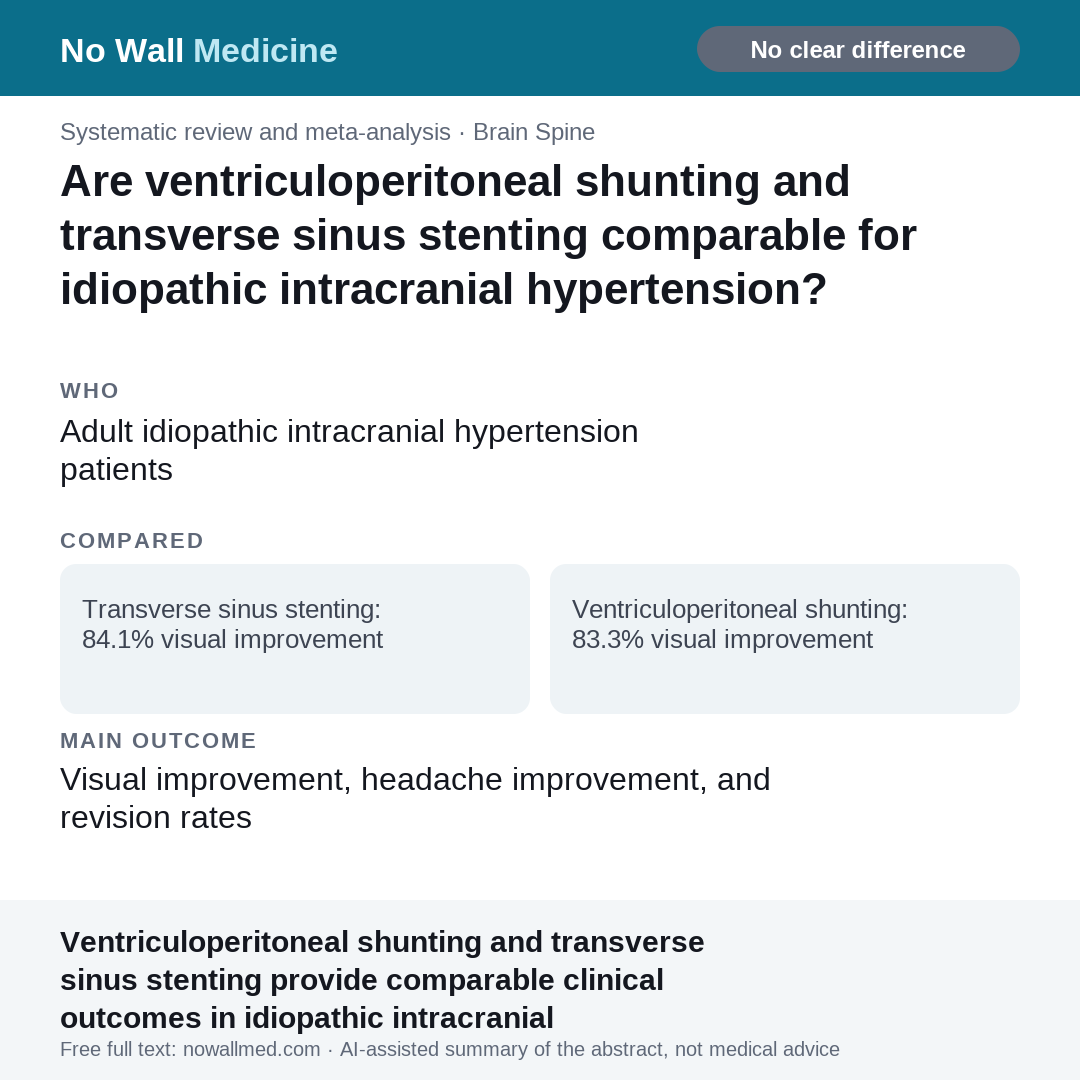
Clinical question: Are ventriculoperitoneal shunting and transverse sinus stenting comparable for idiopathic intracranial hypertension?
Why it matters: Comparative evidence on ventriculoperitoneal shunting and transverse sinus stenting for idiopathic intracranial hypertension remains limited
Key points
- Seventeen studies of adult idiopathic intracranial hypertension patients were analyzed.
- 83.9% of patients had visual improvement, with no significant difference between treatments.
- Revision rates were 9.8% with transverse sinus stenting and 24.5% with ventriculoperitoneal shunting.
Limitation the authors note: Available evidence is derived predominantly from non-randomized studies with substantial indication bias
Headline and key points written with AI from the paper’s abstract, with every number checked against it. Read the paper before relying on them.
Cite this article
Hafiz B, Turkistani A, Alharthi W, Alsindi T, Arif RF, Binmahfoodh M. Ventriculoperitoneal shunt versus transverse sinus stenting in idiopathic intracranial hypertension: A systematic review and meta-analysis. Brain Spine. 2026. doi:10.1016/j.bas.2026.106264
Spotted a mistake? Suggest a correction
Top studies every Monday
The week’s key trials and guidelines in your specialties, plus any topics you follow. By email, free.
Get the weekly digest