Video screen visualization patterns when using a video laryngoscope for tracheal intubation: A systematic review
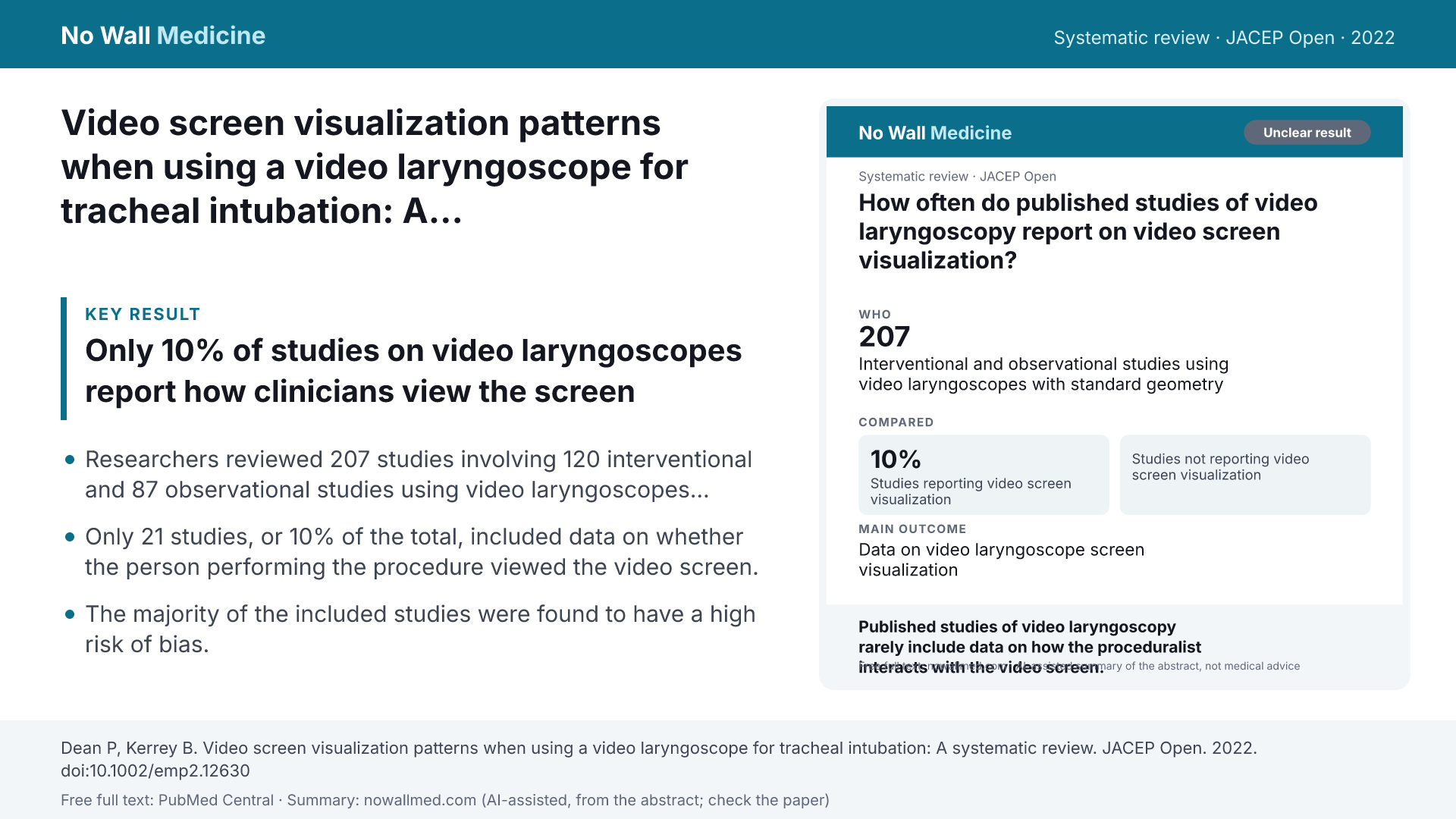
Key result: Only 10% of studies on video laryngoscopes report how clinicians view the screen
Systematic reviewUnclear result
How often do published studies of video laryngoscopy report on video screen visualization?
Who
207
Interventional and observational studies using video laryngoscopes with standard geometry blades
Compared
10%Studies reporting video screen visualization (21/207)
Studies not reporting video screen visualization
Main outcome
Data on video laryngoscope screen visualization
Bottom line: Published studies of video laryngoscopy rarely include data on how the proceduralist interacts with the video screen.
Limitation: Risk of bias was high in the majority of included studies.
JACEP Open · 2022-01-06 · Save PNG

Key points
- Researchers reviewed 207 studies involving 120 interventional and 87 observational studies using video laryngoscopes for tracheal intubation, which is the process of placing a tube into the windpipe.
- Only 21 studies, or 10% of the total, included data on whether the person performing the procedure viewed the video screen.
- The majority of the included studies were found to have a high risk of bias.
Limitation the authors note: Risk of bias was high in the majority of included studies.
Discussion prompts
- Would these patients look like yours? Who was left out?
- Is the main outcome one that matters to patients?
- Is the difference large enough to change what you do?
Cite: Dean P, Kerrey B. Video screen visualization patterns when using a video laryngoscope for tracheal intubation: A systematic review. JACEP Open. 2022. doi:10.1002/emp2.12630
Free full text: PubMed Central · Summary and visual abstract: nowallmed.com/a/video-screen-visualization-patterns-when-using-a-video-laryngoscope-121n5xk/ (AI-assisted from the abstract; check the paper before relying on it).