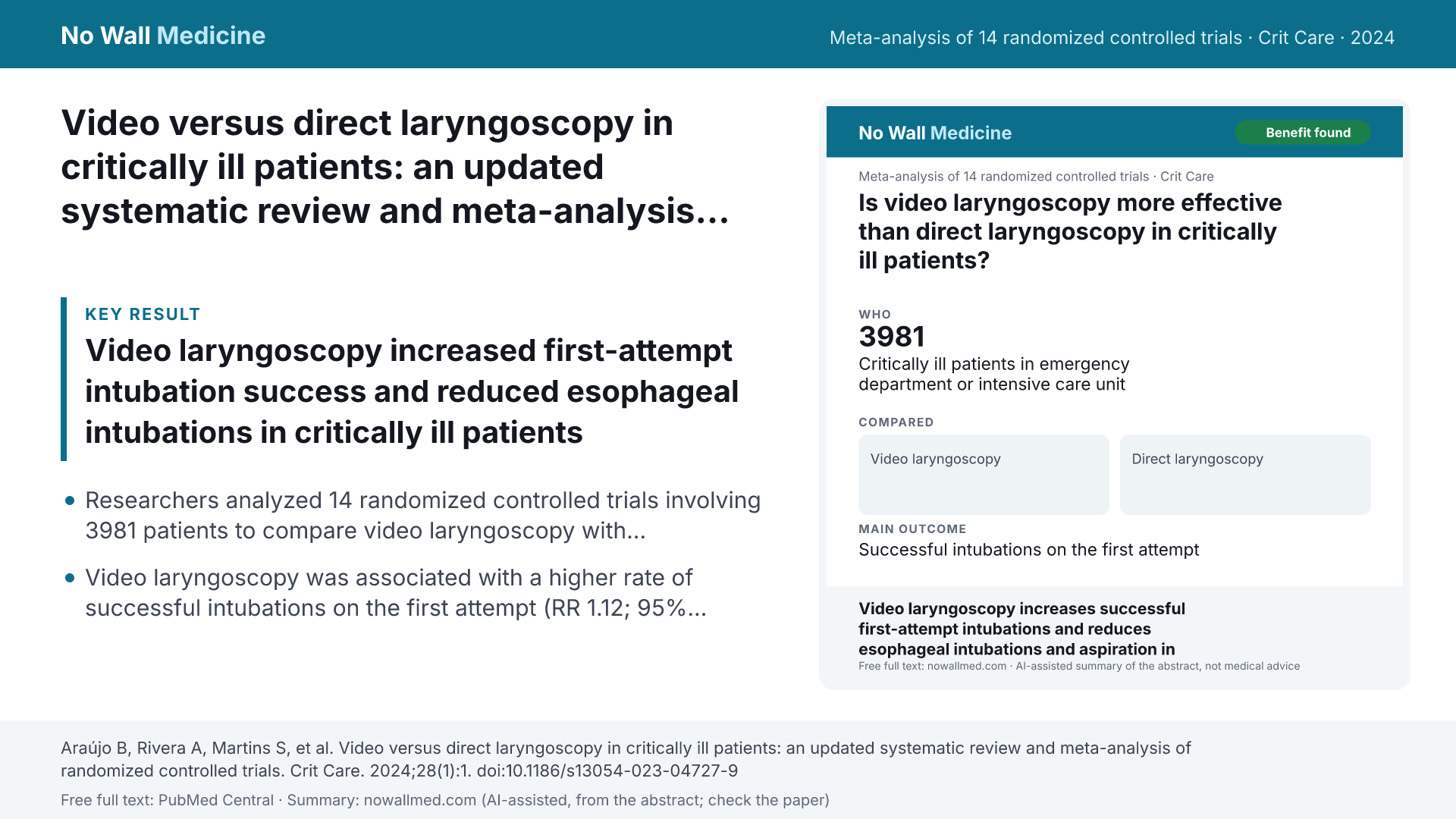
Video versus direct laryngoscopy in critically ill patients: an updated systematic review and meta-analysis of randomized controlled trials
Key result: Video laryngoscopy increased first-attempt intubation success and reduced esophageal intubations in critically ill patients
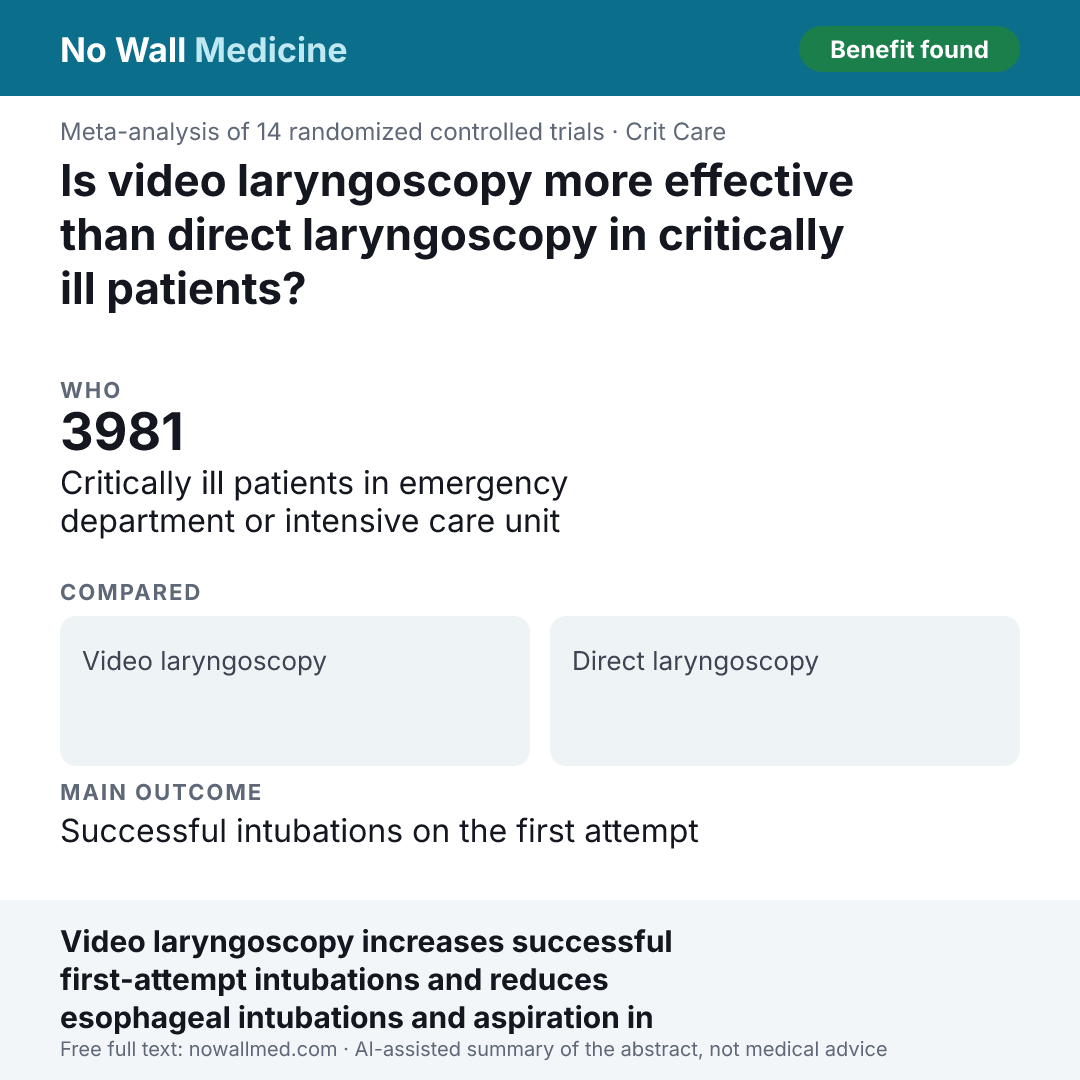
Meta-analysis of 14 randomized controlled trialsBenefit found
Is video laryngoscopy more effective than direct laryngoscopy in critically ill patients?
Who
3981
Critically ill patients in emergency department or intensive care unit
Compared
Video laryngoscopy
Direct laryngoscopy
Main outcome
Successful intubations on the first attempt
Result: relative risk 1.12 (95% CI 1.04-1.20)
Bottom line: Video laryngoscopy increases successful first-attempt intubations and reduces esophageal intubations and aspiration in critically ill patients.
Crit Care · 2024-01-02 · Save PNG
Key points
- Researchers analyzed 14 randomized controlled trials involving 3981 patients to compare video laryngoscopy with direct laryngoscopy in emergency and intensive care settings.
- Video laryngoscopy was associated with a higher rate of successful intubations on the first attempt (RR 1.12; 95% CI 1.04-1.20; p < 0.01).
- Compared to direct laryngoscopy, video laryngoscopy was associated with fewer esophageal intubations (RR 0.44; 95% CI 0.24-0.80; p < 0.01) and fewer aspiration episodes (RR 0.63; 95% CI 0.41-0.96; p = 0.03).
Discussion prompts
- Would these patients look like yours? Who was left out?
- Is the main outcome one that matters to patients?
- Is the difference large enough to change what you do?
Cite: Araújo B, Rivera A, Martins S, et al. Video versus direct laryngoscopy in critically ill patients: an updated systematic review and meta-analysis of randomized controlled trials. Crit Care. 2024;28(1):1. doi:10.1186/s13054-023-04727-9
Free full text: PubMed Central · Summary and visual abstract: nowallmed.com/a/video-versus-direct-laryngoscopy-in-critically-ill-patients-an-3a4wdi/ (AI-assisted from the abstract; check the paper before relying on it).