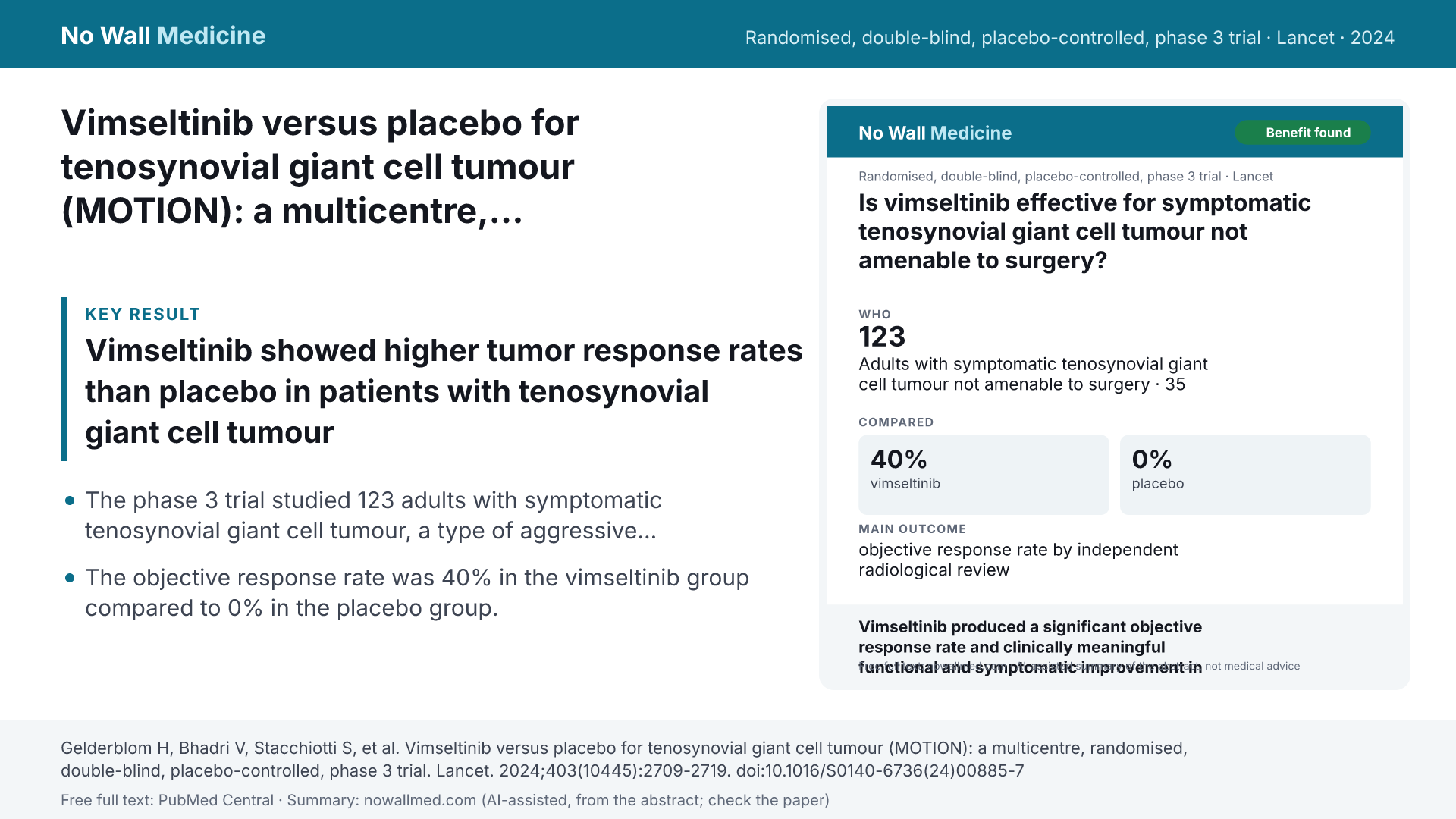
Vimseltinib showed higher tumor response rates than placebo in patients with tenosynovial giant cell tumour
Vimseltinib versus placebo for tenosynovial giant cell tumour (MOTION): a multicentre, randomised, double-blind, placebo-controlled, phase 3 trial
Randomised, double-blind, placebo-controlled, phase 3 trialBenefit found
Is vimseltinib effective for symptomatic tenosynovial giant cell tumour not amenable to surgery?
Who
123
Adults with symptomatic tenosynovial giant cell tumour not amenable to surgery · 35 specialised hospitals in 13 countries
Compared
40%vimseltinib (33 of 83 patients)
0%placebo (none of 40)
Main outcome
objective response rate by independent radiological review
Result: difference 40% (95% CI 29-51)
Bottom line: Vimseltinib produced a significant objective response rate and clinically meaningful functional and symptomatic improvement in patients with tenosynovial giant cell tumour.
Funded by: Deciphera Pharmaceuticals
Lancet · 2024-06-03 · Save PNG
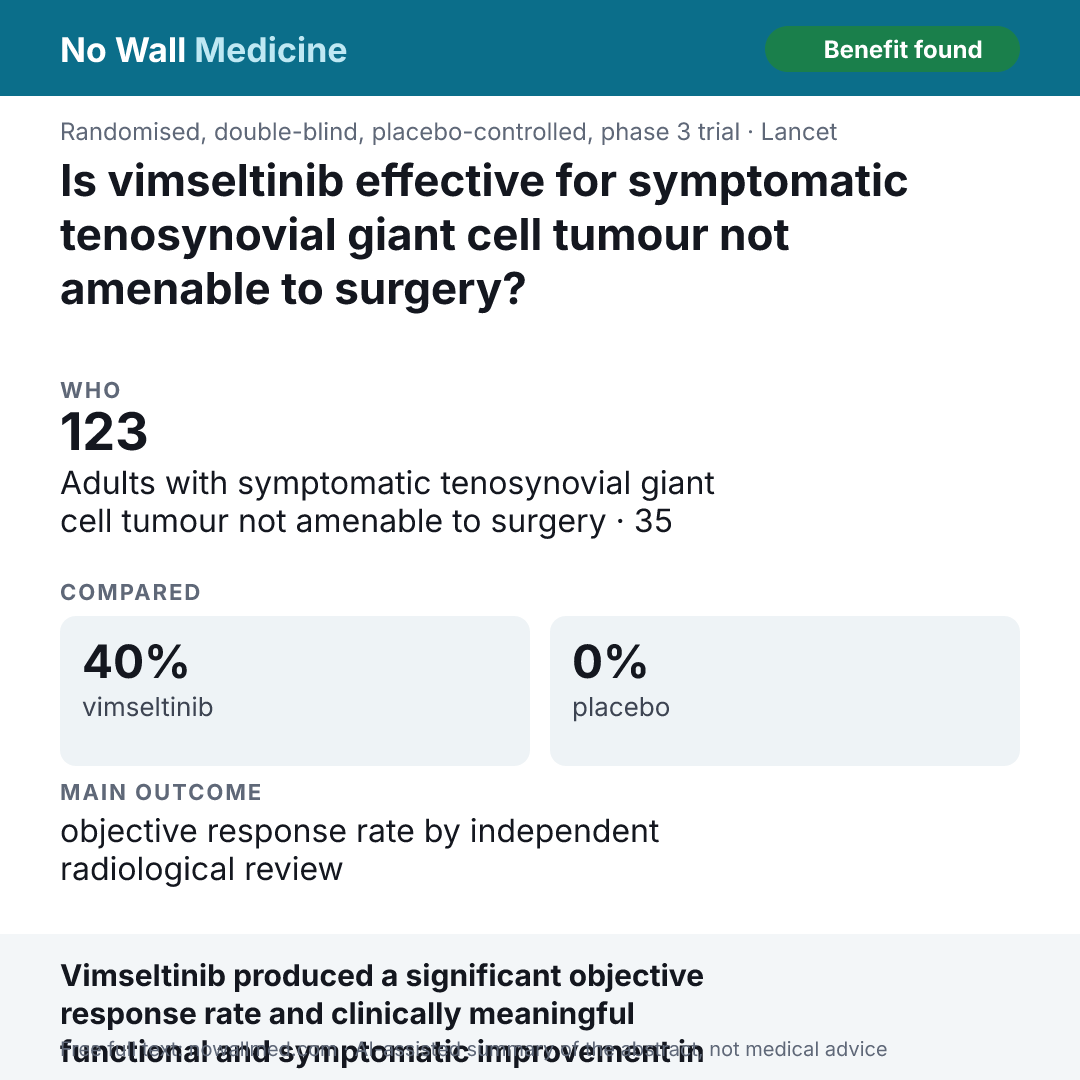
Clinical question: Is vimseltinib effective for symptomatic tenosynovial giant cell tumour not amenable to surgery?
Why it matters: Few systemic treatment options exist for patients with tenosynovial giant cell tumour where surgical resection could cause severe morbidity or worsen functional limitation.
In absolute numbers
vimseltinib: 40% · placebo: 0% → a difference of 40 percentage points, so about 3 people would need the treatment for 1 more to benefit (number needed to treat) over the trial’s follow-up.
Worked out by us from the two group results above, not reported by the authors. Check the paper for the exact outcome and timing.
Key points
- The phase 3 trial studied 123 adults with symptomatic tenosynovial giant cell tumour, a type of aggressive tumor, comparing vimseltinib to a placebo.
- The objective response rate was 40% in the vimseltinib group compared to 0% in the placebo group.
- The only grade 3 or 4 adverse event occurring in more than 5% of the vimseltinib group was increased blood creatine phosphokinase in 10% of patients.
Headline and key points written with AI from the paper’s abstract, with every number checked against it. Read the paper before relying on them.
Was this summary helpful?
Subject terms
Headline, design, result, key points, caveat and citation as plain text.
Cite this article
Gelderblom H, Bhadri V, Stacchiotti S, et al. Vimseltinib versus placebo for tenosynovial giant cell tumour (MOTION): a multicentre, randomised, double-blind, placebo-controlled, phase 3 trial. Lancet. 2024;403(10445):2709-2719. doi:10.1016/S0140-6736(24)00885-7
Spotted a mistake? Suggest a correction