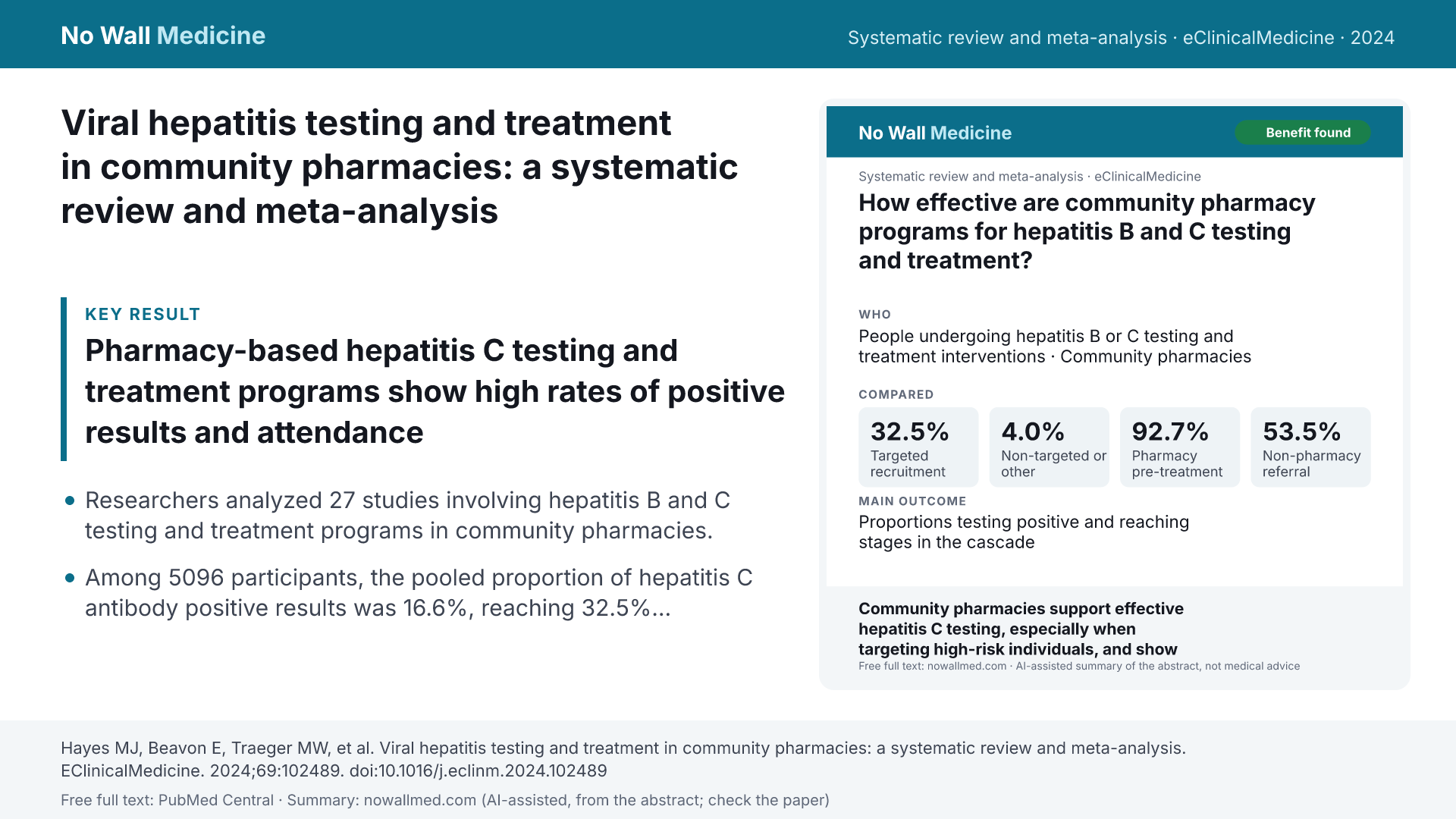
Pharmacy-based hepatitis C testing and treatment programs show high rates of positive results and attendance
Viral hepatitis testing and treatment in community pharmacies: a systematic review and meta-analysis
Systematic review and meta-analysisBenefit found
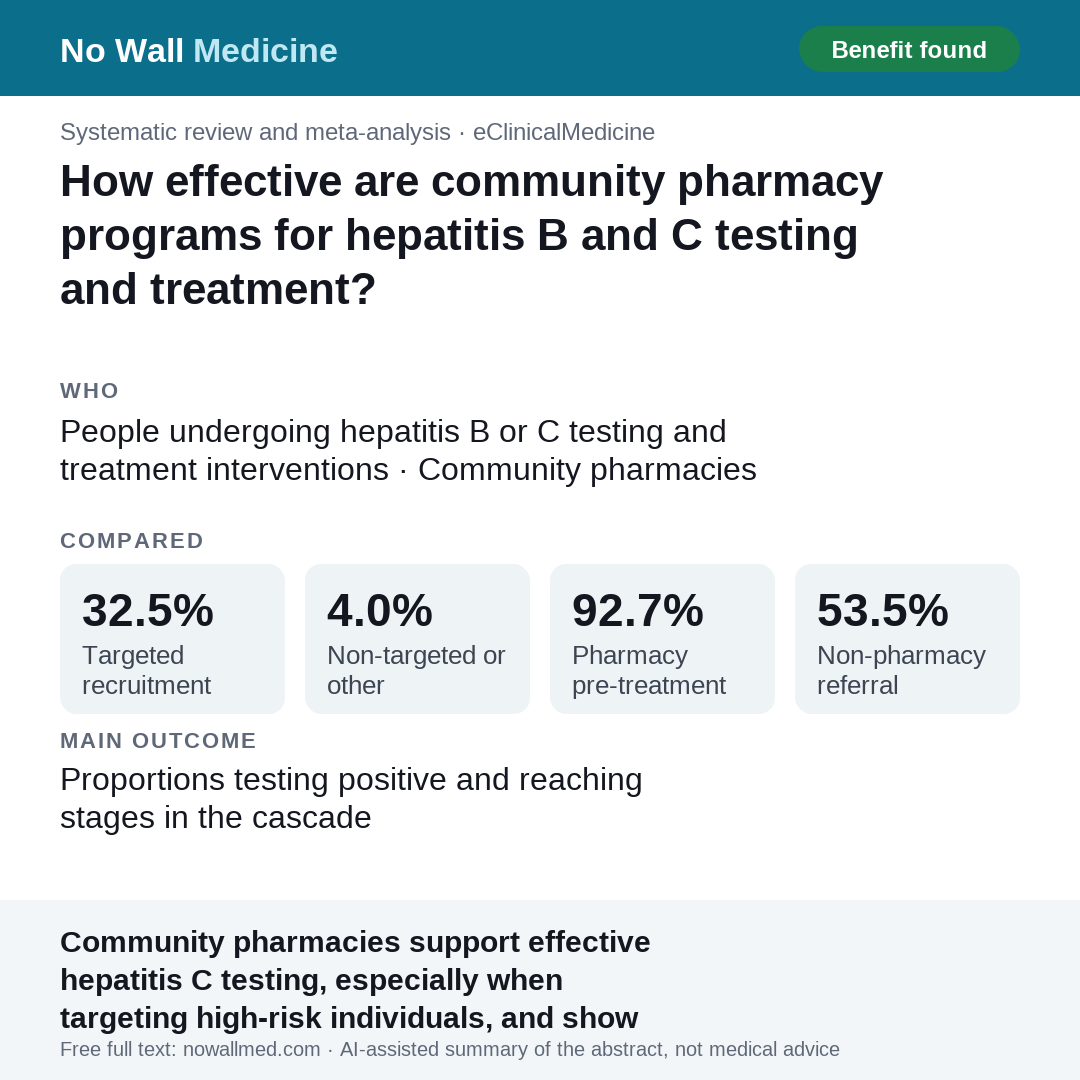
How effective are community pharmacy programs for hepatitis B and C testing and treatment?
Who
People undergoing hepatitis B or C testing and treatment interventions · Community pharmacies
Compared
32.5%Targeted recruitment (95% CI 24.8%-40.6%)
4.0%Non-targeted or other recruitment (95% CI 2.1%-6.5%)
92.7%Pharmacy pre-treatment assessment attendance (95% CI 79.1%-99.9%)
53.5%Non-pharmacy referral pre-treatment assessment attendance (95% CI 36.5%-70.1%)
Main outcome
Proportions testing positive and reaching stages in the cascade
Bottom line: Community pharmacies support effective hepatitis C testing, especially when targeting high-risk individuals, and show higher pre-treatment assessment attendance rates.
Limitation: Few comparative studies and high degrees of statistical heterogeneity were important limitations.
eClinicalMedicine · 2024-02-27Download image
Clinical question: How effective are community pharmacy programs for hepatitis B and C testing and treatment?
Why it matters: It is unknown how effective community pharmacy programs are for hepatitis B and C testing and treatment in reaching public health elimination goals.
Key points
- Researchers analyzed 27 studies involving hepatitis B and C testing and treatment programs in community pharmacies.
- Among 5096 participants, the pooled proportion of hepatitis C antibody positive results was 16.6%, reaching 32.5% when targeting people with specific risk factors.
- Pharmacy-based pre-treatment assessment attendance was 92.7% compared to 53.5% for non-pharmacy settings, though treatment initiation rates did not differ significantly between settings.
Headline and key points written with AI from the paper’s abstract, with every number checked against it. Read the paper before relying on them.
Was this summary helpful?
Cite this article
Hayes MJ, Beavon E, Traeger MW, Dillon JF, Radley A, Nielsen S. Viral hepatitis testing and treatment in community pharmacies: a systematic review and meta-analysis. eClinicalMedicine. 2024. doi:10.1016/j.eclinm.2024.102489
Spotted a mistake? Suggest a correction
Top studies every Monday
The week’s key trials and guidelines in your specialties, plus any topics you follow. By email, free.
Get the weekly digest