Virtual reality in simulation-based emergency skills training: A systematic review with a narrative synthesis
Systematic review with narrative synthesisMixed results
Does virtual reality provide benefit in simulation-based emergency skills training?
Who
Medical, nursing, and allied health professionals · United States and Europe
Compared
Virtual reality
Traditional simulation
Main outcome
Emergency skills training including knowledge, skill performance, and patient outcomes
Bottom line: Virtual reality shows educational benefits in skills and knowledge but lacks evidence for improved patient outcomes.
Resusc Plus · 2023-10-21Download image
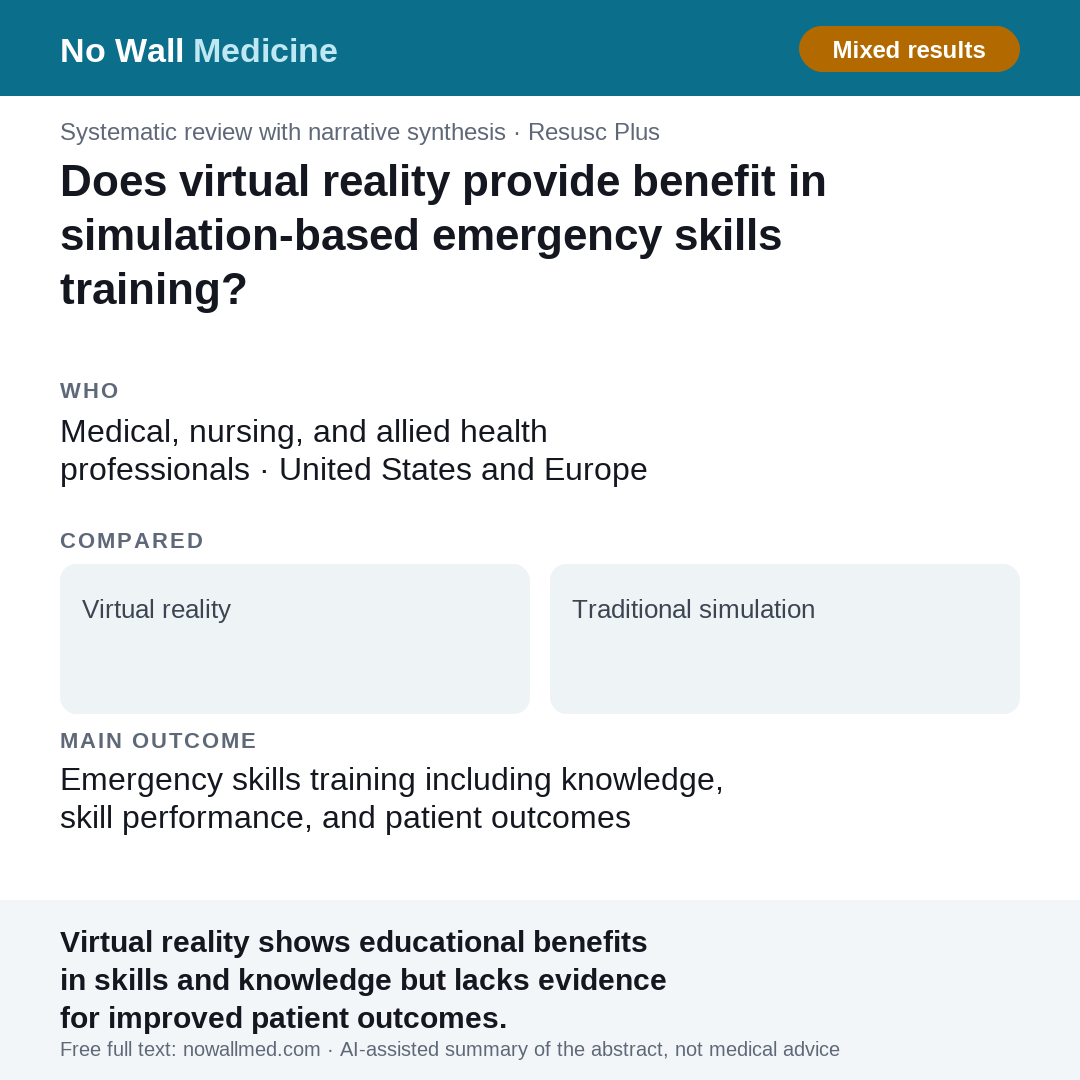
Clinical question: Does virtual reality provide benefit in simulation-based emergency skills training?
Abstract
Objective
An important role is predicted for virtual reality (VR) in the future of medical education. We performed a systematic review of the literature with a narrative synthesis, to examine the current evidence for VR in simulation-based emergency skills training. We broadly define emergency skills as any clinical skill used in the emergency care of patients across all clinical settings. Methods
This systematic review followed the Preferred Reporting Items for Systematic Reviews and Meta Analyses (PRISMA) guidelines. The data sources accessed during this study included: PubMed, CINAHL, EMBASE, AMED, EMCARE, HMIC, BNI, PsychINFO, Medline, CENTRAL, SCOPUS, Web of Science, BIOSIS Citation Index, ERIC, ACM Digital Library, IEEE Xplore, and ProQuest Dissertations and Thesis Global. Cochrane's Rob 2 and ROBVIS tools were used during study quality assessment. No ethical review was required for this work. Results
Thirty-four articles published between 14th March 1998 and 1st March 2022 were included in this review. Studies were predominantly conducted in the USA and Europe and focussed on a variety of healthcare disciplines including medical, nursing, and allied health. VR education was delivered using head-mounted displays, Cave Automatic Virtual Environment systems, and bespoke setups. These systems delivered education in a variety of areas (emergency medicine, equipment training, obstetrics, and basic/advanced life support). Subjective potential advantages of this technology included realism, replayability, and time-effectiveness. Reports of adverse events were low in frequency across the included studies. Whilst clear educational benefit was generally noted, this was not reflected in changes to patient-based outcomes. Conclusion
There may be educational benefit to using VR in the context of simulation-based emergency skills training including knowledge gain and retention, skill performance, acceptability, usability, and validity. Currently, there is insufficient evidence to demonstrate clear cost-effectiveness, or direct improvement of patient or institutional outcomes, at this stage.
Cite this article
Abbas JR, Chu MMH, Jeyarajah C, Isba R, Payton A, McGrath B. Virtual reality in simulation-based emergency skills training: A systematic review with a narrative synthesis. Resusc Plus. 2023. doi:10.1016/j.resplu.2023.100484
Spotted a mistake? Suggest a correction
Top studies every Monday
The week’s key trials and guidelines in your specialties, plus any topics you follow. By email, free.
Get the weekly digest