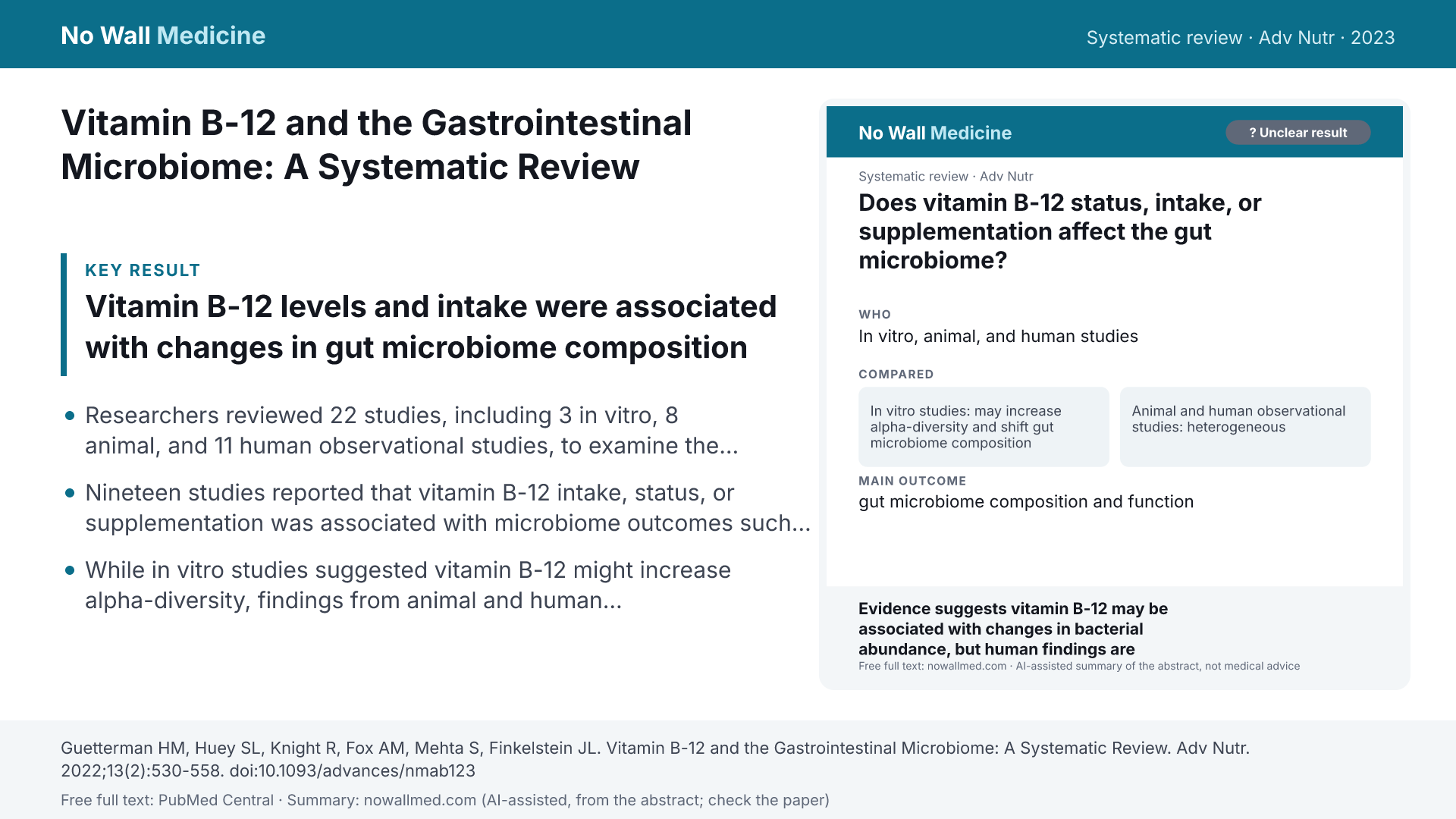
Vitamin B-12 and the Gastrointestinal Microbiome: A Systematic Review
Key result: Vitamin B-12 levels and intake were associated with changes in gut microbiome composition
Key points
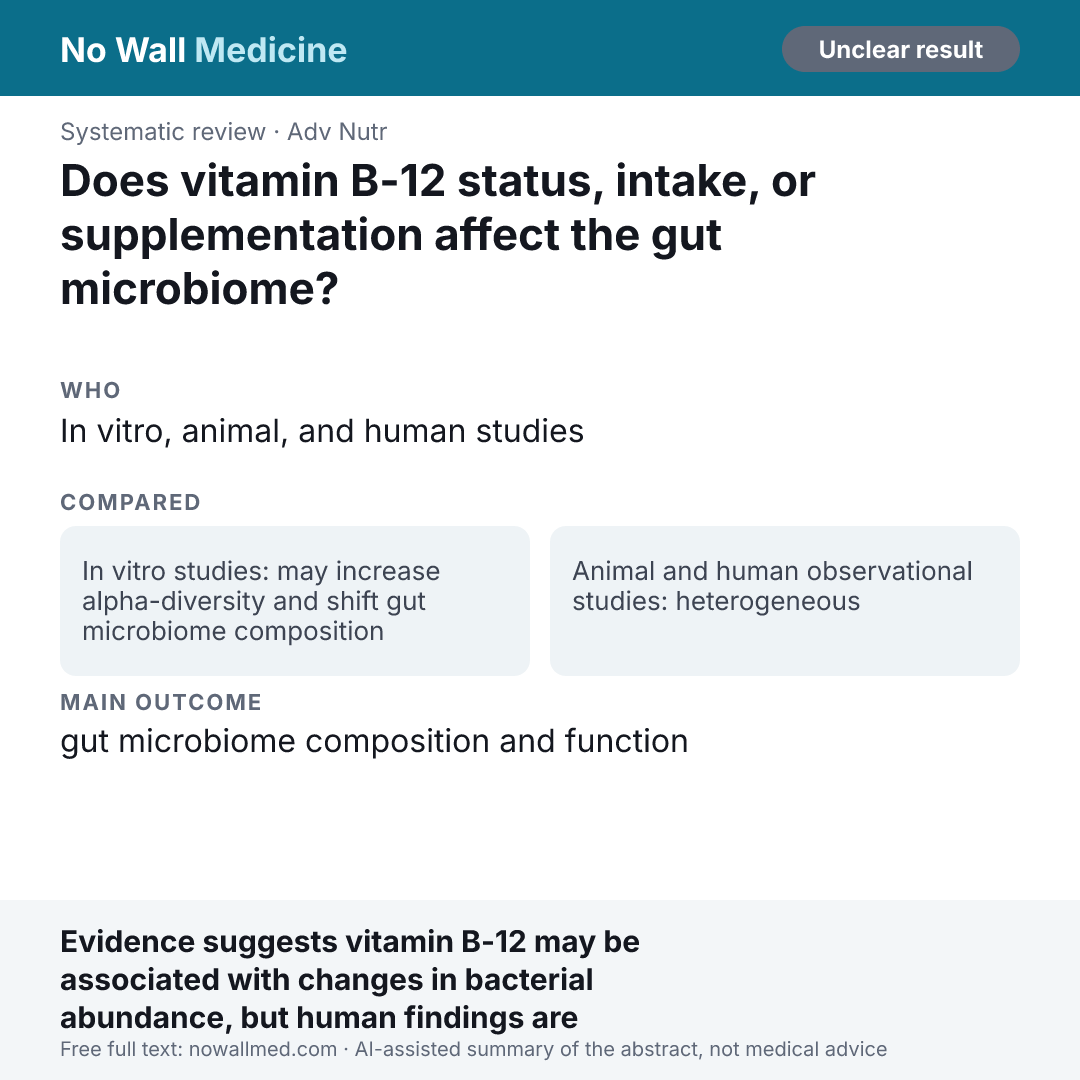
- Researchers reviewed 22 studies, including 3 in vitro, 8 animal, and 11 human observational studies, to examine the link between vitamin B-12 and the gut microbiome.
- Nineteen studies reported that vitamin B-12 intake, status, or supplementation was associated with microbiome outcomes such as bacterial abundance and short-chain fatty acids production.
- While in vitro studies suggested vitamin B-12 might increase alpha-diversity, findings from animal and human observational studies were heterogeneous.
Why it matters: The impact of vitamin B-12 on the composition and function of the gut microbiome has not been established.
Limitation the authors note: There are few prospective observational studies and no randomized trials examining the effects of vitamin B-12 on the human gut microbiome.
Discussion prompts
- Would these patients look like yours? Who was left out?
- Is the main outcome one that matters to patients?
- Is the difference large enough to change what you do?
Cite: Guetterman HM, Huey SL, Knight R, Fox AM, Mehta S, Finkelstein JL. Vitamin B-12 and the Gastrointestinal Microbiome: A Systematic Review. Adv Nutr. 2022;13(2):530-558. doi:10.1093/advances/nmab123
Free full text: PubMed Central · Summary and visual abstract: nowallmed.com/a/vitamin-b-12-and-the-gastrointestinal-microbiome-a-systematic-1e0si3i/ (AI-assisted from the abstract; check the paper before relying on it).